

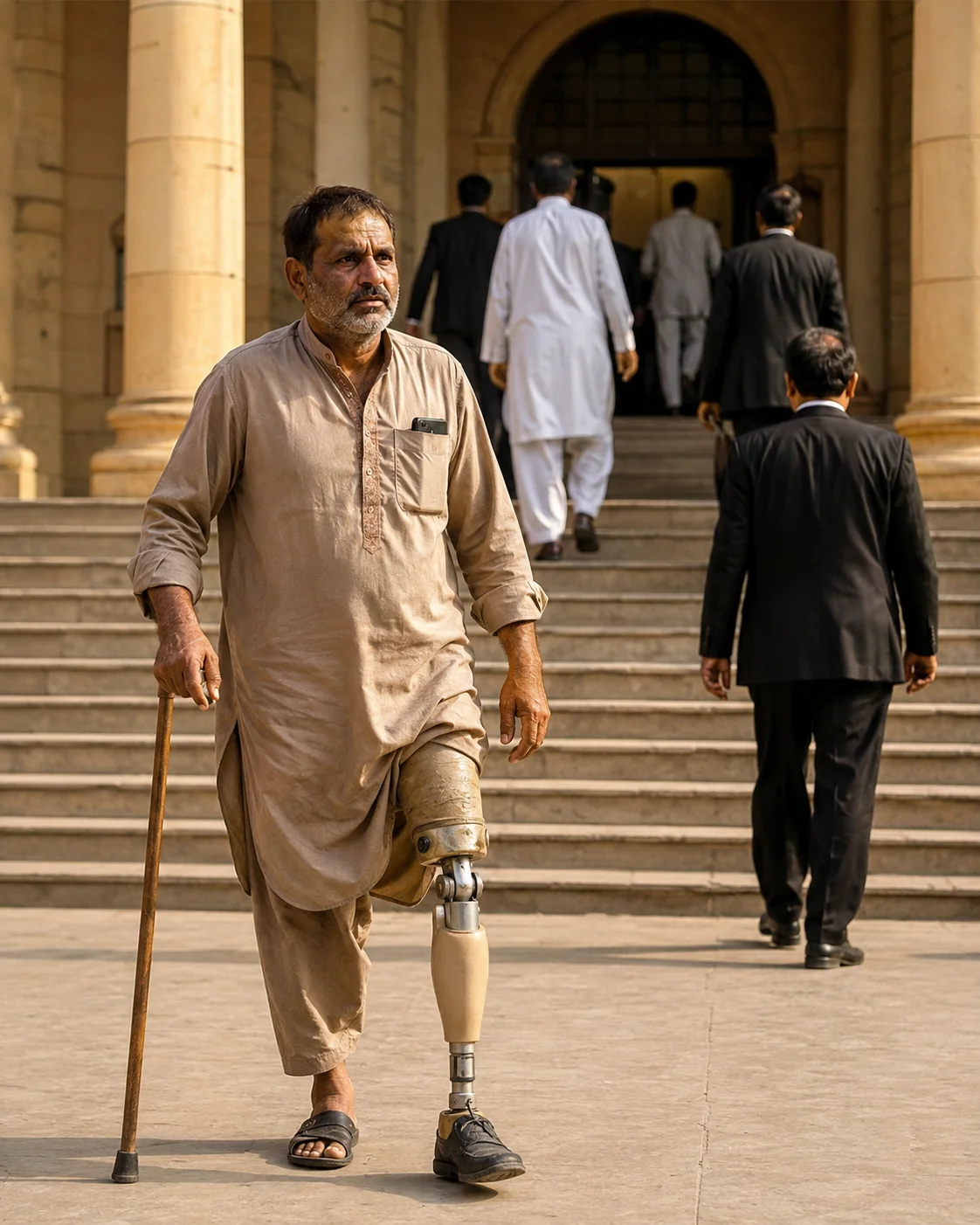
Karachi Bus Accident Compensation: Court Awards Victim Rs10m
KARACHI — A civil court in Karachi has awarded Rs10 million in Karachi bus accident compensation to a pedestrian who lost his right leg after being struck by a Karachi Transport Corporation (KTC) bus more than three decades ago. The court held the Sindh government and the bus driver jointly liable and also granted the plaintiff annual markup on the compensation amount.
The case stems from an accident in March 1992 involving Kishan Lal, who was 27 years old at the time. According to his counsel, Lal was standing at a bus stop on Korangi Road when a KTC bus struck him after its driver allegedly lost control of the vehicle.
The injuries were severe and resulted in the traumatic amputation of Lal’s right leg.
Karachi Bus Accident Compensation Case Took Decades to Conclude
Lal initiated legal proceedings in 1994, filing a compensation suit against the KTC bus driver and the Sindh government before the Sindh High Court (SHC).
He sought Rs10 million in damages over the injuries, permanent disability and financial consequences he suffered following the accident.
According to the plaintiff’s lawyer, Faraz Faheem, the lawsuit remained pending before the Sindh High Court for decades.
The case was transferred to a civil court last year following amendments to the Sindh Civil Courts Amendment Act. By that stage, according to the counsel, proceedings had already advanced to final arguments.
The eventual ruling was delivered by Senior Civil Judge (South) Sher Muhammad Kolachi.
Court Holds Sindh Government and Driver Jointly Liable
After considering the evidence, the civil court ordered the Sindh government and the KTC bus driver to pay Rs10 million to Lal jointly and severally.
This means responsibility for satisfying the decree rests with both defendants under the terms of the judgment.
The court noted that the defendants had been provided opportunities to participate in the proceedings but did not produce evidence capable of rebutting the plaintiff’s case.
Proceedings against the bus driver were conducted ex parte, while the Sindh government, despite being provided sufficient opportunities, did not lead evidence in its defence, according to the detailed order.
As a result, the court found that the evidence submitted by the plaintiff remained unchallenged.
Compensation Covers Disability, Suffering and Financial Loss
The Rs10 million award covers several forms of damage resulting from the accident and the permanent nature of Lal’s injuries.
The court considered his physical pain and suffering, psychological distress, permanent disability and reduced ability to earn a livelihood.
It also took into account medical costs, loss of normal enjoyment of life, future difficulties and other damages connected with the accident.
A significant consideration in determining compensation was the impact of the amputation on Lal’s ability to work.
At the time of the accident, he earned his living by cutting leather, according to the court record.
His occupation required him to remain physically mobile and stand for extended periods. The loss of his right leg therefore substantially affected his ability to continue working and reduced his earning capacity.
Court Recognises Lifelong Impact of Permanent Disability
The court also examined consequences extending beyond Lal’s immediate medical treatment and employment.
It observed that a permanent physical disability can affect mobility as well as a person’s social and personal life, self-confidence and future opportunities.
Lal’s disability and disfigurement were permanent, meaning the consequences of the accident would continue throughout his life.
The court therefore determined that compensation was justified for permanent disability, physical and emotional suffering, reduced quality of life and future hardship.
The decision highlights how compensation in serious personal injury cases can take into account both direct financial losses and the wider long-term consequences of permanent disability.
15% Annual Markup Ordered From Filing Date
In addition to the principal compensation of Rs10 million, the court ruled that Lal is entitled to markup at 15% per annum.
The markup will be calculated from the date the compensation lawsuit was filed until the amount is realised.
Given that the lawsuit was instituted in 1994, the markup provision represents an important part of the decree after the case remained unresolved for more than three decades.
The judgment therefore goes beyond the original Rs10 million compensation amount by recognising the prolonged period between the filing of the case and its eventual resolution.
Sindh Government Given Three Months to Satisfy Decree
Because the judgment has been issued against the government, the court also addressed the procedure for implementing its decision.
Under Section 82 of the Code of Civil Procedure (CPC), the Sindh government has been granted three months from the date of the decree to satisfy it.
Execution proceedings cannot begin against the government before the expiry of this statutory period.
The court stated that if the decree is not satisfied within the three-month period, it will report the matter to the provincial government for appropriate action in accordance with the law.
The procedural requirement gives the government an opportunity to comply with the judgment before formal execution measures can proceed.
Accident Occurred on Korangi Road in 1992
According to Lal’s counsel, the incident took place in March 1992 while the plaintiff was waiting at a bus stop on Korangi Road in Karachi.
The KTC bus involved in the incident allegedly went out of the driver’s control before striking Lal.
The plaintiff’s case attributed his injuries to negligent driving and also sought to hold the provincial government responsible as the driver’s employer.
The accident left Lal with severe injuries and ultimately resulted in the loss of his right leg.
He was only 27 at the time, making the consequences particularly significant for his future working life.
Defendants Did Not Rebut Plaintiff’s Evidence
The civil court’s detailed decision also focused on the evidence presented during the proceedings.
According to the order, neither defendant introduced independent evidence sufficient to challenge Lal’s account and supporting material.
The bus driver did not contest the proceedings and the case against him proceeded ex parte.
The Sindh government was also given opportunities to present evidence but did not do so, according to the judgment.
Consequently, the plaintiff’s evidence remained unrebutted.
The court found the evidence sufficient to establish the compensation claim and ultimately ruled in Lal’s favour.
Why the Karachi Compensation Ruling Matters
The case is notable not only because of the Rs10 million award but also because of the extraordinary length of the legal proceedings.
The accident occurred in 1992, while the compensation lawsuit was filed in 1994. The case subsequently remained before the Sindh High Court for decades before being transferred to a civil court following changes to the relevant provincial civil courts law.
The ruling also illustrates how courts may assess the long-term consequences of catastrophic road injuries.
In Lal’s case, the court considered permanent disability, reduced earning capacity, medical expenses, pain and suffering and the loss of ordinary amenities of life when determining compensation.
The 15% annual markup from the date of filing further reflects the prolonged period during which the plaintiff’s compensation claim remained pending.
The Sindh government now has the statutory three-month period specified by the court to satisfy the decree before execution proceedings may be initiated under the applicable provisions of the Code of Civil Procedure.
Source:
- Dawn
- Civil court judgment/order as reported by Dawn
- Statements attributed to plaintiff’s counsel Faraz Faheem in Dawn
Our audience means everything to us.
Have feedback or suggestions to make us better? We’re always listening—feel free to get in touch with us at editor@truthorahub.com





Leave a Comment