

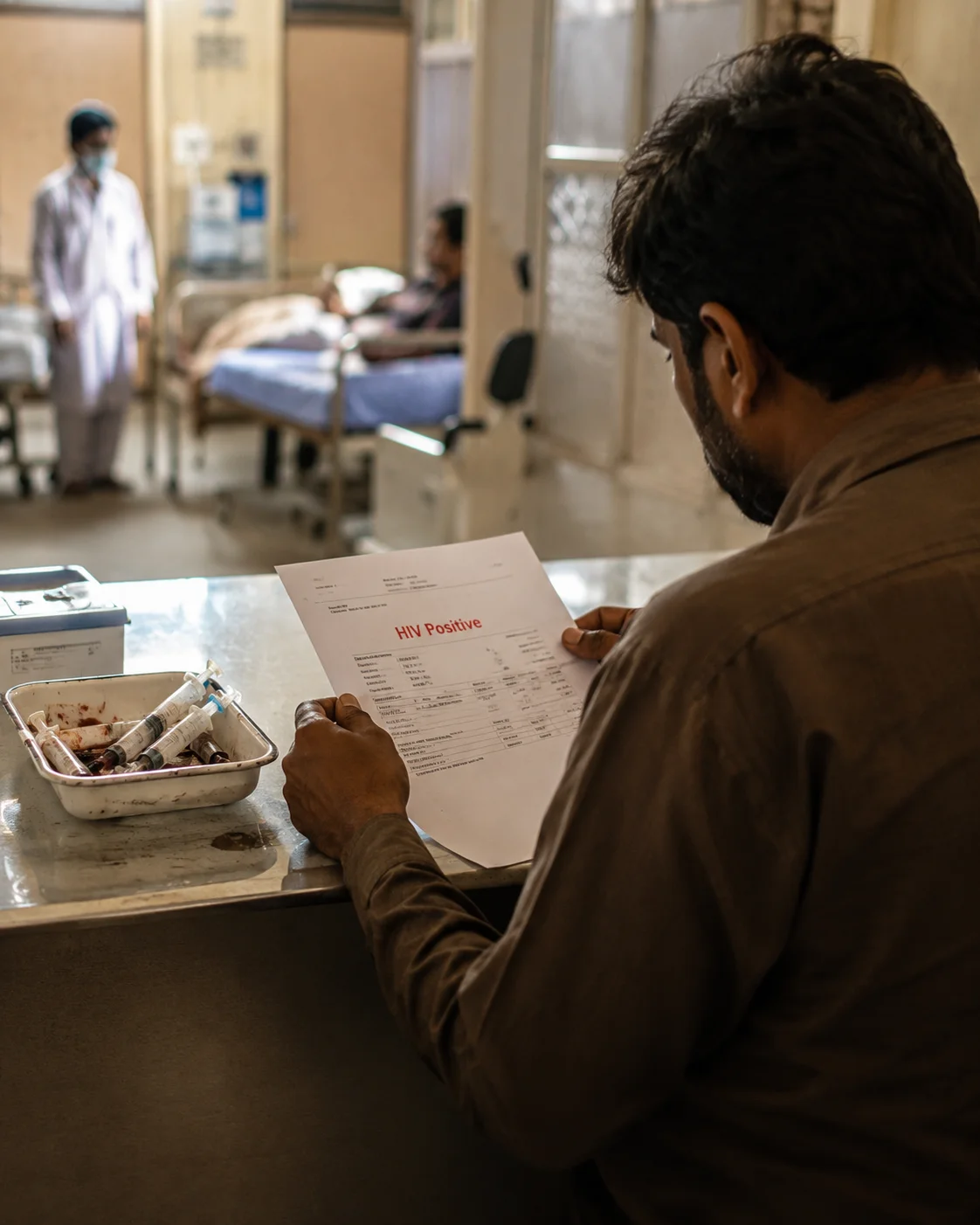
HIV Outbreak in Karachi: 120 Cases Found in SITE Screening Drive
More than 120 people have tested positive during a large-scale screening campaign launched after the HIV outbreak in Karachi linked to the Sindh Employees Social Security Institution (SESSI)-run Valika Hospital in the city’s SITE area. Sindh authorities say over 10,500 residents have been screened since October 2025, while treatment for those diagnosed is being provided at government expense.
Officials have also confirmed that 78 children were infected in the outbreak, with six reported deaths, based on findings presented from official inquiries. The provincial government says screening will continue despite additional cases being identified and has pledged long-term medical support for affected families.
HIV Outbreak in Karachi: Large-Scale Screening Continues
Speaking at a press conference in Karachi on Tuesday, Sindh Labour Minister Saeed Ghani said the screening campaign began one day after Valika Hospital informed the provincial health authorities about the situation on October 22, 2025.
According to the minister, health teams have screened more than 10,500 people living around the hospital in Karachi’s SITE industrial area. The campaign identified 120 individuals living with HIV.
A separate screening exercise was also carried out at another SESSI-operated hospital in Landhi. During that campaign, approximately 2,000 people were tested and 10 were found to be HIV positive.
The minister said all individuals diagnosed through these campaigns are receiving treatment funded by the provincial government.
Official Inquiry Confirms 78 Children Affected
During the briefing, Ghani shared findings from two official investigations into the outbreak at Valika Hospital.
He said the second inquiry report, submitted to the provincial ombudsman on June 19, 2026, confirmed 78 HIV-positive children and six deaths connected to the outbreak.
Authorities believe the number of confirmed infections could increase as screening and verification continue.
According to Ghani, officials have remained in direct contact with affected families while carrying out further investigations.
Government Refuses to Halt Screening Campaign
The Sindh government says it will continue testing residents despite concerns that additional cases may emerge.
Ghani stated that the screening programme would not be suspended simply because more infections might be detected. He said identifying patients early remains essential for treatment and disease control.
The minister also assured families that the provincial government would continue supporting anyone newly diagnosed through the screening programme.
To strengthen ongoing investigations, officials have introduced a dedicated data collection system aimed at gathering additional evidence while protecting patient confidentiality.
Authorities said investigations are being conducted discreetly to minimise stigma and safeguard the privacy of affected families.
Long-Term Medical Care Planned for Affected Children
The provincial government announced that all confirmed child patients are receiving specialised treatment at five major healthcare institutions.
These include:
- Indus Hospital
- Aga Khan University Hospital (AKUH)
- Dow University of Health Sciences
- Two additional leading medical facilities involved in the treatment programme
Ghani also announced plans to establish a standing committee of senior medical experts.
The committee will oversee treatment strategies and supervise a Rs2 billion endowment fund established to finance long-term care for the affected children.
According to the minister, HIV requires lifelong medical management, making sustained financial and clinical support essential. He added that the endowment fund could be expanded if future needs require additional resources.
Medical Waste Disposal and Infection Control Under Review
The minister acknowledged shortcomings in medical waste management during the investigation.
He said proper disposal systems already exist, but some individuals allegedly failed to follow established procedures for personal gain.
Authorities said disciplinary and legal action is underway against anyone found responsible for negligence.
Ghani stated that penalties could include dismissals from service, criminal cases and imprisonment where warranted under applicable laws.
However, no final findings regarding individual criminal responsibility were announced during the press conference.
Patient Confidentiality Remains a Priority
The Sindh government also emphasised the importance of protecting the identities of affected patients.
Ghani referred to the Sindh HIV Control Act of 2006, which requires patient confidentiality to prevent discrimination and social stigma.
He criticised what he described as sensational coverage and public commentary that could expose affected families and violate their privacy.
Officials urged media organisations and public figures to report responsibly while respecting legal protections for patients.
Minister Addresses Questions About Accountability
When asked whether he accepted responsibility for the outbreak, Ghani said he acknowledged indirect responsibility as the minister overseeing the department.
He remarked that he would have no objection if his resignation alone could resolve the issue.
The minister also clarified that investigators believe all hospital-linked infections occurred before October 2025.
According to the government, no new HIV case originating from Valika Hospital has been reported since that period.
Nevertheless, screening programmes remain active both within the hospital system and in surrounding communities.
Health Experts Warn HIV Is a Wider Public Health Challenge
Medical experts participating in the press conference stressed that the issue extends beyond a single hospital.
Dr Faisal Mahmood of Aga Khan University Hospital said HIV cases have also emerged in other areas of Karachi, while infection-control shortcomings have been observed at some private healthcare facilities.
He noted that many HIV patients had previously received treatment at local private clinics.
Meanwhile, Dr Abdul Bari, Chief Executive of Indus Hospital, said Pakistan continues to face significant challenges from both HIV and Hepatitis C.
He emphasised the need for stronger cooperation between government institutions and healthcare providers to reduce transmission.
Dr Bari also highlighted the importance of ensuring that healthcare providers consistently use new disposable syringes during medical procedures to prevent the spread of infectious diseases.
Why the Outbreak Matters
The HIV outbreak in Karachi has renewed attention on infection prevention practices within healthcare facilities and the importance of early disease detection.
Health officials say widespread community screening, strict infection-control measures and continued medical care are essential to limiting further transmission.
The government’s commitment to long-term treatment, combined with ongoing investigations into the causes of the outbreak, will likely shape future public health policies aimed at strengthening patient safety across Sindh.
Source:
- Sindh Labour Minister Saeed Ghani press conference
- Sindh Employees Social Security Institution (SESSI)
- Aga Khan University Hospital
- Indus Hospital
- Official inquiry reports submitted to the Sindh Ombudsman
Our audience means everything to us.
Have feedback or suggestions to make us better? We’re always listening—feel free to get in touch with us at editor@truthorahub.com









Leave a Comment