

Iran-US Conflict Escalates After Iran Claims Strikes on US Bases in Bahrain and Kuwait
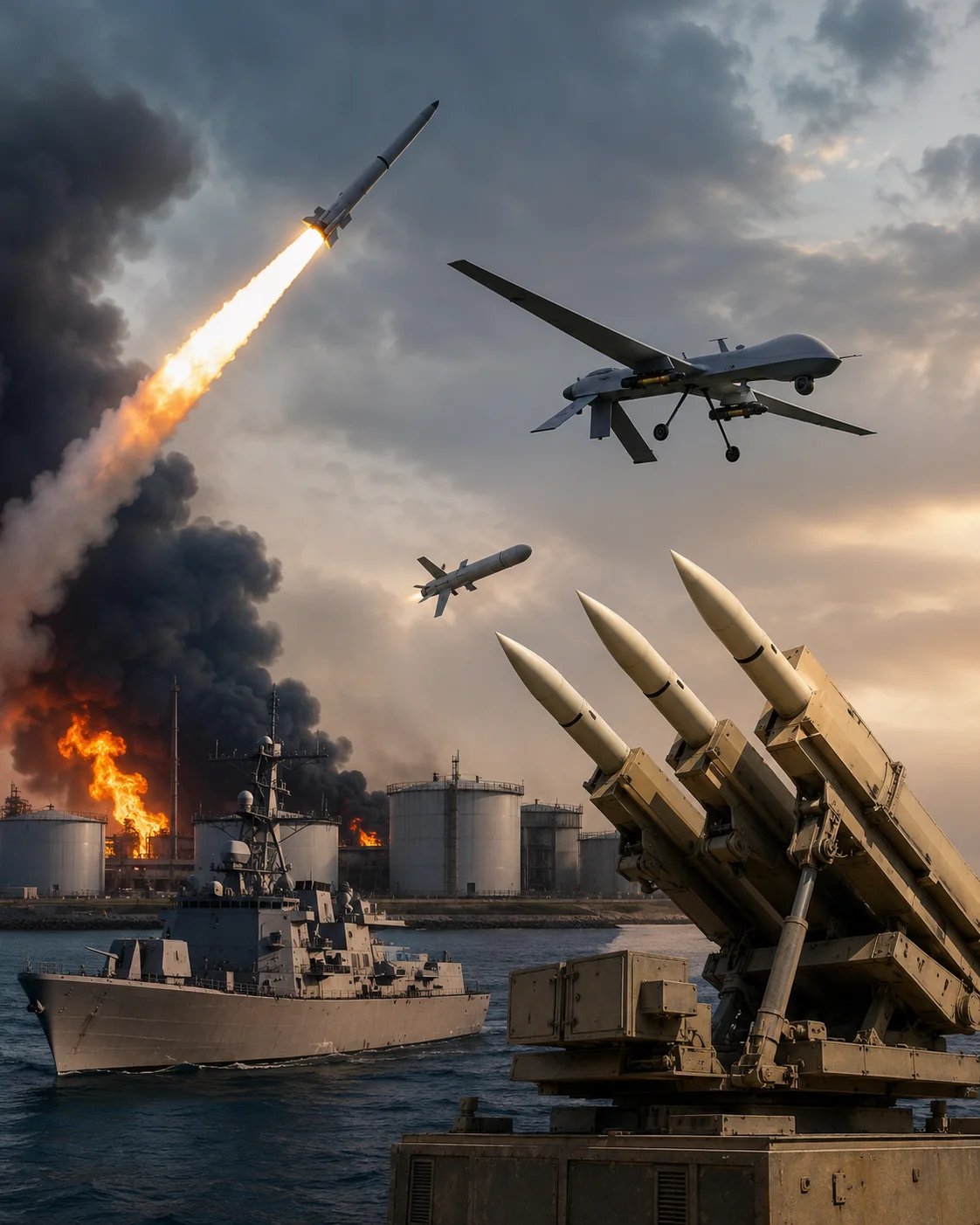
The Iran-US conflict intensified after Iran’s Islamic Revolutionary Guard Corps (IRGC) claimed it launched missile and drone attacks against US military facilities in Bahrain and Kuwait. The announcement came hours after the United States carried out fresh military strikes against Iranian targets, saying the operation was a response to attacks on commercial shipping in the Strait of Hormuz.
According to Reuters, Iran said it targeted US military positions in Bahrain’s Fifth Naval District and Kuwait’s Ali Al Salem Air Base. Iranian authorities also claimed they shot down a US MQ-9 drone during the operation. The US military had not immediately commented on those claims.
Iran Claims Retaliatory Military Operation
The IRGC said the operation involved both missiles and drones aimed at what it described as key US military sites in the Gulf region.
Air raid sirens reportedly sounded in Bahrain and Kuwait during the incident. Kuwait’s military later confirmed that its air defence systems were responding to what it described as hostile missile and drone activity.
At the time of reporting, there was no independent confirmation of the full extent of the damage or casualties resulting from the reported attacks.
US Launches New Strikes on Iranian Targets
Earlier, the United States announced a new wave of military strikes inside Iran following attacks on commercial vessels in the Strait of Hormuz.
According to Reuters, the US Central Command (CENTCOM) said the operation targeted more than 60 small boats linked to Iran’s Islamic Revolutionary Guard Corps, along with air defence systems, coastal surveillance equipment, anti-ship cruise missiles, surface-to-air missile systems and drone launch sites.
US officials said the operation was intended to impose significant costs on Iran following attacks on shipping that Washington said violated the existing ceasefire arrangement.
In a statement, CENTCOM described the Iranian actions as an unjustified breach of the ceasefire and said they threatened freedom of navigation in one of the world’s most strategically important waterways.
NATO Chief Supports US Response
NATO Secretary General Mark Rutte defended the American military action before a summit of NATO leaders.
He said the US response was necessary because, according to his assessment, Iran had violated the ceasefire agreement. Rutte argued that maintaining the ceasefire required a firm reaction when its terms were breached.
His remarks reflected growing international concern over the renewed military escalation in the Gulf.
Iran Condemns US Action
Iran strongly rejected the US operation.
The Khatam al-Anbiya Central Headquarters described the strikes as a blatant act of aggression and warned of what it called a crushing response. Iranian officials also said they would not accept foreign interference in the management of the Strait of Hormuz.
Iranian Parliament Speaker Mohammad Baqer Ghalibaf accused Washington of violating the ceasefire agreement. He argued that the renewed military strikes, additional oil sanctions and other actions represented breaches of previous understandings between the two countries.
Iran’s Foreign Ministry also condemned the US operation, saying Washington would bear responsibility for the consequences. The ministry stated that Iran would take any measures it considered necessary to protect its national security and national interests.
Explosions Reported in Southern Iran
Iranian media reported explosions at several locations in southern Iran, including Kharg Island, Qeshm Island, Sirik and Bandar Abbas.
According to Iranian state media, multiple explosions were heard on Kharg Island, a critical oil export hub that handles the majority of Iran’s crude oil exports.
Reuters reported that US officials did not specifically mention Kharg Island among the confirmed targets.
Iranian state television said no civilian deaths had been reported. However, several people were reportedly injured after shrapnel from what officials described as an enemy projectile struck a commercial pier in Sirik. Reports also indicated that fishing piers in Sirik and Bandar Abbas were damaged.
Tensions Grow Around Commercial Shipping
The latest military developments followed attacks on commercial vessels operating in the Strait of Hormuz.
Qatar accused Iran of attacking several ships, including the liquefied natural gas tanker Al Rekayyat, which reportedly suffered a drone strike that caused a fire in its engine room. Officials said the crew remained safe and evacuation procedures were underway.
Maritime security sources also reported damage to the Saudi-flagged crude oil tanker believed to be the Wedyan off the coast of Oman. Authorities had not confirmed the exact cause of the damage.
Qatar’s Foreign Ministry summoned Iran’s deputy ambassador and delivered an official protest over the reported attack.
Iran rejected Qatar’s accusations, calling them perplexing. Tehran maintained that it was meeting its obligations while arguing that commercial vessels should coordinate their routes with Iranian authorities to reduce risks.
A second US official, speaking anonymously to Reuters, said preliminary assessments indicated Iran had fired on three commercial vessels.
Ceasefire Under Increasing Pressure
The latest exchange marks another setback for the fragile ceasefire reached between Iran and the United States last month.
The agreement was intended to pause fighting for 60 days while negotiations continued toward a broader settlement. However, indirect talks held in Qatar reportedly ended without significant progress.
US President Donald Trump recently warned that military action could resume if negotiations failed, saying Washington would either reach an agreement or continue military operations.
Iranian Foreign Minister Abbas Araghchi responded that negotiations on a permanent agreement would not begin while military threats remained.
Why the Strait of Hormuz Matters
The Strait of Hormuz remains one of the world’s most important energy corridors, carrying a significant share of global oil exports.
Any disruption to shipping through the waterway can affect international energy markets, freight costs and regional security. Renewed military exchanges between Iran and the United States therefore carry implications that extend well beyond the Middle East.
As of publication, officials from both sides continued to exchange accusations over responsibility for the latest escalation, while independent verification of several battlefield claims remained unavailable.
Source:
- Reuters
Our audience means everything to us.
Have feedback or suggestions to make us better? We’re always listening—feel free to get in touch with us at editor@truthorahub.com








Leave a Comment