

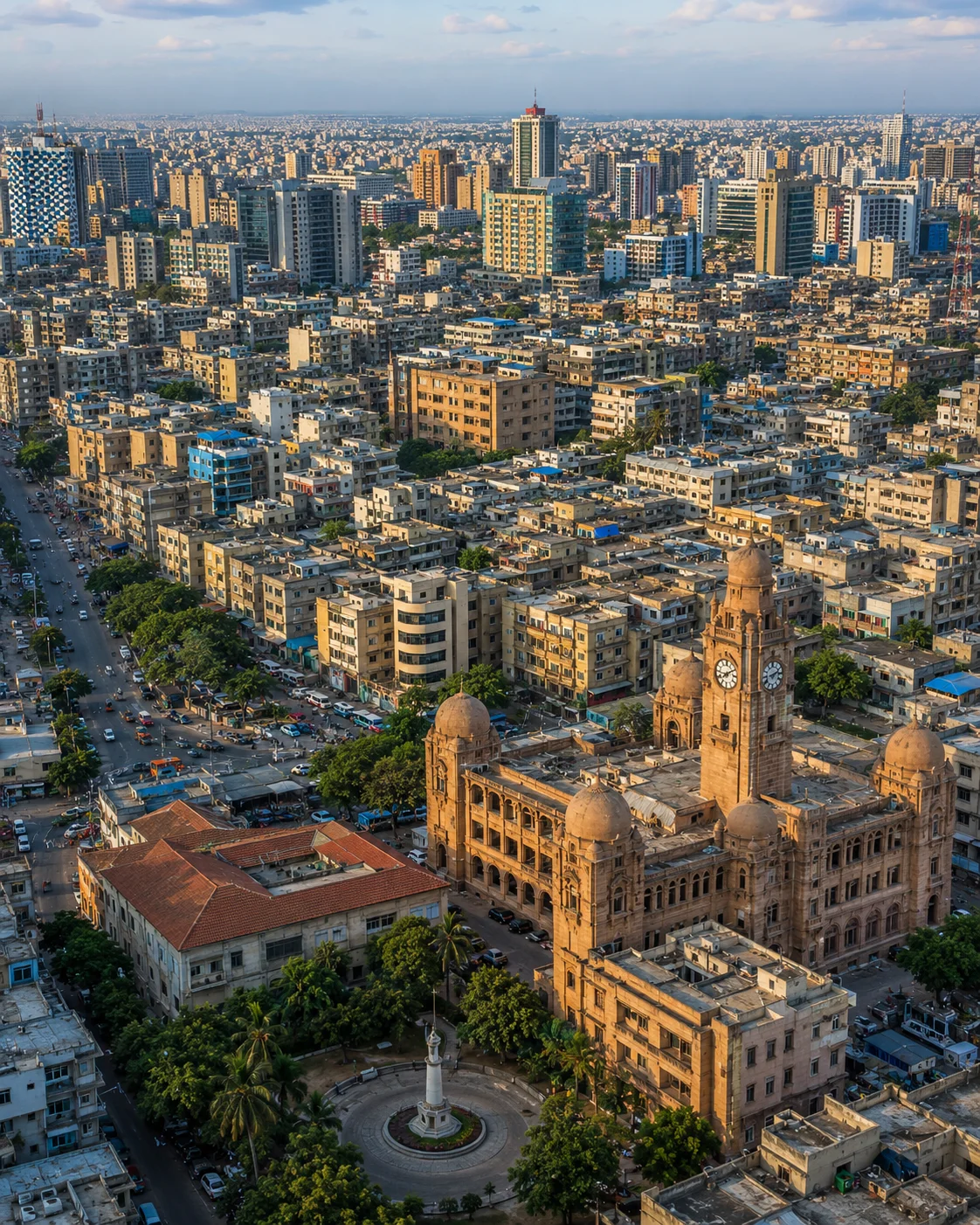
Karachi Liveability Ranking Falls to 170th in Global Index 2026
The Karachi Liveability Ranking has placed Pakistan’s largest city among the world’s least liveable urban centres after the Economist Intelligence Unit (EIU) ranked it 170th out of 173 cities in its Global Liveability Index 2026. The annual assessment evaluates cities across key indicators including stability, healthcare, education, infrastructure, and culture and environment to measure overall living conditions.
Karachi received an overall score of 43 out of 100, placing it alongside Algiers and ahead of only Dhaka, Tripoli, and Damascus. The report also noted that several cities in the Middle East experienced lower rankings this year following regional instability linked to the recent Iran-US conflict.
Karachi Liveability Ranking Highlights Urban Challenges
The latest Karachi Liveability Ranking reflects longstanding urban issues that continue to affect residents’ daily lives. According to the Economist Intelligence Unit, large metropolitan areas often face greater challenges due to heavy traffic congestion, public safety concerns, and pressure on essential services.
The Global Liveability Index measures conditions across five categories:
- Stability
- Healthcare
- Culture and environment
- Education
- Infrastructure
Each category contributes to an overall score designed to assess how suitable a city is for everyday living.
For Karachi, the scores were as follows:
| Category | Score |
|---|---|
| Stability | 20 |
| Healthcare | 54 |
| Culture & Environment | 36 |
| Education | 75 |
| Infrastructure | 52 |
| Overall Score | 43 |
Education remained Karachi’s strongest-performing category with a score of 75, while stability received the lowest score at 20, significantly affecting the city’s overall ranking.
How the Global Liveability Index Works
Published annually by the Economist Intelligence Unit, the Global Liveability Index compares 173 cities worldwide using a consistent methodology.
The ranking considers a wide range of factors that influence quality of life, including:
- Public safety and political stability
- Availability and quality of healthcare
- Educational opportunities
- Transport and public infrastructure
- Environmental conditions
- Cultural and recreational amenities
The index is widely used by businesses, governments, researchers, and multinational organisations as a benchmark for comparing urban living standards across different regions.
Regional Cities Also Saw Ranking Changes
The 2026 report showed that several cities in the Middle East experienced notable declines following heightened regional tensions during the recent conflict involving the United States and Iran.
According to the Economist Intelligence Unit, Muscat recorded the largest drop, falling 14 places to 123rd after a series of Iranian drone strikes.
Other cities that moved down the rankings include:
- Doha, down seven places to 108th
- Dubai, down four places to 79th
- Abu Dhabi, down four places to 76th
- Kuwait City and Manama, which also slipped in the rankings
Meanwhile, Tehran ranked 164th, while Kyiv, which continues to face the effects of war, ranked 166th, both placing slightly above Karachi.
Why Karachi Continues to Rank Low
Karachi is Pakistan’s commercial and financial hub, home to more than 20 million residents. Rapid population growth, expanding urbanisation, ageing infrastructure, and increasing demand for public services have placed sustained pressure on the city’s resources over many years.
Traffic congestion remains one of the city’s most persistent problems, often resulting in long commuting times and reduced productivity. Public transport infrastructure has improved in some areas, but challenges remain in meeting the needs of a growing population.
Healthcare access has also been under pressure due to increasing demand, while concerns related to public safety continue to influence residents’ quality of life.
Although Karachi performed relatively well in education compared with its other scores, weaker results in stability, infrastructure, and culture and environment reduced its overall standing.
World’s Most Liveable Cities in 2026
While Karachi ranked near the bottom of the index, several cities continued to perform strongly across nearly every category.
According to the Economist Intelligence Unit, the top-ranked cities were:
- Copenhagen
- Vienna
- Melbourne
Among other notable performers:
- Vancouver ranked 9th, making it the only North American city in the top ten.
- Tokyo ranked 10th, remaining the only megacity to secure a place among the world’s ten most liveable cities.
These cities generally benefit from stable governance, reliable public services, strong healthcare systems, high-quality education, and well-developed infrastructure.
Why the Rankings Matter
The Global Liveability Index offers more than just an international comparison of cities. It provides governments, policymakers, businesses, and urban planners with insight into areas requiring investment and reform.
For Karachi, the latest ranking highlights the importance of continued improvements in public safety, infrastructure, transport, healthcare, and environmental management. Addressing these challenges could enhance residents’ quality of life while strengthening the city’s attractiveness for investment and economic growth.
Although liveability rankings represent one assessment of urban conditions and cannot capture every aspect of life in a city, they remain an influential benchmark used around the world to evaluate how effectively cities support their residents.
As Pakistan’s largest economic centre, Karachi continues to play a critical role in the country’s development. The 2026 rankings underscore the ongoing need for long-term planning and sustainable urban development to improve everyday living conditions for millions of people.
Source:
- Economist Intelligence Unit (EIU) Global Liveability Index 2026
- Dawn
Our audience means everything to us.
Have feedback or suggestions to make us better? We’re always listening—feel free to get in touch with us at editor@truthorahub.com








Leave a Comment