

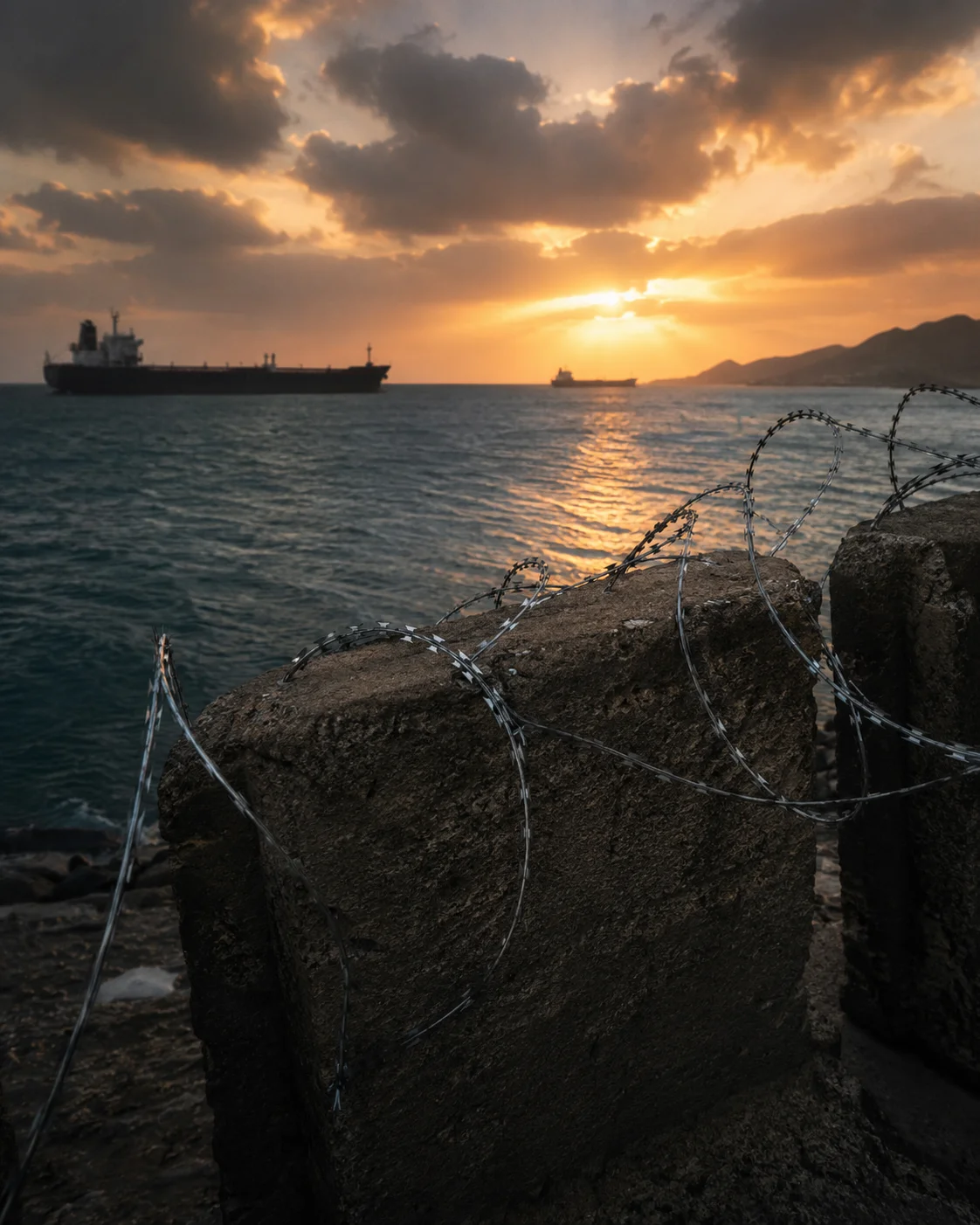
Houthi Maritime Embargo on Saudi Arabia Raises Oil Risks
Yemen’s Houthi movement has announced a Houthi maritime embargo against Saudi Arabia, adding a new source of uncertainty for Red Sea shipping and global energy markets as the wider confrontation involving Iran and the United States continues to intensify.
The declaration was made on Monday, July 20, by Houthi military spokesman Yahya Saree, who said the measure would take effect immediately. However, the group did not provide detailed information explaining how it intended to enforce the embargo or which vessels would be targeted.
The announcement comes only days after Saudi Arabia and the Houthis exchanged strikes for the first time in years, placing renewed pressure on the fragile truce that has largely reduced direct hostilities between the two sides since 2022.
The latest escalation is particularly significant because Saudi Arabia has increasingly depended on its Red Sea infrastructure to maintain oil exports while instability affects shipping through the Strait of Hormuz.
Houthis Announce Maritime Embargo Against Saudi Arabia
The Houthis announced that they were imposing a maritime embargo against Saudi Arabia under what their military spokesman described as an “eye for an eye” response.
Yahya Saree said the measure was effective immediately.
The declaration followed renewed military tensions between Saudi Arabia and the Houthis, including strikes involving Sanaa International Airport and Saudi territory.
The Associated Press reported that the Houthis presented the maritime measure as retaliation for a recent attack on Sanaa airport.
Despite the announcement, there was no immediate indication that the Houthis had physically shut down Red Sea shipping routes or completely prevented Saudi-linked vessels from operating.
The practical impact of the declaration will therefore depend heavily on whether the group attempts to enforce it through attacks, interceptions or other military measures.
Any such action could significantly increase security risks for commercial vessels operating near Yemen and the Bab al-Mandab Strait.
Why the Houthi Maritime Embargo Matters for Saudi Arabia
Saudi Arabia is one of the world’s most important crude oil producers and exporters, making the security of its maritime infrastructure important not only for the kingdom but also for international energy markets.
The kingdom has access to both the Persian Gulf and the Red Sea.
Normally, the Strait of Hormuz provides a critical maritime route for Gulf energy exports. However, the current US-Iran conflict has severely disrupted normal shipping through the strategically important waterway.
That has increased the importance of Saudi Arabia’s Red Sea export infrastructure, including the port of Yanbu.
Yanbu allows Saudi crude to reach international markets through the Red Sea rather than depending entirely on the Strait of Hormuz.
A successful disruption of Saudi shipping in the Red Sea could therefore place pressure on one of Riyadh’s most important alternative oil-export routes.
Bab al-Mandab Becomes Increasingly Important
The Bab al-Mandab Strait sits between Yemen and the Horn of Africa and connects the Red Sea with the Gulf of Aden.
It is one of the world’s most strategically important maritime chokepoints because ships travelling between Europe and Asia through the Suez Canal generally pass through the waterway.
Its importance has increased further because of disruption around the Strait of Hormuz.
If shipping faced major restrictions at both Hormuz and Bab al-Mandab at the same time, energy supplies and international trade could experience significantly greater disruption.
Commercial vessels could again be forced to travel around Africa, substantially increasing voyage distances, transportation costs and delivery times.
Previous Houthi Attacks Disrupted Red Sea Shipping
The threat to maritime traffic is particularly significant because the Houthis have previously demonstrated their ability to disrupt shipping in the Red Sea region.
Beginning in November 2023 during the Gaza conflict, the group launched attacks against commercial vessels operating around the Red Sea and Gulf of Aden.
The Houthis said at the time that their operations were linked to the conflict in Gaza.
Those attacks prompted numerous shipping companies to divert vessels away from the Red Sea and Suez Canal route.
Instead, ships were forced to travel around the Cape of Good Hope in southern Africa, adding considerable distance and time to voyages between Asia and Europe.
The previous disruption demonstrated how security developments around Yemen can quickly affect global shipping networks.
Saudi-Houthi Truce Faces Renewed Pressure
The latest developments also threaten the relative calm that has existed between Saudi Arabia and the Houthis since 2022.
A UN-mediated ceasefire that began that year formally expired, but large-scale direct fighting between the two sides remained substantially reduced afterward.
Saudi Arabia had led a military coalition supporting Yemen’s internationally recognised government after the Houthis seized control of Sanaa and expanded their influence across the country.
Years of conflict caused extensive destruction and contributed to a major humanitarian crisis in Yemen.
The renewed exchange of strikes last week has therefore raised concerns that the long period of reduced Saudi-Houthi hostilities could begin to unravel.
UN Warns of Wider Regional Escalation
The United Nations has expressed concern about the possibility of further escalation.
UN Secretary-General spokesman Stephane Dujarric warned that the Houthi threat could contribute to an even broader regional conflict.
The concern comes as several overlapping conflicts and military confrontations increasingly affect some of the world’s most important energy and trade corridors.
Any significant disruption in both the Red Sea and Strait of Hormuz could have consequences extending far beyond the Middle East.
Iran Says It Is in ‘Full-Scale War’ With United States
The Houthi announcement comes against the backdrop of renewed fighting between Iran and the United States.
Iranian President Masoud Pezeshkian said his country was engaged in what he described as a “full-scale war” with Washington as US military strikes continued against targets inside Iran.
Iranian authorities reported strikes in several parts of the country, including Bushehr, where Iran’s only operational civilian nuclear power plant is located.
Bushehr Governor Mohammad Mozaffari said several locations in the city had been struck by US projectiles.
There was no indication in the information available that the nuclear power plant itself had been hit.
Authorities in East Azerbaijan province also reported casualties following an attack, with one person reported killed and several others injured.
Diplomatic Contacts Reportedly Continue
Despite the renewed military confrontation, Iran has indicated that indirect diplomatic communication with the United States has not completely stopped.
Iranian Foreign Ministry spokesman Esmaeil Baqaei said ideas had been communicated to Tehran through mediators.
The continued diplomatic exchanges suggest that channels remain available even as military operations continue.
However, there has been no confirmed breakthrough capable of ending the latest fighting.
Strait of Hormuz Remains at Centre of Conflict
The Strait of Hormuz remains another major focus of the confrontation.
The narrow waterway is one of the world’s most important energy corridors and historically handles a substantial share of global petroleum shipments.
Iran has maintained that it will not allow the strait to be used by adversaries in ways that threaten its national security and interests.
Reports of attacks on vessels have further increased concerns about maritime safety.
The UK Maritime Trade Operations agency reported that sailors abandoned a vessel after it caught fire following an attack in the area.
Iran’s Revolutionary Guards separately claimed that two oil tankers attempting to pass through the strait had exploded and were stopped.
Such battlefield claims require caution because details emerging during an active conflict can be difficult to independently verify immediately.
US and Iran Exchange Strikes Across Region
The confrontation has also spread beyond Iranian territory.
Iran’s Revolutionary Guards claimed attacks against US-linked or military targets in several countries across the region.
The Guards said they had struck targets in Syria, Jordan and Kuwait.
Among their claims was an attack on military aircraft at Aqaba Airport in Jordan and another operation against military infrastructure in Kuwait.
These claims were made by Iranian military authorities and could not all be independently confirmed from the information immediately available.
Kuwait’s military said its air defences were responding to hostile drone attacks following what it described as Iranian aggression.
Bahrain also activated air raid warnings, with authorities advising residents to move toward safe locations.
US Military Reports Additional Fatalities
The latest escalation has also resulted in further American military casualties.
US Central Command reported additional deaths involving American service members during the conflict.
Two US personnel were reported killed during Iranian missile and drone attacks on Jordan, while another service member died in northern Iraq during the controlled destruction of unexploded ordnance from a downed Iranian drone.
US President Donald Trump subsequently said American forces had struck Iran heavily following the deaths.
The continuing casualties have further increased pressure surrounding efforts to find a diplomatic solution to the conflict.
Global Oil and Shipping Markets Face New Uncertainty
The Houthi maritime embargo adds another potentially serious risk to already strained international energy and shipping networks.
Saudi Arabia’s Red Sea facilities have become increasingly important because they provide an alternative route for crude exports when shipping through the Strait of Hormuz is disrupted.
If Houthi forces attempt to enforce their declared embargo and maritime traffic around Yemen is significantly affected, Saudi exporters could face greater difficulties moving crude to international markets.
The consequences could also extend to commercial vessels travelling between Europe and Asia.
However, the scale of any economic impact will depend on whether the Houthis actually enforce the embargo and how governments, naval forces and commercial shipping operators respond.
For now, the declaration represents a significant escalation in rhetoric and a new security threat surrounding the Red Sea.
With tensions simultaneously affecting the Strait of Hormuz and the Bab al-Mandab region, developments around both waterways are likely to remain closely watched by governments, energy markets and the global shipping industry.
Source:
- AFP
- Associated Press
- United Nations spokesperson Stephane Dujarric
- UK Maritime Trade Operations (UKMTO)
- US Central Command (CENTCOM)
- Iranian Presidency statement
- Iran’s IRNA state news agency
- Statements from Iran’s Revolutionary Guards
- Statements from Kuwaiti authorities
Our audience means everything to us.
Have feedback or suggestions to make us better? We’re always listening—feel free to get in touch with us at editor@truthorahub.com








Leave a Comment