

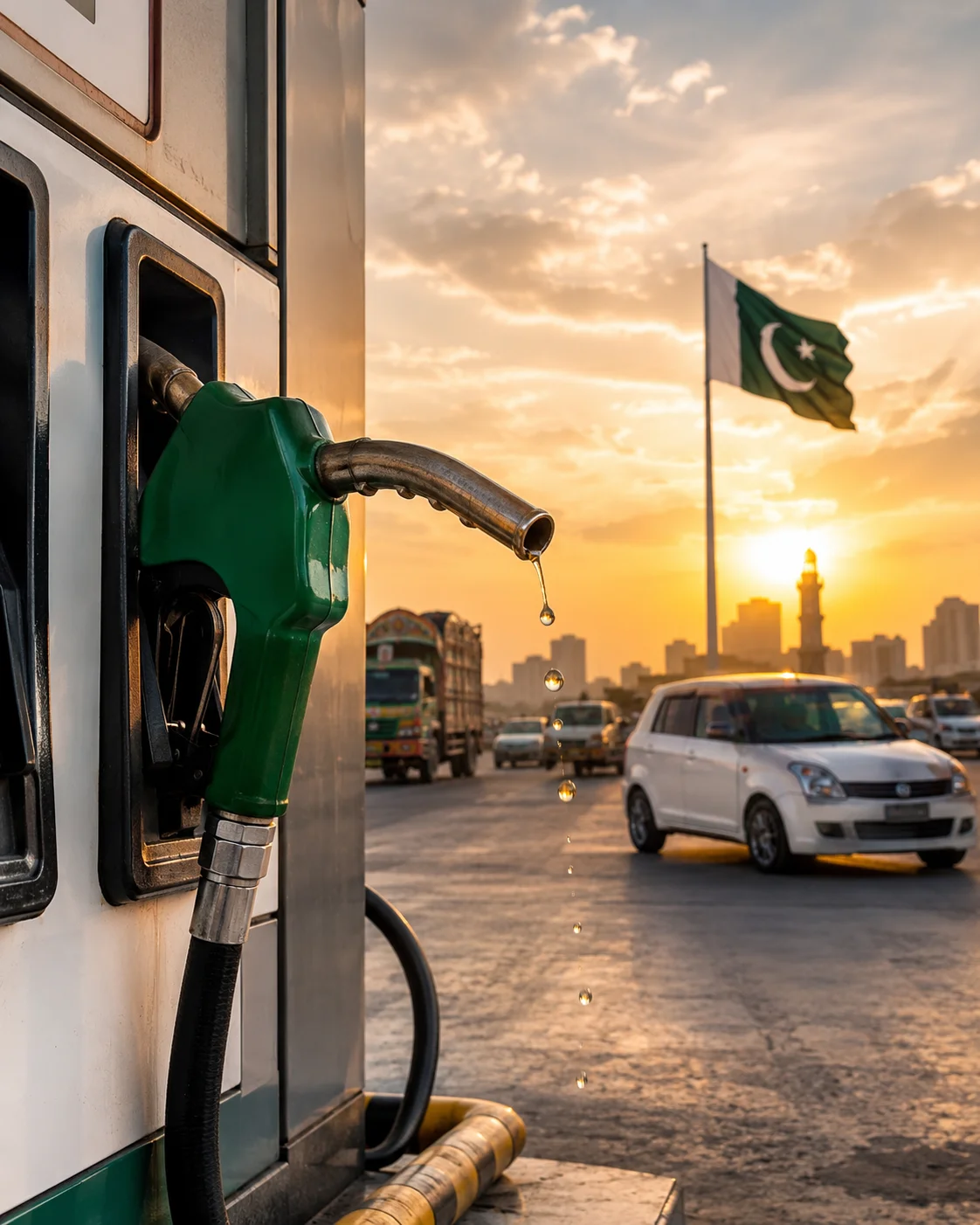
Petrol Price in Pakistan Increased by Rs13.18 Per Litre
The Petrol price in Pakistan has increased significantly after the federal government announced a fresh revision in petroleum prices, raising petrol by Rs13.18 per litre and high-speed diesel (HSD) by Rs13.80 per litre. The revised prices come just one week after motorists received a temporary reduction in fuel costs and follow a rise in international crude oil prices linked to renewed geopolitical tensions in the Middle East.
According to a notification issued by the Petroleum Division, the new fuel prices took effect after the government adjusted domestic rates to reflect higher import costs caused by rising global oil prices.
New Petrol and Diesel Prices Announced
Under the latest revision, petrol has increased from Rs297.53 per litre to Rs310.71 per litre.
High-speed diesel has risen from Rs309.50 per litre to Rs323.30 per litre.
The increase reverses last week’s relief, when fuel prices had been reduced by up to Rs1.97 per litre for a one-week period.
Revised Fuel Prices
| Fuel Type | Previous Price | New Price | Increase |
|---|---|---|---|
| Petrol | Rs297.53/litre | Rs310.71/litre | Rs13.18 |
| High-Speed Diesel | Rs309.50/litre | Rs323.30/litre | Rs13.80 |
Why Have Fuel Prices Increased?
According to the Petroleum Division, the latest increase follows a sharp rise in international crude oil prices.
Global oil markets moved higher after renewed tensions involving the United States and Iran, including reported US strikes on Iran and developments following ceasefire violations reported on July 7 and 8.
As international prices increased, Pakistan’s imported fuel costs also rose.
Brent crude traded around $77–78 per barrel, while US West Texas Intermediate (WTI) crude reached approximately $73.60 per barrel, increasing the cost of petroleum imports.
Government Raises Petroleum Levy
Alongside higher fuel prices, the federal government has also revised petroleum levy rates.
For petrol sold through retail outlets, the petroleum levy has increased from Rs70.36 per litre to Rs80 per litre.
For direct sales, the levy has been increased from Rs79 to Rs88.64 per litre.
The levy on premium HOBC/MS (95 RON) has also been raised.
Updated Petroleum Levy
- Petrol (Retail): Rs80/litre (previously Rs70.36)
- Petrol (Direct Sales): Rs88.64/litre (previously Rs79)
- Premium HOBC/MS Retail: Rs105/litre
- Premium HOBC/MS Direct Sales: Rs107.15/litre
Meanwhile, petroleum levy rates on kerosene oil, light diesel oil (LDO) and furnace oil remain unchanged.
Impact on Consumers and Inflation
Higher fuel prices are expected to increase transportation costs across Pakistan.
High-speed diesel is widely used by commercial transport, agriculture, heavy machinery and freight services. As diesel prices rise, transport costs often increase, which can contribute to higher prices for food and other goods.
Petrol is mainly consumed by motorcycles, cars and other passenger vehicles, meaning millions of daily commuters will also face higher fuel expenses.
The increase may place additional pressure on household budgets already affected by inflation.
Importance of Different Petroleum Products
Different petroleum products serve different sectors of Pakistan’s economy.
Petrol
Petrol is primarily used by motorcycles, cars and other passenger vehicles. Demand has also increased after restrictions on the use of indigenous gas in parts of Punjab.
High-Speed Diesel
High-speed diesel is the main fuel for trucks, buses, tractors and agricultural equipment. Any increase in diesel prices typically affects freight charges and agricultural production costs.
Kerosene Oil
Kerosene remains an important source of fuel in remote and mountainous areas where access to liquefied petroleum gas (LPG) is limited.
Light Diesel Oil
Light diesel oil is mainly consumed by industrial users.
Oil Industry Reports Decline in Sales
Industry representatives also reported a noticeable decline in petroleum sales during June.
According to the industry, sales dropped by as much as 20 percent, with representatives attributing the decline largely to the increasing smuggling of petroleum products from Iran.
The reported explanation reflects the views of industry representatives.
GST and Petroleum Levy Debate Continues
General Sales Tax (GST) on petroleum products remains at zero percent.
Because GST is not being collected on fuel, provincial governments do not receive revenue from petroleum sales through this tax.
Instead, the federal government continues to rely on the petroleum levy, which is retained entirely by the federal government.
Sindh has raised concerns over this arrangement, arguing that unlike GST, petroleum levy collections are not shared with the provinces.
Why This Price Increase Matters
Pakistan relies heavily on imported petroleum products, making domestic fuel prices sensitive to changes in global oil markets and geopolitical developments.
Any sustained increase in international crude prices can affect transportation, agriculture, manufacturing and overall inflation.
The latest revision comes shortly after consumers received temporary fuel price relief, highlighting how quickly international market movements can influence domestic petroleum prices.
For businesses, transport operators and households alike, the latest increase is expected to raise operating and commuting costs while adding further pressure to inflation.
Source:
- Petroleum Division Notification
- Petroleum Division, Government of Pakistan
Our audience means everything to us.
Have feedback or suggestions to make us better? We’re always listening—feel free to get in touch with us at editor@truthorahub.com





Leave a Comment