

Pakistan Virtual Assets Regulatory Authority Engages Religious Scholars on Digital Assets
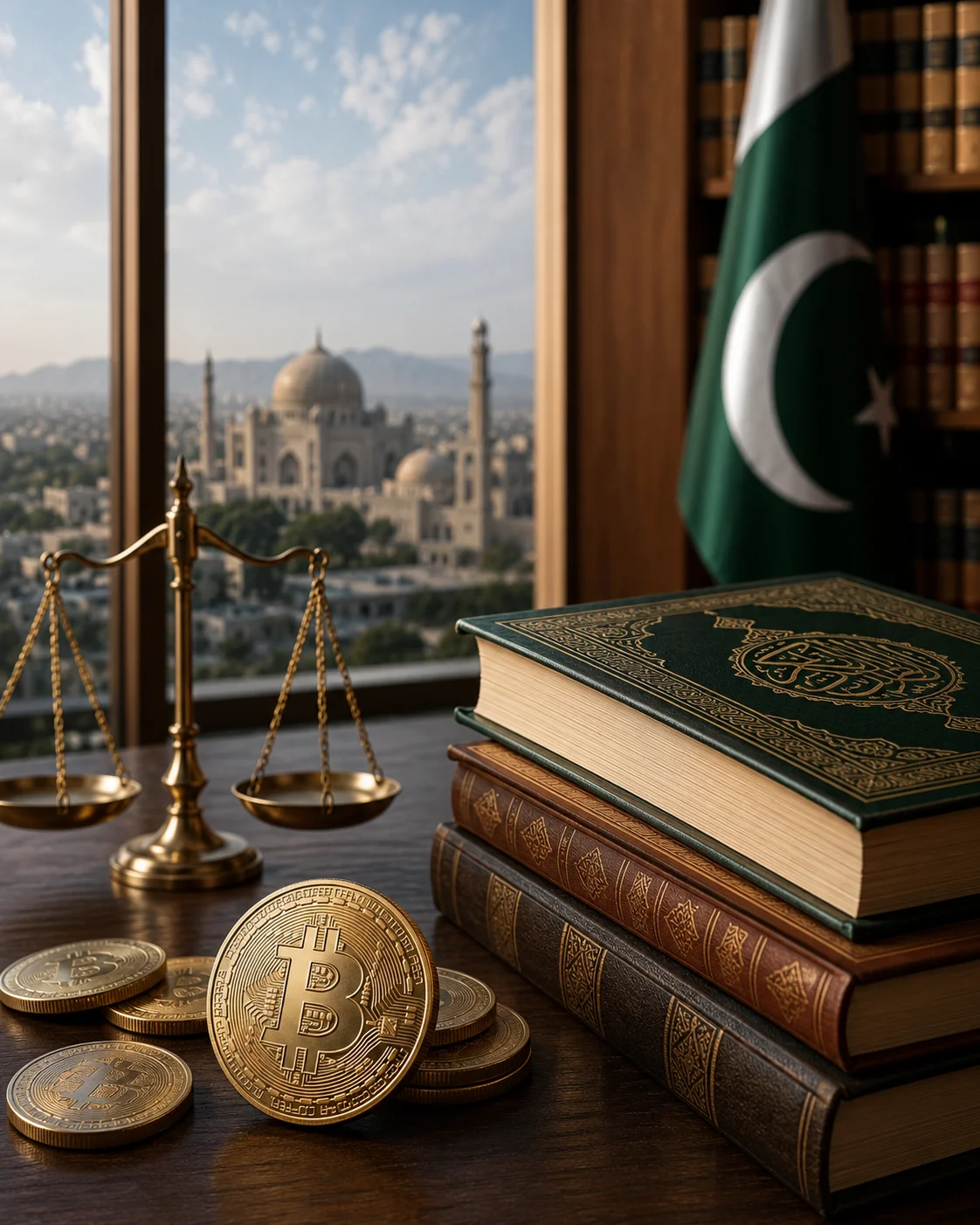
Pakistan Virtual Assets Regulatory Authority (PVARA) Chairman Bilal bin Saqib has held discussions with renowned Islamic scholar Mufti Taqi Usmani as Pakistan continues developing its regulatory framework for digital assets. The meeting focused on evaluating emerging financial technologies alongside their compliance with Islamic principles while prioritising consumer protection and financial stability.
According to a statement shared by Bilal bin Saqib on X, both sides agreed that safeguarding Pakistanis from fraud, exploitation, and financial losses should remain a central objective as the country expands its approach to blockchain technology and digital assets.
The meeting reflects Pakistan’s ongoing efforts to establish a regulated virtual asset ecosystem that balances innovation with legal, financial, and Shariah considerations.
Pakistan Virtual Assets Regulatory Authority Discusses Shariah Compliance
During the meeting, Bilal bin Saqib and Mufti Taqi Usmani exchanged views on the evolving digital asset industry and the need for careful evaluation of different technologies.
According to Saqib, digital assets should not be viewed as a single category because blockchain networks, cryptocurrencies, stablecoins, tokenised real-world assets, and other blockchain-based applications serve different purposes and carry different characteristics.
He stated that each technology deserves detailed technical analysis alongside comprehensive Shariah examination before policy decisions are made.
Saqib also stressed that consumer protection remains a shared priority. He said Pakistan’s regulatory framework should minimise financial risks while encouraging responsible innovation.
Collaboration Between Scholars and Regulators
The PVARA chairman highlighted the importance of continued dialogue between Islamic scholars, financial regulators, policymakers, and industry experts.
According to his statement, collaboration between these groups will help Pakistan develop regulations that remain consistent with Islamic principles while addressing the rapidly changing nature of blockchain and digital asset technologies.
The discussions form part of broader efforts to ensure that future regulations are informed by both religious guidance and technical expertise.
Pakistan’s Growing Digital Asset Market
Pakistan has emerged as one of the world’s fastest-growing digital asset markets despite adopting cryptocurrencies before establishing formal regulations.
According to the 2025 Global Crypto Adoption Index published by Chainalysis, Pakistan ranks third worldwide for grassroots cryptocurrency adoption, behind only India and the United States.
Several factors have contributed to this growth, including:
- A large young population with widespread smartphone access.
- One of the world’s largest freelance workforces.
- More than $38 billion in annual remittances.
- Increasing use of stablecoins by some users as protection against inflation.
Rather than introducing cryptocurrencies through legislation first, Pakistan experienced significant public adoption before beginning to build a formal regulatory framework.
Development of Pakistan’s Crypto Regulatory Framework
Pakistan has gradually introduced institutions and legislation to regulate digital assets.
National Crypto Council
In February last year, the government established the National Crypto Council (NCC) to prepare a regulatory framework for cryptocurrencies and blockchain technologies while exploring opportunities for foreign investment.
The council was also tasked with examining how blockchain innovation could be integrated into Pakistan’s financial and economic systems.
Bilal bin Saqib was appointed as the finance minister’s chief adviser on cryptocurrency matters, playing a central role in shaping the country’s digital asset strategy.
International Expertise Added
In April 2025, Binance co-founder Changpeng Zhao joined the National Crypto Council as an adviser.
His appointment reflected Pakistan’s efforts to benefit from international expertise while developing policies for virtual assets and blockchain technologies.
Strategic Bitcoin Reserve Announcement
Later in 2025, Bilal bin Saqib announced Pakistan’s first government-backed Strategic Bitcoin Reserve.
The announcement attracted international attention as Pakistan signalled its intention to explore the role of digital assets within its broader economic strategy.
Authorities have continued developing regulatory institutions alongside these initiatives.
Establishment of PVARA
Pakistan formally established the Pakistan Virtual Assets Regulatory Authority (PVARA) through a presidential ordinance in July 2025.
The authority later received statutory backing under the Virtual Assets Act 2026, which created a legal framework for regulating the country’s virtual asset sector.
Under the legislation, PVARA has been assigned responsibility for:
Licensing Digital Asset Businesses
The authority is responsible for issuing licences to virtual asset service providers operating in or from Pakistan.
Regulatory Oversight
PVARA supervises compliance with financial, operational, and cybersecurity standards applicable to licensed businesses.
Anti-Money Laundering Measures
The law requires safeguards against money laundering and terrorism financing while aligning Pakistan’s regulatory practices with international standards.
Banking Access for Licensed Providers
In April, the State Bank of Pakistan (SBP) allowed banks to open accounts for licensed virtual asset service providers.
The decision effectively replaced restrictions introduced in 2018 and marked Pakistan’s first formal step toward integrating regulated crypto businesses into the country’s banking system.
Officials said the move followed implementation of the Virtual Assets Act 2026 and would operate under strict anti-money laundering and compliance requirements.
Government Push for Digital Economy
Pakistan’s leadership has continued supporting the development of the country’s digital economy.
In May, Prime Minister Shehbaz Sharif directed authorities to accelerate implementation of an internationally aligned regulatory framework for virtual assets.
The government said the objective is to improve investor confidence, strengthen oversight, and encourage responsible innovation within Pakistan’s financial technology sector.
Officials believe a transparent regulatory environment could help attract investment while ensuring compliance with domestic laws and international financial standards.
Why the Meeting Matters
The meeting between Bilal bin Saqib and Mufti Taqi Usmani highlights Pakistan’s efforts to combine technological innovation with Islamic financial principles.
As blockchain applications continue expanding beyond cryptocurrencies into areas such as tokenised assets and digital payments, policymakers face the challenge of balancing innovation, consumer protection, regulatory oversight, and religious considerations.
The discussions also demonstrate the government’s intention to involve religious scholars in policy development as Pakistan builds a long-term framework for regulating digital assets.
While regulations continue to evolve, authorities have indicated that future policy decisions will seek to support innovation while protecting consumers and maintaining compliance with both national laws and internationally recognised financial standards.
Source:
- Dawn
- Statement by Bilal bin Saqib on X
- Chainalysis 2025 Global Crypto Adoption Index
- State Bank of Pakistan
- Government of Pakistan
Our audience means everything to us.
Have feedback or suggestions to make us better? We’re always listening—feel free to get in touch with us at editor@truthorahub.com








Leave a Comment