

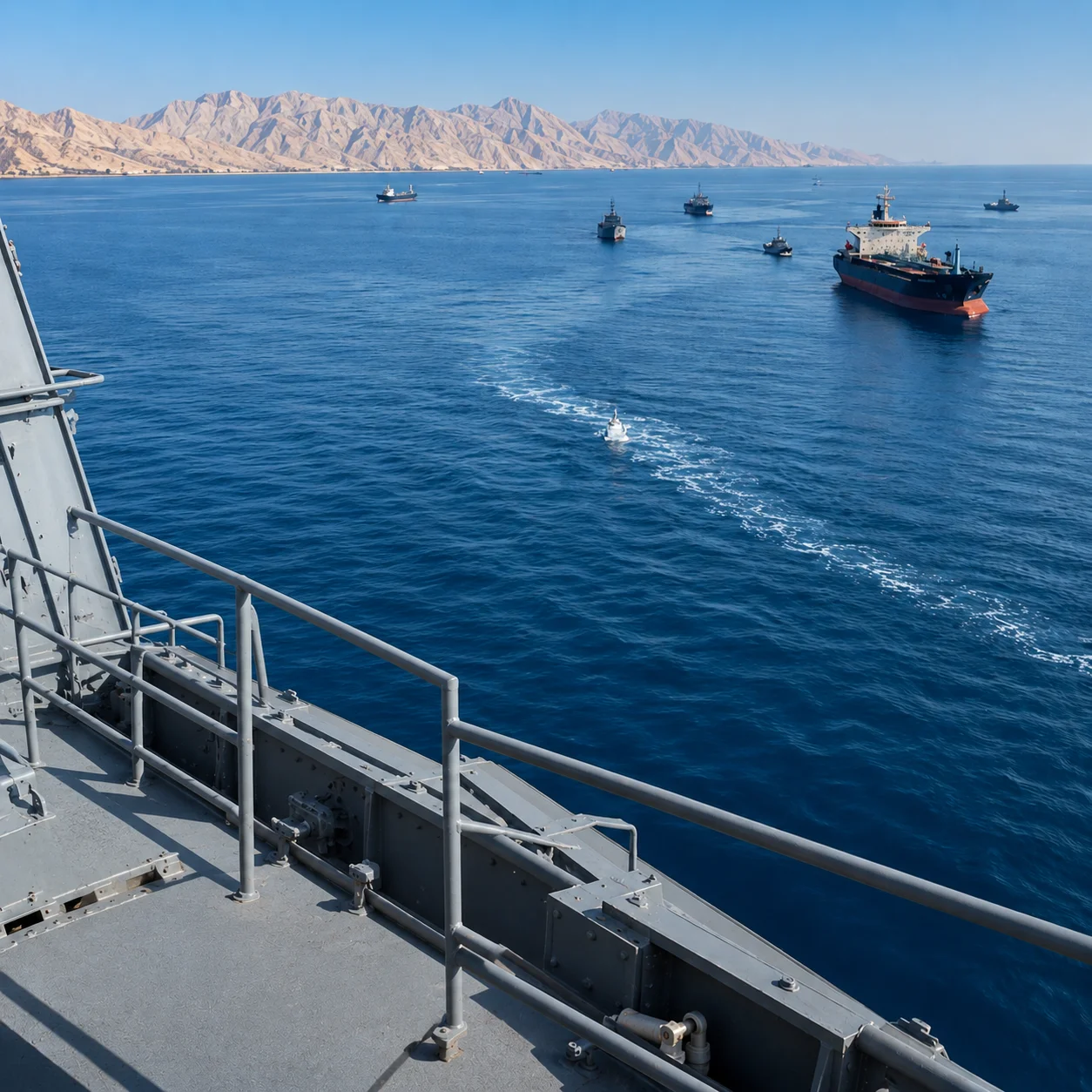
After Months of Fear and Delay, Why Are Oil Tankers Suddenly Moving Again?
The global oil market is once again standing on edge. Two massive Chinese-linked oil tankers that had remained stranded near the Strait of Hormuz for more than two months have finally departed, carrying nearly 4 million barrels of crude oil. Their sudden movement comes at a time when the United States claims a breakthrough with Iran could be close, while Tehran warns that any fresh military action could ignite a conflict far beyond the Middle East.
For weeks, the world watched nervously as tensions between the United States, Israel, and Iran pushed one of the planet’s most important shipping routes into dangerous territory. Now, with diplomacy and threats unfolding side by side, one major question remains:
Is the world truly moving toward peace, or simply preparing for the next phase of conflict?
The Tankers That Waited Through Crisis
According to shipping data tracked by LSEG and Kpler, two giant vessels — the Chinese-flagged Yuan Gui Yang and the Hong Kong-flagged Ocean Lily — successfully navigated out of the Strait of Hormuz this week.
These were not ordinary ships.
Together, the supertankers were transporting around 4 million barrels of crude oil. The cargo included Iraqi Basrah crude and Qatari Al-Shaheen crude, two highly valuable energy supplies crucial for Asian markets.
The timeline itself tells a dramatic story.
- Yuan Gui Yang loaded nearly 2 million barrels of Iraqi crude on February 27.
- Ocean Lily carried another 2 million barrels gathered from Iraq and Qatar between late February and early March.
But instead of continuing normally, both ships remained trapped in Gulf waters as military tensions exploded across the region.
Industry observers say shipping companies feared escalation could turn the Strait of Hormuz into an active conflict zone overnight.
Why the Strait of Hormuz Matters So Much
The Strait of Hormuz is not just another waterway. It is one of the world’s most critical oil arteries.
Nearly one-fifth of the world’s oil passes through this narrow route connecting the Persian Gulf to international markets. Any disruption there can instantly shake economies worldwide.
A single military strike, naval blockade, or tanker attack has the potential to:
- Push fuel prices sharply higher
- Trigger inflation worldwide
- Disrupt global supply chains
- Damage stock markets
- Increase food prices in poorer countries
That is why every movement in Hormuz is monitored closely by governments, investors, and energy traders around the world.
And when giant tankers remain stuck for months, markets begin preparing for the worst.
Trump Says the War Could End “Very Quickly”
The departure of the tankers happened shortly after US President Donald Trump claimed that negotiations involving Iran were progressing rapidly.
Speaking to American lawmakers, Trump reportedly said the conflict with Iran could end “very quickly” and hopefully “in a very nice manner.”
His comments were later reinforced by US Vice President JD Vance, who stated during a White House briefing that talks between Tehran and Washington were currently “in a pretty good spot.”
According to Vance:
“There’s a lot of back-and-forth, a lot of good progress being made.”
Those statements briefly calmed oil markets and gave investors hope that a broader regional war might still be avoided.
But behind the scenes, uncertainty remains extremely high.
Iran Issues a Chilling Warning
While Washington signaled optimism, Iran’s Islamic Revolutionary Guard Corps (IRGC) issued one of its strongest warnings in recent months.
In statements carried by Iranian media outlets, the IRGC warned that if attacks against Iran resumed, Tehran’s retaliation would not remain limited to the Middle East.
The message was direct and aggressive.
Iran warned that future military escalation could bring destruction to “places never imagined.”
Security analysts believe this statement was designed to send a global signal — not only to Israel and the United States, but also to Western allies and international energy markets.
Iran has repeatedly threatened to target US military bases in the region if attacked again. However, the latest warning suggests Tehran may now be hinting at broader strategic retaliation beyond regional borders.
That possibility alone is enough to unsettle global markets.
Oil Prices Drop Slightly — But Experts Say the Danger Is Far From Over
Following the White House comments, Brent crude prices briefly eased, falling toward $110 per barrel.
Yet energy analysts say investors should not assume stability has returned.
Experts speaking to Reuters and market intelligence firms warned that even if a diplomatic agreement is reached, oil supplies may not recover immediately.
Years of sanctions, conflict fears, disrupted shipping patterns, and military uncertainty have already damaged supply confidence.
Emril Jamil, a senior oil analyst at LSEG, explained that prices may continue rising because supply chains cannot instantly return to normal.
In simple terms: even peace takes time to repair economic damage.
And the world is already feeling the consequences.
The Hidden Victims: Ordinary Families Around the World
When oil prices rise, it does not only affect fuel stations.
The impact spreads everywhere.
Transport becomes expensive. Food costs rise. Electricity prices increase. Manufacturing slows down. Businesses cut spending.
The United Nations recently reduced its global growth forecast to 2.5%, blaming higher energy costs and weakening trade activity linked to geopolitical instability.
But perhaps the most painful effect is felt in developing countries.
The UN warned that low-income families suffer the most because food and energy consume a major portion of household spending.
For millions of families already struggling with inflation, rising oil prices can quickly become a survival issue.
This is why the Strait of Hormuz matters not only to governments and oil traders — but also to ordinary people buying groceries, paying electricity bills, or trying to afford transportation.
South Korea Also Monitoring the Situation Closely
The crisis is not only affecting China and the Middle East.
South Korean Foreign Minister Cho Hyun confirmed during a parliamentary hearing that a Korean crude vessel was also passing through the Strait this week.
Asian economies remain heavily dependent on Gulf energy supplies, making the region’s stability critically important.
Countries like China, Japan, South Korea, and India closely monitor every military and diplomatic development in the Gulf because even temporary disruptions can affect industrial production and national energy reserves.
Is a Real Deal Actually Close?
That remains the biggest unanswered question.
The United States continues signaling confidence that Iran may agree to terms preventing further escalation.
Trump himself claimed he had nearly approved military action recently before delaying the decision at the last moment.
At the same time, Tehran continues issuing warnings while insisting it will respond forcefully to any attack.
This combination of diplomacy and threats has created a dangerous atmosphere where markets react to every speech, military movement, and shipping update.
Some experts believe both sides genuinely want to avoid full-scale war because the economic consequences would be catastrophic globally.
Others argue that the situation remains extremely fragile, where even one mistake could trigger another major regional conflict.
The World Is Watching the Gulf Again
For now, the successful departure of the Chinese-linked oil tankers offers a temporary sign of relief.
But relief is not the same as stability.
The Strait of Hormuz remains one of the most politically sensitive and economically important waterways on Earth. Every tanker that passes through it now carries more than oil — it carries the weight of global economic anxiety.
The coming days may determine whether diplomacy finally cools tensions or whether the region moves closer to another dangerous chapter.
And until a lasting agreement is reached, markets, governments, and ordinary families worldwide will continue watching every movement in the Gulf with nervous attention.
Source:
- Reuters
- Al Jazeera
- Bloomberg
- CNBC
- The Guardian
- Associated Press
Our audience means everything to us.
Have feedback or suggestions to make us better? We’re always listening—feel free to get in touch with us at truthora2026@gmail.com





Leave a Comment