

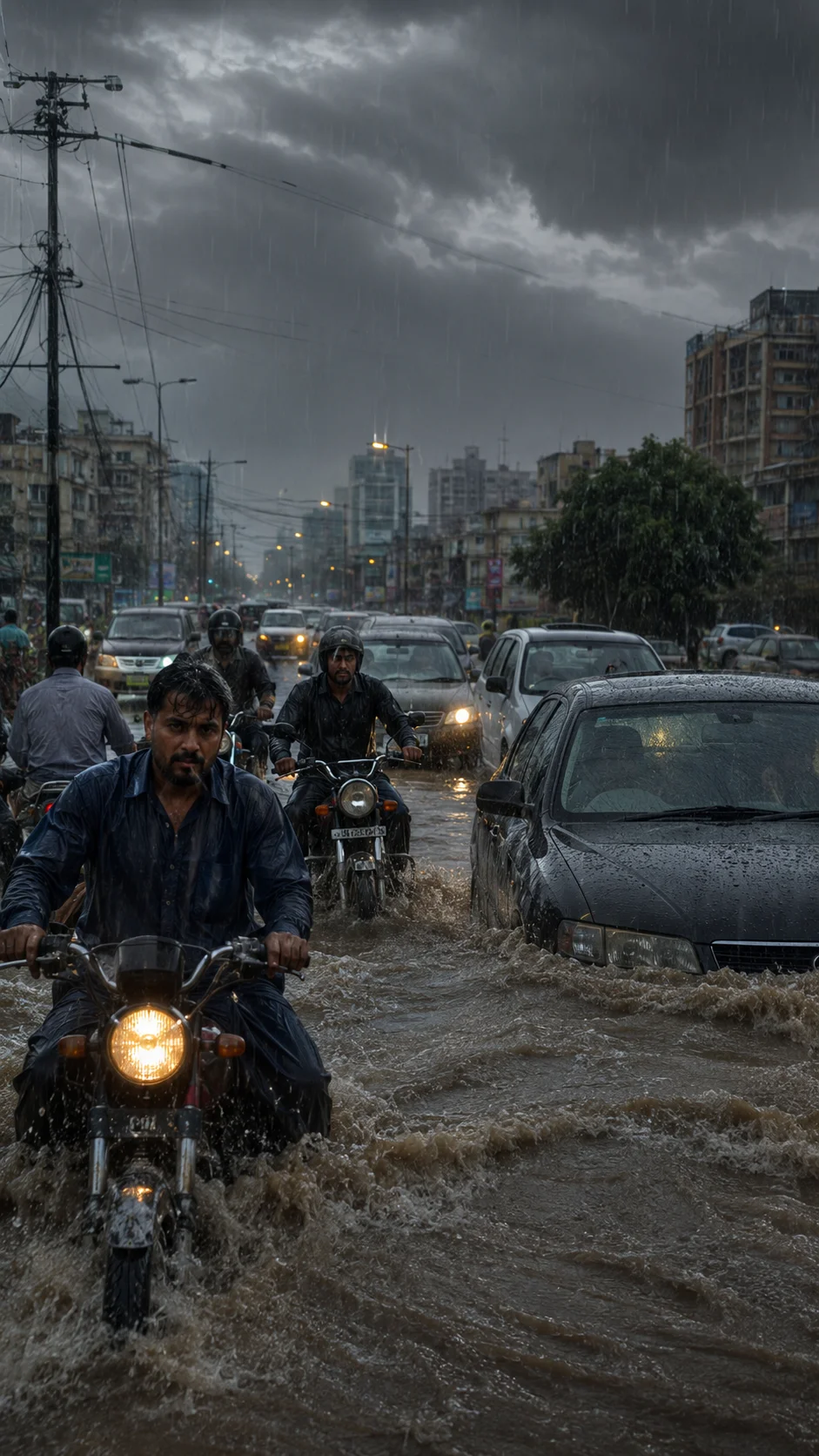
Karachi Urban Flooding: Why Heavy Rain Floods the City
Karachi urban flooding has become a recurring challenge during periods of intense monsoon rainfall, with water accumulating on roads, disrupting traffic and affecting homes, businesses and daily life. While heavy rainfall can overwhelm infrastructure in any major city, Karachi’s flood risk is shaped by several interconnected problems, including drainage limitations, blocked waterways, rapid urbanisation, solid waste, construction around natural drainage routes and the vulnerability of low-lying areas.
Pakistan’s largest city has expanded significantly over the decades, placing growing pressure on municipal infrastructure. As Karachi continues to develop, its ability to safely carry large volumes of rainwater away from densely populated areas has become an increasingly important urban planning issue.
Understanding why the city floods requires looking beyond rainfall alone.
Why Karachi Urban Flooding Happens During Heavy Rain
Rain is the immediate trigger for most urban flooding, but the amount of rainfall is only one part of the problem.
The speed at which rain falls, the condition and capacity of drainage infrastructure, the location of a neighbourhood and the availability of natural routes for water to escape can all influence whether an area becomes flooded.
During particularly intense rainfall, large quantities of water can reach roads and drains within a relatively short period. If the drainage network cannot remove that water at the same rate, it begins accumulating on streets and other low points.
This helps explain why some areas of Karachi can experience serious waterlogging while other neighbourhoods may be less severely affected during the same weather system.
Karachi’s Drainage Network Faces Heavy Pressure
Karachi depends on storm-water drains, including the network commonly referred to as nullahs, to move rainwater through the city and eventually toward larger waterways and the Arabian Sea.
The effectiveness of this system becomes especially important during the monsoon.
When rainfall exceeds the amount of water that drains can carry away quickly, roads and residential areas may begin to flood. The problem can become worse where drainage infrastructure has insufficient capacity, requires maintenance, has been damaged or contains obstructions.
Even when drains remain operational, extremely intense rainfall can produce runoff faster than the available system can discharge it.
This means that improving Karachi’s flood resilience requires both routine maintenance and longer-term infrastructure planning.
Blocked Nullahs Can Restrict Rainwater Flow
Solid waste can significantly reduce the effectiveness of storm-water drainage.
Plastic, household rubbish, packaging materials and construction debris can enter drains and interfere with the movement of water.
A nullah does not have to be completely blocked before it creates a flooding risk. Any substantial reduction in its effective capacity can slow water movement at a time when large volumes of rainwater are entering the drainage network.
Pre-monsoon cleaning can therefore play an important role in reducing obstructions.
However, drain cleaning by itself cannot address every cause of Karachi urban flooding. Broader problems involving drainage capacity, waste management, urban development and sewerage infrastructure also require attention.
Encroachments Can Affect Natural Drainage Routes
Karachi’s natural landscape contains drainage channels that historically helped move rainwater toward the coast.
As the city expanded, development occurred around many existing drainage corridors.
Where waterways become narrowed or their natural paths are restricted, less space may remain available for large quantities of storm water to move safely through the city.
This can increase pressure on surrounding drainage infrastructure during intense rainfall.
Protecting important drainage corridors is therefore not simply an environmental concern. It is also an important part of urban flood management.
Any action involving existing settlements or structures around drainage channels, however, requires lawful procedures and careful planning while taking broader social and urban considerations into account.
Rapid Urbanisation Creates More Surface Runoff
Karachi’s enormous urban expansion has also changed how rainfall interacts with the ground.
Open soil and undeveloped land can absorb some rainwater. Roads, concrete buildings, parking areas and other paved surfaces have much lower absorption capacity.
As more land becomes covered by impermeable surfaces, a greater proportion of rainfall remains above ground and becomes surface runoff.
That water then moves toward roads, low-lying areas and storm-water drains.
The result is greater pressure on drainage infrastructure, particularly when intense rain falls within a short period.
For a rapidly growing metropolitan area, drainage planning therefore needs to develop alongside housing, road and commercial construction.
Why Low-Lying Areas Flood More Easily
Karachi’s flood risk is not evenly distributed across the city.
Local elevation and topography can strongly influence where rainwater accumulates.
Water naturally moves from higher ground toward lower elevations. Consequently, low-lying roads and neighbourhoods may receive runoff from surrounding areas in addition to the rain falling directly over them.
If these locations lack sufficient drainage outlets — or if available drains are obstructed or overwhelmed — water can remain after rainfall has ended.
Why Underpasses Are Particularly Vulnerable
Underpasses require particular attention because their road surfaces are deliberately constructed below surrounding ground levels.
Rainwater can naturally move toward these lower points.
If pumping or drainage systems cannot remove incoming water quickly enough, an underpass can become waterlogged and potentially dangerous for motorists.
This makes effective drainage and maintenance particularly important around depressed road infrastructure.
Sewerage Problems Can Make Flooding More Serious
Storm-water drainage and sewerage serve different purposes.
Storm drains are designed to carry rainfall runoff, while sewerage infrastructure handles wastewater.
Problems can arise when these systems become overloaded, damaged or improperly interconnected.
During heavy rainfall, additional water entering already pressured infrastructure can contribute to overflow.
Where wastewater mixes with floodwater, the consequences extend beyond transport disruption and property damage. Contaminated standing water can also create sanitation and public-health concerns for residents.
Improving flood management therefore requires attention not only to storm-water drains but also to the wider sewerage infrastructure.
Construction Can Change Where Rainwater Travels
Urban development can alter the natural movement of water.
Roads, housing schemes, commercial projects and other construction can change ground elevations, slopes and existing drainage pathways.
If drainage requirements are not adequately incorporated into development planning, rainwater that once moved through one route may begin accumulating somewhere else.
This highlights the importance of assessing storm-water movement as part of major urban development projects.
Planning for drainage before construction can help reduce the risk of creating new waterlogging points as the city expands.
Why Karachi Can Flood After a Short Rainfall
Flooding is not determined solely by the total amount of rain recorded.
Rainfall intensity is equally important.
A large volume of water falling over a short period can place immediate pressure on drainage infrastructure. The same amount of rainfall spread over a longer period may allow drains more time to carry water away.
Highly localised conditions can also make a major difference.
A blocked drainage outlet, depressed road, restricted nullah or other local infrastructure problem can cause one neighbourhood to experience significant water accumulation while another area remains relatively clear.
This is one reason urban flooding can vary considerably across Karachi during the same period of rainfall.
Climate Change Adds Another Long-Term Challenge
Climate change has become an increasingly important consideration for cities preparing for extreme weather.
A warmer atmosphere can hold more moisture, potentially contributing to conditions that allow intense rainfall events to become more severe.
For a large coastal city such as Karachi, this adds another dimension to long-term flood planning.
Climate change should not be treated as the sole explanation for every individual flooding event. Local infrastructure, rainfall intensity, drainage conditions, land use and topography remain important factors.
However, the possibility of more intense extreme rainfall increases the importance of strengthening infrastructure and improving urban resilience.
What Can Karachi Do to Reduce Urban Flooding?
There is no single intervention capable of eliminating Karachi’s flooding problem.
Reducing the risk requires coordinated action across infrastructure, waste management, development planning and municipal governance.
Important measures can include:
- Regular inspection and cleaning of storm-water drains and nullahs
- Preventing household and commercial waste from entering waterways
- Strengthening municipal solid-waste collection
- Protecting important natural drainage corridors
- Addressing critical obstructions and encroachments through lawful, properly planned measures
- Increasing the capacity and reliability of storm-water drainage infrastructure
- Improving sewerage networks
- Making drainage assessments part of new construction and development approvals
- Identifying and mapping areas with higher urban flood risk
- Expanding permeable surfaces where practical
- Developing urban green spaces that can help manage runoff
- Strengthening rainfall monitoring and flood-warning systems
- Improving coordination among authorities responsible for drainage, roads, waste and sewerage
These measures would need to form part of a broader long-term strategy rather than being limited to emergency interventions immediately before or during the monsoon.
Karachi’s Flooding Challenge Is About More Than Rain
Heavy monsoon rainfall triggers urban flooding, but the impact of that rainfall depends greatly on how effectively a city can absorb, channel and discharge water.
In Karachi, rapid urban expansion has increased pressure on storm-water drainage, sewerage, waste-management systems and natural waterways.
Concrete development also means that less rainfall can be absorbed directly into the ground, increasing the amount of surface runoff entering roads and drains.
Routine cleaning of nullahs remains important, particularly before the monsoon, but lasting improvements require a broader approach.
Investment in drainage capacity, stronger waste management, protection of natural drainage corridors, better sewerage infrastructure and more effective urban planning could all contribute to reducing the city’s vulnerability.
As Karachi continues to grow, managing storm water will remain an important part of making the city more resilient to intense rainfall and future climate-related risks.
Disclaimer: This article provides a general explanatory overview of factors associated with urban flooding in Karachi. The causes, duration and severity of flooding can vary between neighborhoods and individual rainfall events.
Source:
- Information supplied in the source material provided for this article
No external news reports, official statements or third-party sources were supplied or independently cited in the source material, so no additional attribution has been invented.
Our audience means everything to us.
Have feedback or suggestions to make us better? We’re always listening—feel free to get in touch with us at editor@truthorahub.com






Leave a Comment