

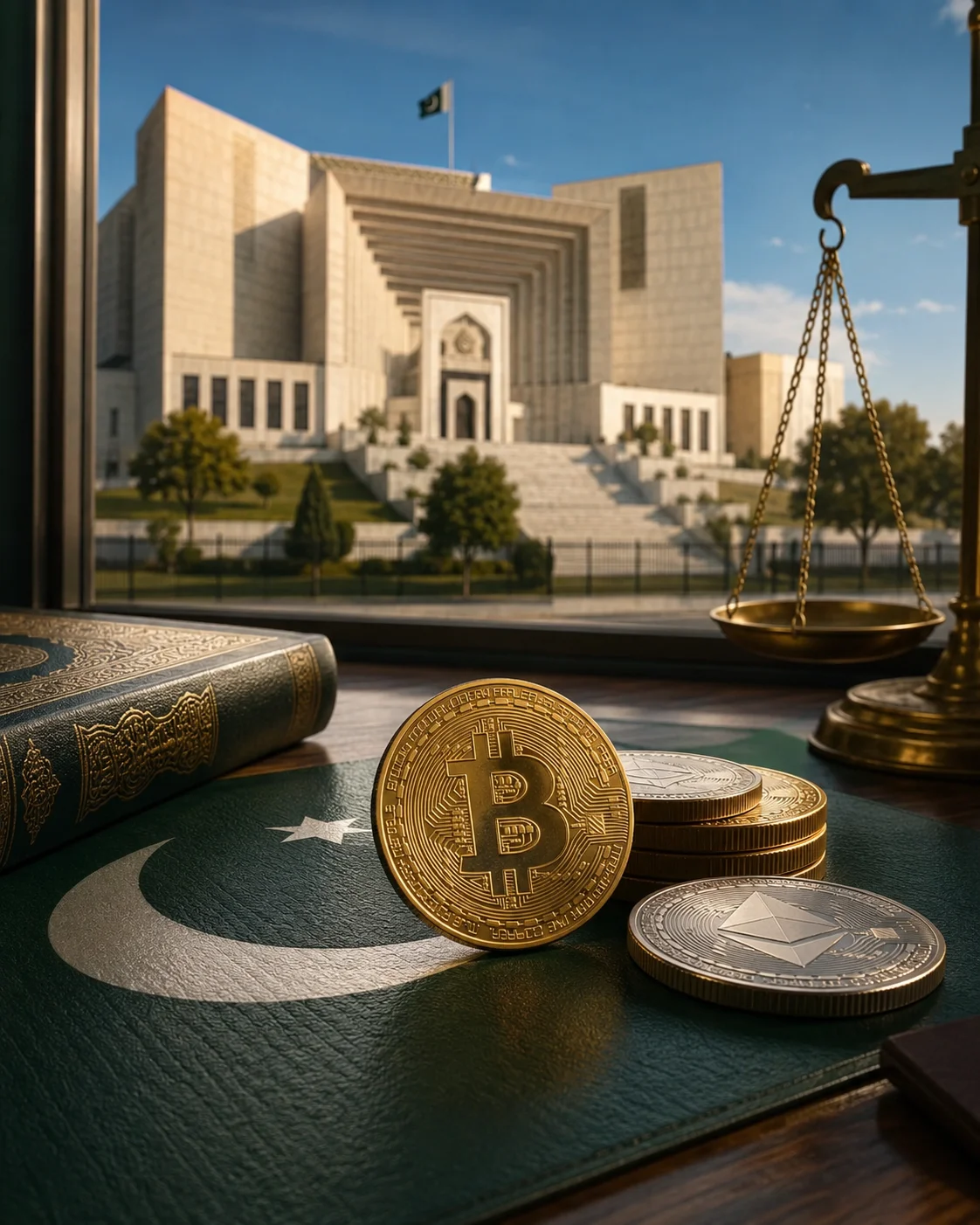
Pakistan Crypto Regulation: PVARA Chief Meets Mufti Taqi Usmani Over Sharia Debate
Pakistan crypto regulation has entered a new phase after the country’s top digital assets regulator met with leading Islamic scholar Mufti Taqi Usmani to discuss the Sharia status of cryptocurrencies and blockchain-based financial products. The meeting comes days after a widely circulated fatwa declared purchases made using USDT and other cryptocurrencies impermissible under Islamic law, prompting renewed discussion about how Pakistan should regulate emerging digital assets.
PVARA Chairman Bilal bin Saqib said he held a constructive meeting with Mufti Taqi Usmani, stressing that while consumer protection should remain a priority, different categories of digital assets deserve separate technical and Sharia evaluations rather than being judged under a single framework.
Pakistan Crypto Regulation Faces Sharia Compliance Debate
The discussion highlights an important challenge as Pakistan develops its legal framework for virtual assets. The country is moving ahead with plans to regulate cryptocurrency exchanges, introduce tokenized financial products, and explore a sovereign stablecoin, all while ensuring compliance with Islamic finance principles.
Following the meeting, Bilal bin Saqib said regulators, religious scholars, and technology experts should continue working together to examine blockchain-based products individually.
According to his public statement, technologies such as stablecoins, tokenized real-world assets, and other blockchain applications differ significantly in both design and purpose. As a result, he argued they should receive separate technical and Sharia assessments instead of being treated as one category.
However, he did not indicate that Mufti Taqi Usmani had changed his previously expressed religious opinion.
Fatwa Declared Crypto Purchases Impermissible
The debate follows the circulation of a fatwa issued on June 10 by Mufti Taqi Usmani and other scholars associated with Darul Ifta at Jamia Darul Uloom Karachi.
The ruling concluded that cryptocurrencies do not qualify as “maal” (recognized wealth) under Sharia and described them as digital numerical records rather than tangible or legally recognized assets.
The scholars specifically included USDT and other cryptocurrency tokens in their ruling.
According to the fatwa, purchases made using cryptocurrency—including physical books and digital educational courses—were considered invalid. The ruling further instructed that purchased books should be returned where possible and digital course materials should not be used or transferred.
Because the fatwa addressed both physical goods and digital services, its implications extend beyond cryptocurrency trading and touch on everyday commercial transactions conducted using digital assets.
Meeting Did Not Reverse Religious Opinion
Although Bilal bin Saqib described his meeting with Mufti Taqi Usmani as constructive, he did not state that the scholar had revised or withdrawn the fatwa.
Instead, he emphasized continued dialogue between regulators, Islamic finance experts, and blockchain specialists as Pakistan develops its cryptocurrency framework.
The meeting suggests that religious guidance will likely remain an important consideration as Pakistan expands its digital asset ecosystem.
Virtual Assets Act Shapes Pakistan’s Crypto Future
The issue carries significant regulatory importance because Pakistan recently established a formal legal framework for digital assets.
Parliament passed the Virtual Assets Act in March, creating the Pakistan Virtual Assets Regulatory Authority (PVARA) as the country’s permanent federal regulator for the sector.
The authority has been empowered to:
- License cryptocurrency exchanges
- Regulate digital asset custodians
- Supervise token issuers
- Develop regulatory standards for virtual asset businesses
A key feature of the law is the requirement that licensed firms ensure their products and services comply with Sharia principles under the guidance of Islamic finance scholars.
This framework could allow regulators to distinguish between different types of digital assets, including unbacked cryptocurrencies, fiat-backed stablecoins, and tokenized securities.
That distinction reflects the position highlighted by Bilal bin Saqib following his meeting with Mufti Taqi Usmani.
Different Views on Stablecoins and Blockchain Assets
The current debate centres on whether all blockchain-based assets should be treated the same under Islamic finance.
While the fatwa broadly assessed USDT alongside other cryptocurrencies, Bilal bin Saqib argued that different blockchain products serve different economic purposes.
For example, a fiat-backed stablecoin, tokenized government bond, or blockchain-based real-world asset may operate differently from decentralized cryptocurrencies such as Bitcoin.
Regulators are therefore considering whether these distinctions should influence future Sharia assessments and licensing decisions.
Pakistan Continues Expanding Digital Asset Plans
Pakistan has significantly accelerated its digital asset strategy throughout 2025.
PVARA has previously invited international cryptocurrency companies to apply for operating licences in Pakistan, citing an estimated 40 million crypto users nationwide.
Binance and HTX have already received preliminary regulatory clearances. However, those approvals do not yet permit either exchange to begin commercial operations within Pakistan.
Separately, the Finance Ministry signed a non-binding agreement under which Binance would provide advisory support for the possible tokenization of up to $2 billion in sovereign bonds, treasury bills, and commodity reserves.
Bilal bin Saqib has also said Pakistan intends to introduce a sovereign stablecoin.
In addition, the government has previously announced plans for a state-held Bitcoin reserve and allocated 2,000 megawatts of electricity to support Bitcoin mining and artificial intelligence data centres.
Why the Debate Matters
The outcome of discussions between regulators and Islamic scholars could shape the future of Pakistan’s digital economy.
Because the country’s crypto licensing framework requires Sharia compliance, religious opinions may directly influence which blockchain products are approved for public use.
Industry experts believe continued engagement between regulators, scholars, and technology specialists will be necessary as digital finance evolves.
At present, there has been no indication that Pakistan’s broader cryptocurrency plans have changed. However, the recent discussions demonstrate that Islamic finance considerations will remain central to the country’s regulatory approach.
As Pakistan seeks to balance innovation with religious and legal requirements, future policies are likely to focus on distinguishing between different types of blockchain-based financial products while maintaining investor protection and regulatory oversight.
Source:
- Statement by PVARA Chairman Bilal bin Saqib (X)
- Darul Ifta, Jamia Darul Uloom Karachi Fatwa
- Pakistan Virtual Assets Act
Our audience means everything to us.
Have feedback or suggestions to make us better? We’re always listening—feel free to get in touch with us at editor@truthorahub.com





Leave a Comment