

Could a Simple Nasal Treatment Change the Future of Brain Cancer Therapy?
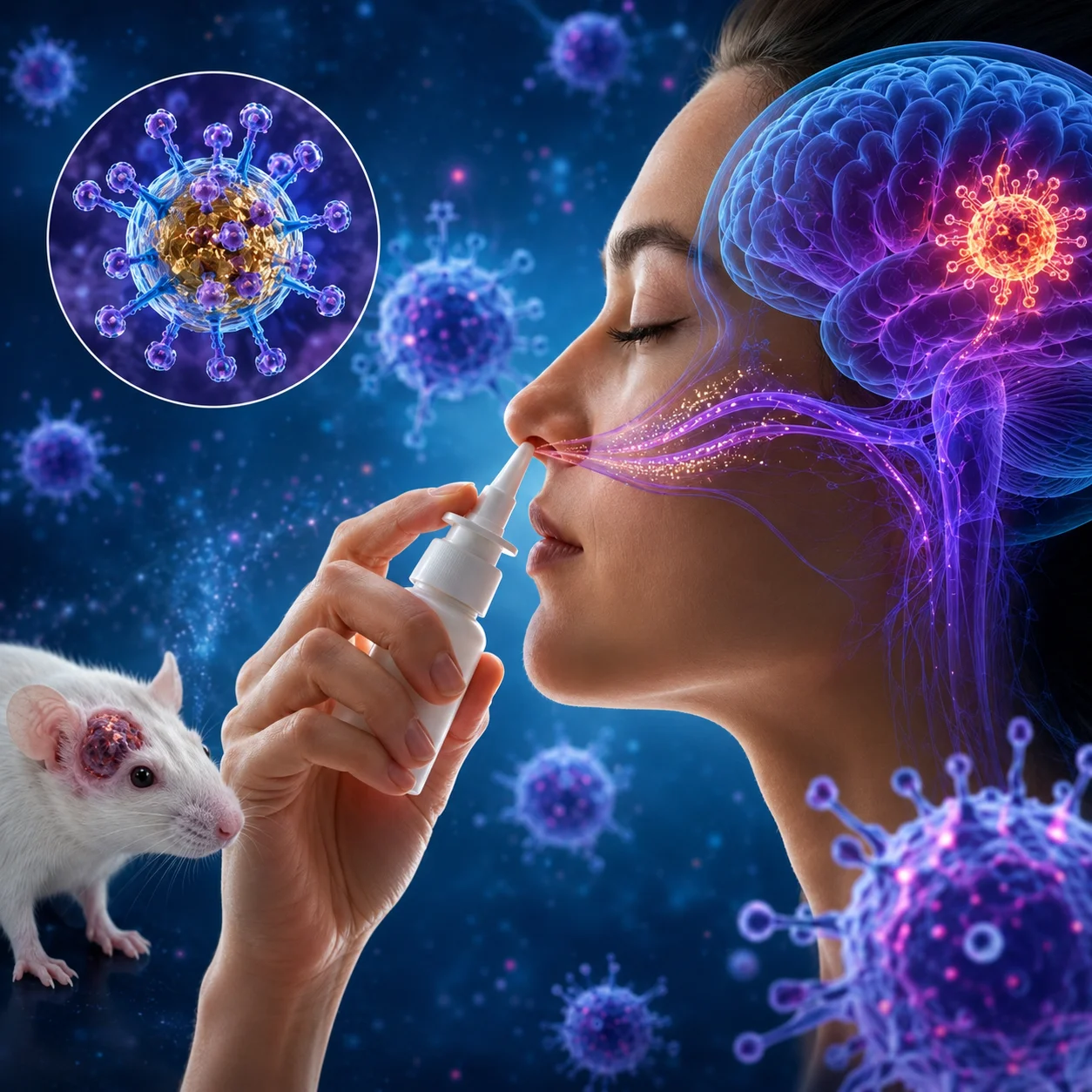
In what many researchers are calling a breakthrough moment in cancer science, scientists in the United States and Japan have developed an experimental nasal treatment that may one day help destroy aggressive brain tumors — without the need for surgery.
The new therapy is being explored as a possible weapon against glioblastoma, one of the deadliest and fastest-growing forms of brain cancer known to medicine.
For years, doctors and researchers around the world have struggled to treat glioblastoma effectively. Even after surgery, chemotherapy, and radiation, the disease often returns aggressively. Patients diagnosed with glioblastoma usually face extremely difficult survival odds, making the search for new treatments one of the biggest priorities in cancer research.
Now, a team led by researchers from Washington University in St. Louis and scientific collaborators in Japan believe they may have found a completely different approach — a noninvasive nasal delivery system that activates the body’s own immune defenses inside the brain.
But could this experimental treatment truly become the future of brain cancer therapy? Or is the excitement still too early?
Understanding Glioblastoma: Why Is It So Dangerous?
Glioblastoma is considered the most aggressive type of brain cancer because of how rapidly it grows and spreads through brain tissue.
Unlike some tumors that remain localized, glioblastoma infiltrates healthy brain cells, making it incredibly difficult to remove completely through surgery.
Patients often experience symptoms such as:
- Severe headaches
- Memory problems
- Vision disturbances
- Seizures
- Difficulty speaking
- Personality or mood changes
Even with advanced treatment, the average survival rate remains painfully low.
One of the biggest challenges is that the brain naturally protects itself through a defense system known as the blood-brain barrier.
The Blood-Brain Barrier: The Body’s Strongest Shield
The blood-brain barrier acts like a highly selective security wall around the brain.
Its purpose is to block harmful toxins, bacteria, and dangerous substances from entering brain tissue. While this protection is essential for survival, it also creates a major obstacle for doctors trying to deliver medicines directly to brain tumors.
Many cancer drugs simply cannot penetrate the barrier effectively.
This is one reason why treating brain cancer remains far more difficult than treating tumors in other parts of the body.
Researchers worldwide have spent decades trying to discover safer ways to bypass or overcome this barrier without damaging the brain itself.
And now, scientists may have found an unexpected route: the nose.
How the Nasal Therapy Works
The newly developed treatment functions similarly to a nasal spray.
Instead of relying on surgery or injections into the brain, the therapy travels through nasal pathways that connect directly to the central nervous system.
This allows the treatment to potentially bypass the blood-brain barrier naturally.
The research team engineered special compounds known as STING activators into microscopic nanoparticle structures called spherical nucleic acids.
These particles are stabilized using gold nanoparticles.
While the science sounds highly technical, the goal is surprisingly straightforward:
activate the immune system inside the brain so it can recognize and attack cancer cells.
What Are STING Activators?
The term “STING” refers to a biological immune signaling pathway inside the body.
Scientists have discovered that activating this pathway can trigger powerful immune responses against tumors.
In many cancers, especially glioblastoma, tumors suppress immune activity, effectively hiding themselves from the body’s natural defenses.
The experimental therapy attempts to reverse that process.
Once delivered through the nasal route, the nanoparticles help stimulate immune cells to recognize the tumor as a threat.
Researchers believe this could allow the immune system to directly fight the cancer rather than relying entirely on chemotherapy or radiation.
Why Gold Nanoparticles Were Used
One of the most fascinating aspects of the research involves gold particles.
The spherical nucleic acids are built around tiny gold nanoparticle cores, which help protect the treatment compounds from breaking down before they reach the brain.
Without protection, many biological compounds degrade too quickly inside the body to remain effective.
The nanoparticles essentially act like microscopic delivery vehicles.
This technology also improves stability and may increase the amount of treatment reaching tumor tissue.
Scientists say the combination of nasal delivery and nanoparticle protection could open entirely new possibilities for treating neurological diseases in the future.
What Happened During Animal Testing?
The experimental treatment was tested in mice with glioblastoma tumors.
According to findings published in the 2025 edition of the Proceedings of the National Academy of Sciences (PNAS), the therapy produced highly encouraging results.
Researchers observed:
- Strong immune activation inside the brain
- Slower tumor growth
- Improved anti-cancer immune responses
- Increased survival in animal models
Perhaps most importantly, the therapy achieved these effects without invasive surgery.
This is what makes the research especially exciting for scientists around the world.
For decades, brain cancer treatment has largely depended on surgical removal combined with radiation and chemotherapy. A noninvasive alternative could dramatically change how future patients are treated.
But Is It Ready for Humans Yet?
Not yet.
And this is where reality becomes important.
Although the results appear promising, the treatment remains in an early experimental stage. So far, it has only been tested in animals.
Human clinical trials are still required before doctors can determine:
- Whether the treatment is safe for people
- How effective it truly is
- What side effects may occur
- Whether it works alongside existing therapies
Medical breakthroughs often generate excitement during animal testing, but not every successful mouse study leads to approved human treatments.
Researchers themselves are being careful not to overpromise results too early.
Could It Work With Existing Cancer Treatments?
Scientists believe the therapy may eventually work best when combined with existing immunotherapy drugs.
Immunotherapy has already transformed treatment for certain cancers by helping the immune system recognize and destroy tumors more effectively.
However, brain tumors have remained especially difficult because of immune suppression inside the brain environment.
Researchers hope the nasal therapy could strengthen immune activity enough to make current immunotherapies far more effective against glioblastoma.
If future studies confirm this, the approach could become part of combination treatment plans rather than replacing existing therapies entirely.
Why This Research Matters Globally
Brain cancer affects families worldwide regardless of nationality, age, or background.
Glioblastoma has taken the lives of countless patients despite decades of medical advancement.
What makes this research important is not only the possibility of a new treatment — but also the completely different strategy behind it.
Instead of trying to force drugs through the blood-brain barrier, scientists are exploring natural biological pathways and immune-based solutions.
This reflects a larger shift happening in modern medicine:
moving away from highly invasive treatments toward smarter, targeted, and immune-driven therapies.
Could Nasal Medicine Become the Future of Brain Treatments?
The idea may sound futuristic, but nasal drug delivery is gaining serious scientific attention.
Researchers are studying nasal pathways for potential treatment of:
- Alzheimer’s disease
- Parkinson’s disease
- Brain inflammation
- Neurological disorders
- Stroke recovery
The nose provides one of the few direct access points to the brain without surgery.
If scientists successfully refine this technology, future medicine could look very different from today’s traditional methods.
Imagine treating certain brain conditions using advanced nasal therapies instead of invasive operations.
That possibility is now being explored more seriously than ever before.
A Breakthrough Filled With Hope — But Also Patience
For patients and families affected by glioblastoma, any new development naturally brings hope.
And this research genuinely represents an exciting scientific step forward.
But experts stress the importance of patience.
The road from laboratory discovery to approved medical treatment is long and complex. Clinical trials, safety studies, government approvals, and large-scale testing can take years.
Still, the findings demonstrate something important:
scientists are continuing to push boundaries in the fight against one of the world’s deadliest cancers.
And sometimes, the next major medical breakthrough begins with an idea as simple as a nasal spray.
Source:
- Proceedings of the National Academy of Sciences (PNAS)
- Reuters
- Medical News Today
- ScienceDaily
- Washington University School of Medicine
- Nature Reviews Cancer
Have feedback or suggestions to make us better? We’re always listening—feel free to get in touch with us at truthora2026@gmail.com









Leave a Comment