

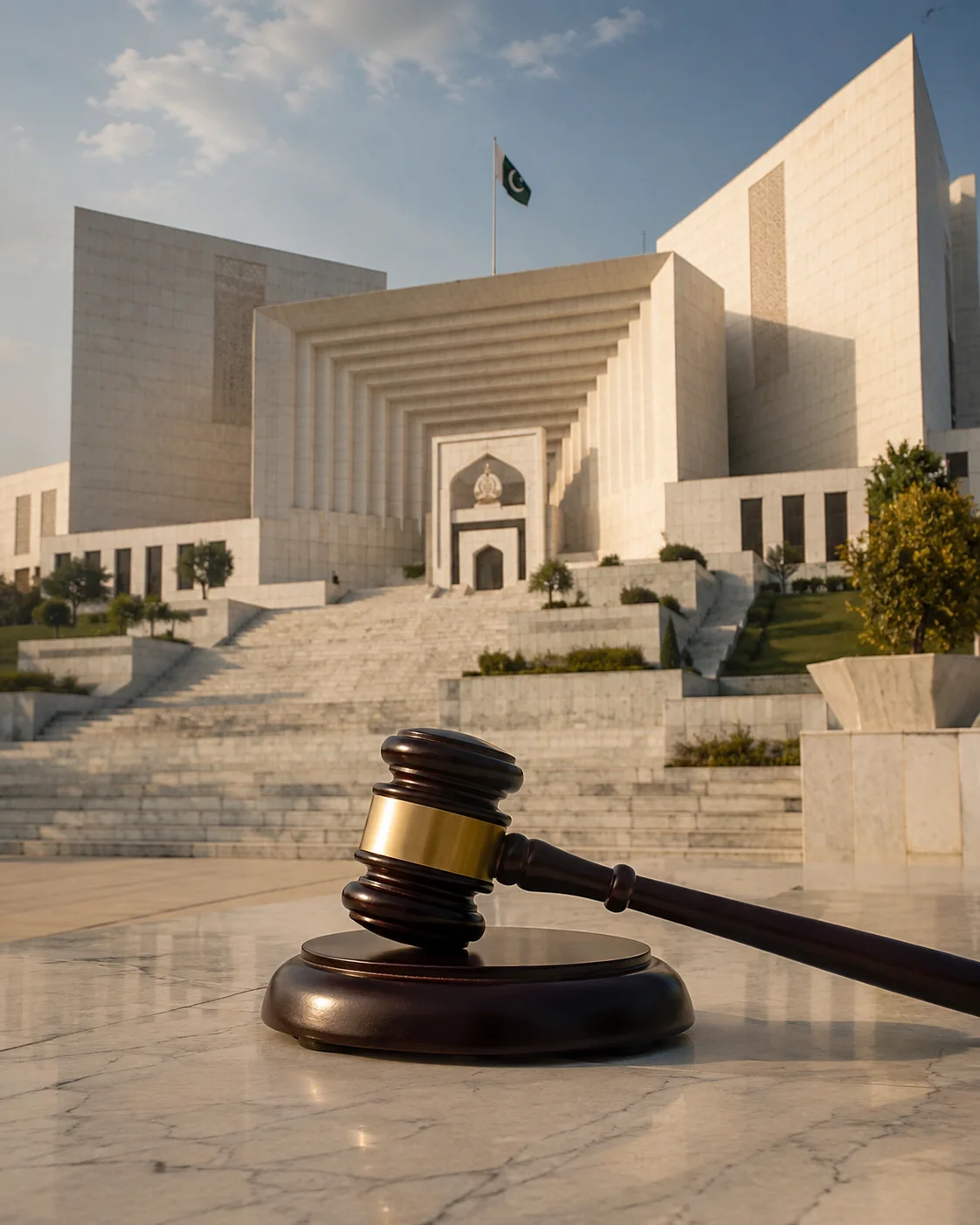
Supreme Court Harassment Ruling Restores Headmistress’ Penalty
The Supreme Court harassment ruling has reinstated a strict disciplinary penalty against a government school headmistress after finding that she failed to prevent the alleged sexual harassment of female teachers under her supervision. Alongside restoring the punishment, the court issued detailed directions to educational institutions across Pakistan, calling for stronger workplace protections, mandatory reporting systems, and stricter enforcement of anti-harassment laws.
The judgment emphasizes that educational institutions must provide a safe working environment for employees and adopt a zero-tolerance approach toward workplace harassment. It also directs both public and private institutions to strengthen their internal complaint mechanisms to ensure allegations are investigated promptly and fairly.
Supreme Court Restores Original Penalty
A two-member bench of the Supreme Court, headed by Justice Muhammad Ali Mazhar and comprising Justice Musarrat Hilali, issued the ruling in a 12-page judgment authored by Justice Mazhar.
The court overturned a December 8, 2023 decision of the Punjab Service Tribunal, Lahore, which had reduced the disciplinary punishment imposed on headmistress Shazia Iqbal.
Previously, the tribunal had reduced her penalty from the forfeiture of five years of past service to the forfeiture of one year. The Supreme Court restored the original punishment after concluding that the reduction was not justified.
Case Background
The case relates to Shazia Iqbal, who served as principal and headmistress (BS-17) at the Government Special Education Centre in Lyalpur Town, Faisalabad.
She had been issued a show-cause notice under the Punjab Employees Efficiency, Discipline and Accountability Act, 2006.
According to the allegations in the departmental proceedings, she displayed serious negligence by failing to address the conduct of Special Therapist Kamran Khan, who was allegedly residing unlawfully on the institution’s premises.
The allegations further stated that he harassed female teachers through blackmail, coercion, and threats, creating an unsafe environment within the institution.
The Supreme Court judgment refers to these as allegations that formed part of the disciplinary proceedings. It does not amount to a criminal conviction unless established through the appropriate legal process.
Court Describes Sexual Harassment as a Serious Violation
In its judgment, the Supreme Court described sexual harassment in educational institutions as a grave violation of law, ethics, workplace dignity, and personal respect.
The court noted that workplace harassment can include:
Examples of Prohibited Conduct
- Unwelcome sexual comments or remarks
- Offensive jokes or messages of a sexual nature
- Catcalling
- Pressure for unlawful personal favors in exchange for employment benefits
- Unwanted physical contact
- Creating an intimidating or hostile workplace
According to the judgment, such conduct not only harms individual victims but also damages the educational environment by undermining trust, safety, and professional performance.
The court observed that female teachers cannot effectively perform their duties in an atmosphere of fear or insecurity.
Educational Institutions Must Ensure Safe Workplaces
The Supreme Court stressed that educational institutions are places of learning and personal development and therefore must maintain the highest standards of professionalism and respect.
Justice Muhammad Ali Mazhar observed that institutions serve as a foundation for intellectual and professional growth and should remain environments where employees and students feel secure.
The judgment states that heads of institutions carry a significant responsibility to establish and maintain workplaces where harassment is not tolerated under any circumstances.
New Guidelines for Public and Private Educational Institutions
Along with deciding the disciplinary case, the Supreme Court issued comprehensive directions aimed at preventing workplace harassment across Pakistan’s education sector.
Mandatory Internal Harassment Policies
Every educational institution has been directed to adopt a clear internal harassment policy that complies with existing workplace protection laws.
Institutions are expected to ensure that staff members understand the procedures for reporting harassment complaints.
Effective Complaint Mechanisms
The court instructed institutions to establish reliable reporting systems involving senior management so complaints can be received, investigated, and resolved fairly.
Where allegations are proven through due process, disciplinary action should be taken against those responsible.
Independent Departmental Inquiries
The judgment clarifies that departmental disciplinary proceedings do not have to wait for decisions from the Federal Ombudsperson or provincial ombudsmen dealing with workplace harassment complaints.
Instead, institutions should proceed independently under applicable service rules while ensuring fairness and due process.
Display of Workplace Code of Conduct Made Mandatory
The Supreme Court also directed federal and provincial education authorities to require every government and private educational institution to prominently display the Code of Conduct for Protection against Harassment of Women at the Workplace.
According to the judgment, the code should be displayed in both English and relevant local languages to improve awareness among employees.
The requirement is based on provisions of the Protection against Harassment of Women at the Workplace Act, 2010.
Institutions Must Establish Inquiry Committees
One of the most significant directions in the judgment is the requirement for every educational institution to establish an in-house inquiry committee.
The court noted that such committees would allow female teachers and other employees to submit complaints directly instead of relying solely on the institution’s head to initiate action.
This measure is intended to improve transparency, strengthen confidence in the complaint process, and ensure allegations are examined according to the law.
Copies of Judgment Sent to Authorities
Recognising the broader importance of the issue, the Supreme Court directed its office to circulate copies of the judgment to several government authorities.
These include:
- Federal Education Secretary
- Provincial Chief Secretaries
- Provincial School Education Departments
- Higher Education Departments
- Federal Ombudsperson
- Provincial Ombudsmen responsible for workplace harassment matters
The court instructed these authorities to implement meaningful measures for preventing workplace harassment at educational institutions throughout Pakistan.
Why the Judgment Matters
The ruling reinforces the legal responsibility of educational administrators to protect employees from workplace harassment.
It also strengthens the implementation of existing anti-harassment laws by making it clear that institutions must actively prevent misconduct rather than simply respond after incidents occur.
By requiring internal complaint systems, inquiry committees, visible workplace codes of conduct, and prompt disciplinary action where misconduct is established, the judgment seeks to improve workplace safety for teachers across both public and private educational institutions.
The decision also signals that institutional negligence in handling harassment complaints may attract disciplinary consequences under applicable service laws.
Source:
- Supreme Court of Pakistan Judgment
- Punjab Service Tribunal Record
- Protection against Harassment of Women at the Workplace Act, 2010
Our audience means everything to us.
Have feedback or suggestions to make us better? We’re always listening—feel free to get in touch with us at editor@truthorahub.com









Leave a Comment