


Karachi’s Roads Have a Problem Everyone Can Feel
For years, Karachi residents have complained about the same nightmare: broken roads, overflowing sewerage, potholes after every rainfall, and endless repair work that never seems to solve anything permanently. From Gulistan-e-Jauhar to Sharea Faisal, drivers, bikers, and pedestrians continue to face damaged roads that become dangerous after even light rain.
Now, a new solution is rapidly spreading across the city — paver block roads.
But the big question remains: are paver blocks truly fixing Karachi’s road crisis, or are they simply covering up deeper problems that authorities still cannot solve?
Why Karachi Is Suddenly Switching to Paver Blocks
Across several areas of Karachi, traditional asphalt roads are being replaced with interlocking concrete paver blocks. Local government officials say the move is necessary because asphalt roads continue to break apart due to water leakage, flooding, and sewerage overflow.
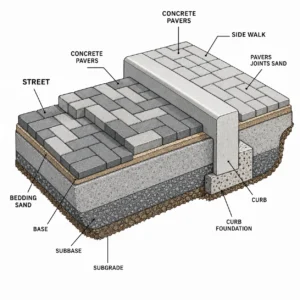
In areas where underground pipelines leak constantly, roads often collapse within months after construction. Water slowly enters the lower layers beneath the asphalt surface, weakening the foundation until cracks and potholes appear everywhere.
Officials argue that paver blocks offer one major advantage: they can be removed and reinstalled easily whenever underground repair work is needed.
Instead of rebuilding an entire road after digging, workers can simply lift the blocks, repair the pipelines, and place the blocks back again.
This flexibility is one of the biggest reasons Karachi’s authorities are now favouring paver roads in several neighbourhoods.
The Reality Behind Karachi’s Broken Roads
Many people think potholes appear because roads are made poorly from the top. But engineers say the real problem actually starts underneath the road surface.
Road construction depends heavily on strong soil compaction and proper drainage systems. When water remains trapped beneath roads, the lower layers weaken and become unstable.
Once heavy traffic passes over weakened ground, the asphalt surface begins cracking.
Karachi faces a unique challenge because many roads sit above leaking sewerage lines, damaged water pipelines, internet cables, electricity infrastructure, and gas lines. Whenever one utility department digs the road for repair work, the surface becomes weaker.
The city’s drainage system also struggles badly during rainfall.
In low-lying areas, water remains trapped for hours or even days, accelerating road damage. This is why some newly built roads begin deteriorating within a very short period.
Experts believe paver blocks are not solving the root problem — they are simply helping roads survive longer under difficult conditions.
Areas Where Paver Roads Are Already Being Used
Karachi has already introduced paver block roads in several major areas.
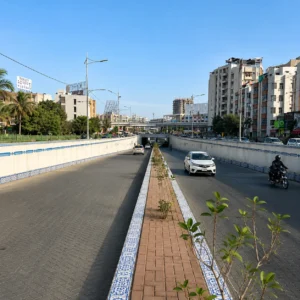
One notable example is the Gulistan-e-Jauhar underpass, where authorities used high-strength paver blocks after repeated flooding damaged earlier asphalt surfaces.
Officials claimed that strong water flow from surrounding elevated roads would destroy ordinary asphalt quickly, making pavers a more durable option.
Similarly, parts of Sharea Faisal and other flood-prone roads have also been redesigned using pavers.
In many neighbourhood streets, residents themselves requested paver roads after becoming frustrated with repeated repair work on traditional roads.
According to local representatives, roads built with pavers tend to remain usable even when sewerage overflow occurs temporarily.
But Are Residents Actually Happy?
Public opinion about paver roads is sharply divided.
Some residents appreciate the fact that paver roads survive longer and develop fewer potholes. They believe the roads remain functional even after heavy rainfall.
Others, however, strongly dislike the driving experience.
Many bikers complain that paver surfaces feel uneven and create constant vibration while riding. Some riders claim the shaking affects bike control, especially at higher speeds.
Drivers also report that loose blocks sometimes create gaps or uneven surfaces, making roads uncomfortable and potentially dangerous.
For people using underpasses with paver roads daily, the experience often depends on the quality of installation.
Well-installed pavers feel stable and smooth, while poor-quality construction can quickly create bumps and loose sections.
This difference is why many Karachi residents remain unsure whether pavers are truly a long-term solution.
The Hidden Engineering Science Most People Never See
Most people judge roads by what they see on the surface, but engineers focus on what lies underneath.
A strong road depends on multiple carefully compacted layers beneath the top surface. These layers distribute vehicle weight evenly while preventing sinking and cracking.
However, when water enters these lower layers, the soil loses strength.
Karachi’s biggest challenge is not simply road construction — it is water management.
Without proper drainage systems, rainwater and sewerage continue collecting on roads across the city. Experts say even the strongest asphalt cannot survive for long under such conditions.
Paver blocks offer slightly better water movement between joints, but they are not designed to completely solve flooding issues.
Urban planners warn that unless Karachi improves drainage infrastructure, road damage will continue no matter which surface material is used.
Is the Government Spending Billions on the Right Solution?
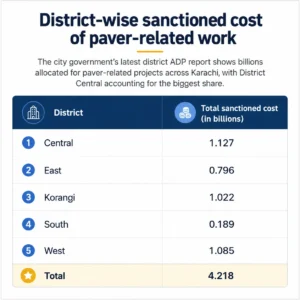
Billions of rupees are now being allocated for paver-related projects across Karachi.
Supporters believe this investment makes sense because paver roads are easier to maintain and repair.
Critics disagree.
Some urban planners argue that authorities are focusing too heavily on surface-level solutions while ignoring deeper institutional failures.
Instead of fixing drainage systems, replacing leaking pipelines, and improving coordination between departments, the city is choosing a quicker alternative that appears effective temporarily.
Experts say Karachi urgently needs integrated urban planning where roads, sewerage, drainage, and utilities are repaired together instead of separately.
Without coordination, roads will continue suffering repeated damage regardless of construction style.
Are Paver Blocks Actually Cheaper?
Many people assume paver roads cost less than traditional asphalt roads.
The reality is more complicated.
Initial construction costs for quality paver roads can sometimes equal or even exceed asphalt roads, especially when high-strength blocks are used.
Cheaper pavers may break quickly under heavy traffic pressure, creating frequent maintenance needs.
High-quality pavers with proper engineering can survive for many years, but poor-quality blocks may fail within a short period.
Experts warn that Karachi’s growing demand for pavers has attracted many new manufacturers, and quality standards vary significantly.
Some companies produce strong, durable blocks, while others supply weaker materials that may not withstand heavy traffic.
This raises serious concerns about quality control in future projects.
The Bigger Problem Nobody Wants to Discuss
Perhaps the most important issue raised by experts is this:
Why are roads repeatedly being damaged in the first place?
Several engineers believe Karachi’s road crisis is actually a symptom of much larger governance and infrastructure problems.
Leaking pipelines remain unrepaired for years. Drainage systems fail during rainfall. Multiple departments work independently without proper coordination.
In many cases, roads are rebuilt before underground issues are permanently resolved.
This creates a cycle where taxpayers continue paying for repairs again and again.
Some experts even argue that the popularity of paver roads reflects institutional frustration — a sign that authorities no longer expect drainage problems to be solved completely anytime soon.
Could Karachi Still Find a Better Long-Term Solution?
Urban planning experts believe Karachi still has alternatives.
Reviving proper asphalt production plants, modernising drainage systems, improving engineering standards, and ensuring better oversight during construction could significantly improve road quality.
Authorities could also adopt stricter quality testing for construction materials and enforce modern international standards.
At the moment, however, paver blocks appear to be the city’s preferred short-term answer.
Whether they become a lasting solution or another temporary experiment will depend entirely on how seriously Karachi addresses the deeper infrastructure crisis beneath its roads.
Final Thoughts
Karachi’s growing use of paver block roads reflects both innovation and desperation at the same time.
On one hand, these roads offer flexibility, easier maintenance, and better resistance against water damage. On the other hand, they highlight the city’s inability to permanently solve drainage failures, leaking pipelines, and poor urban coordination.
For citizens tired of potholes, damaged vehicles, and flooded streets, the debate is becoming increasingly important.
Are paver blocks truly transforming Karachi’s roads for the better?
Or are they simply helping the city survive a problem it still cannot fully fix?
Only time — and Karachi’s next monsoon season — will reveal the real answer.
Source:
Dawn News
Our audience means everything to us.
Have feedback or suggestions to make us better? We’re always listening—feel free to get in touch with us at truthora2026@gmail.com








Leave a Comment