

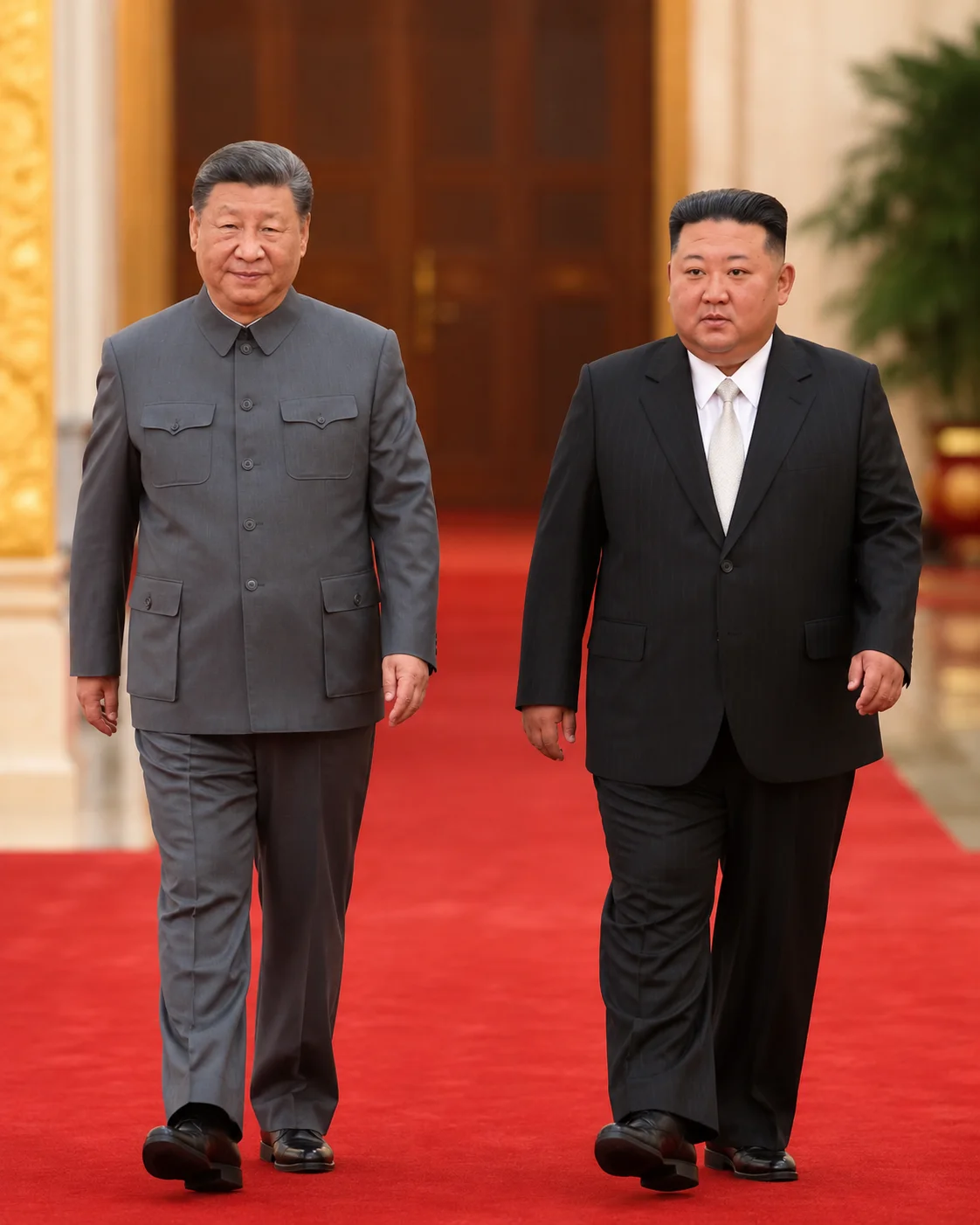
China and North Korea Enter a New Chapter
Chinese President Xi Jinping has arrived in North Korea for a highly anticipated state visit that is already being viewed as one of the most significant diplomatic events in Asia this year.
The two-day visit marks Xi’s first trip to Pyongyang in nearly seven years and comes at a time when the geopolitical landscape in East Asia is changing rapidly. From North Korea’s expanding nuclear program to its growing relationship with Russia and China’s increasing role in regional diplomacy, the meeting between Xi Jinping and Kim Jong Un is attracting attention far beyond Asia.
But why is this visit so important?
And what could it mean for China, North Korea, the United States, and the broader international community?
The answers lie in a complex mix of diplomacy, security, trade, and strategic influence.
A Meeting Years in the Making
Xi Jinping’s last visit to North Korea took place in 2019. At the time, the Korean Peninsula was experiencing a period of intense diplomatic activity, with hopes that negotiations between North Korea and the United States might eventually reduce tensions.
Seven years later, the situation looks very different.
North Korea has continued to strengthen its military capabilities, expand its nuclear program, and deepen cooperation with Russia. Meanwhile, China has been seeking to maintain its influence over its longtime ally while navigating increasingly complicated relationships with Washington and Moscow.
For both Beijing and Pyongyang, the visit offers an opportunity to demonstrate that their partnership remains strong despite changing global circumstances.
Why Is Xi Jinping Visiting Now?
Timing often reveals as much as the meeting itself.
Xi’s visit comes shortly after separate meetings with US President Donald Trump and Russian President Vladimir Putin. Analysts believe Beijing wants to reinforce its role as a major diplomatic player while ensuring that North Korea remains closely connected to China despite Pyongyang’s growing ties with Moscow.
China remains North Korea’s largest trading partner and most important economic lifeline.
While Russia has become increasingly influential in North Korean affairs, especially through military cooperation, Beijing still holds significant economic leverage.
The visit sends a message that China intends to remain a central player in shaping regional developments.
The Growing China–North Korea Relationship
Relations between China and North Korea stretch back decades.
The two countries share historical ties forged during the Korean War and remain connected through the China–North Korea Treaty of Friendship, Cooperation and Mutual Assistance.
Over the years, the relationship has experienced both cooperation and occasional tensions, particularly regarding North Korea’s nuclear ambitions.
However, recent developments suggest both governments are eager to strengthen bilateral ties.
Trade between the two countries has rebounded significantly following the pandemic years. Passenger rail services between China and North Korea have resumed, while direct flights have also returned, signaling a gradual reopening of economic activity. These developments highlight the importance of economic cooperation for both sides.
For North Korea, Chinese trade and investment remain critical for economic stability. For China, maintaining a stable relationship with its neighbor helps preserve regional security and strategic influence.
The Nuclear Question Remains Unresolved
One issue continues to dominate discussions surrounding North Korea: nuclear weapons.
In recent weeks, North Korean officials have repeatedly emphasized that the country’s nuclear status is non-negotiable.
Kim Yo Jong, the influential sister of Kim Jong Un, recently declared that North Korea’s position as a nuclear-armed state is irreversible and rejected calls for denuclearization. Her comments came shortly before Xi’s arrival in Pyongyang.
These statements underline a reality that many international observers already recognize.
Unlike previous periods when negotiations focused heavily on denuclearization, North Korea now appears determined to maintain and expand its nuclear arsenal.
This creates a major challenge for regional diplomacy.
Can meaningful negotiations occur when one side considers its nuclear program untouchable?
That question remains unanswered.
Is China Trying to Play Mediator?
One of the biggest questions surrounding Xi’s visit is whether China intends to serve as a mediator between North Korea and the United States.
Speculation increased after reports that Xi and Donald Trump discussed the Korean Peninsula during recent meetings.
While Washington continues to support denuclearization efforts, Beijing has remained more cautious in its public statements, emphasizing dialogue and political solutions rather than direct pressure.
Some analysts believe China could attempt to reduce tensions and encourage future diplomatic engagement.
Others argue that Beijing’s primary goal is simply maintaining stability and protecting its strategic interests.
Either way, Xi’s presence in Pyongyang highlights China’s unique position as one of the few countries capable of maintaining close communication with all major players involved.
North Korea’s Expanding Military Ambitions
The visit also comes amid a period of growing military activity in North Korea.
Recent state media reports have highlighted new naval projects, including larger warships and expanded military modernization programs. Kim Jong Un has repeatedly called for stronger defense capabilities and increased weapons production.
North Korean leaders argue these measures are necessary to protect national security.
Critics, however, view them as contributing to regional instability and increasing tensions with neighboring countries.
Regardless of perspective, military modernization remains a central component of North Korea’s national strategy.
The Economic Dimension
While headlines often focus on missiles and nuclear weapons, economics may be equally important during Xi’s visit.
North Korea has faced years of international sanctions, pandemic-related isolation, and economic difficulties.
China’s support could help accelerate economic recovery through trade, tourism, infrastructure projects, and investment opportunities.
Experts believe discussions may include ways to increase economic cooperation and strengthen cross-border exchanges. Tourism is another area receiving attention, as North Korea gradually reopens after years of restrictions.
For ordinary citizens, economic development often matters more than geopolitical rivalries.
Improved trade and investment could provide tangible benefits that are felt beyond diplomatic circles.
How the World Is Reacting
Governments and analysts across the globe are closely monitoring the visit.
In South Korea, policymakers hope China might encourage stability and reduce tensions on the Korean Peninsula.
In Washington, officials continue to watch North Korea’s nuclear developments with concern.
Russia, meanwhile, has strengthened its relationship with Pyongyang, creating a new layer of complexity in regional politics.
The meeting between Xi and Kim is therefore about much more than bilateral relations.
It represents a broader test of how major powers will navigate an increasingly complicated international environment.
What Could Happen Next?
Several possible outcomes may emerge from this visit.
First, China and North Korea could announce new economic cooperation initiatives aimed at boosting trade and development.
Second, both sides may reaffirm their long-standing friendship and strategic partnership.
Third, Xi could seek assurances regarding regional stability while encouraging diplomatic engagement with other countries.
Finally, the visit may simply serve as a powerful symbolic statement that China and North Korea remain closely connected despite global political shifts.
Whatever the outcome, the discussions are likely to influence regional diplomacy for months to come.
Final Thoughts
Xi Jinping’s return to Pyongyang after seven years is far more than a routine diplomatic trip.
It reflects changing alliances, evolving security concerns, economic interests, and the ongoing competition for influence in Asia.
As China seeks to strengthen ties with North Korea while balancing relationships with the United States and Russia, the world is watching closely.
Will the visit lead to new opportunities for cooperation?
Can it help ease tensions in one of the world’s most sensitive regions?
Or will it simply reinforce existing alliances without changing the broader strategic picture?
For now, those questions remain open.
What is certain, however, is that the meeting between Xi Jinping and Kim Jong Un has become one of the most closely watched diplomatic events of 2026.
Source:
Reuters, Associated Press (AP), Al Jazeera, NK News, Xinhua, international diplomatic and regional affairs reporting.
Our audience means everything to us.
Have feedback or suggestions to make us better? We’re always listening—feel free to get in touch with us at truthora2026@gmail.com







Leave a Comment