

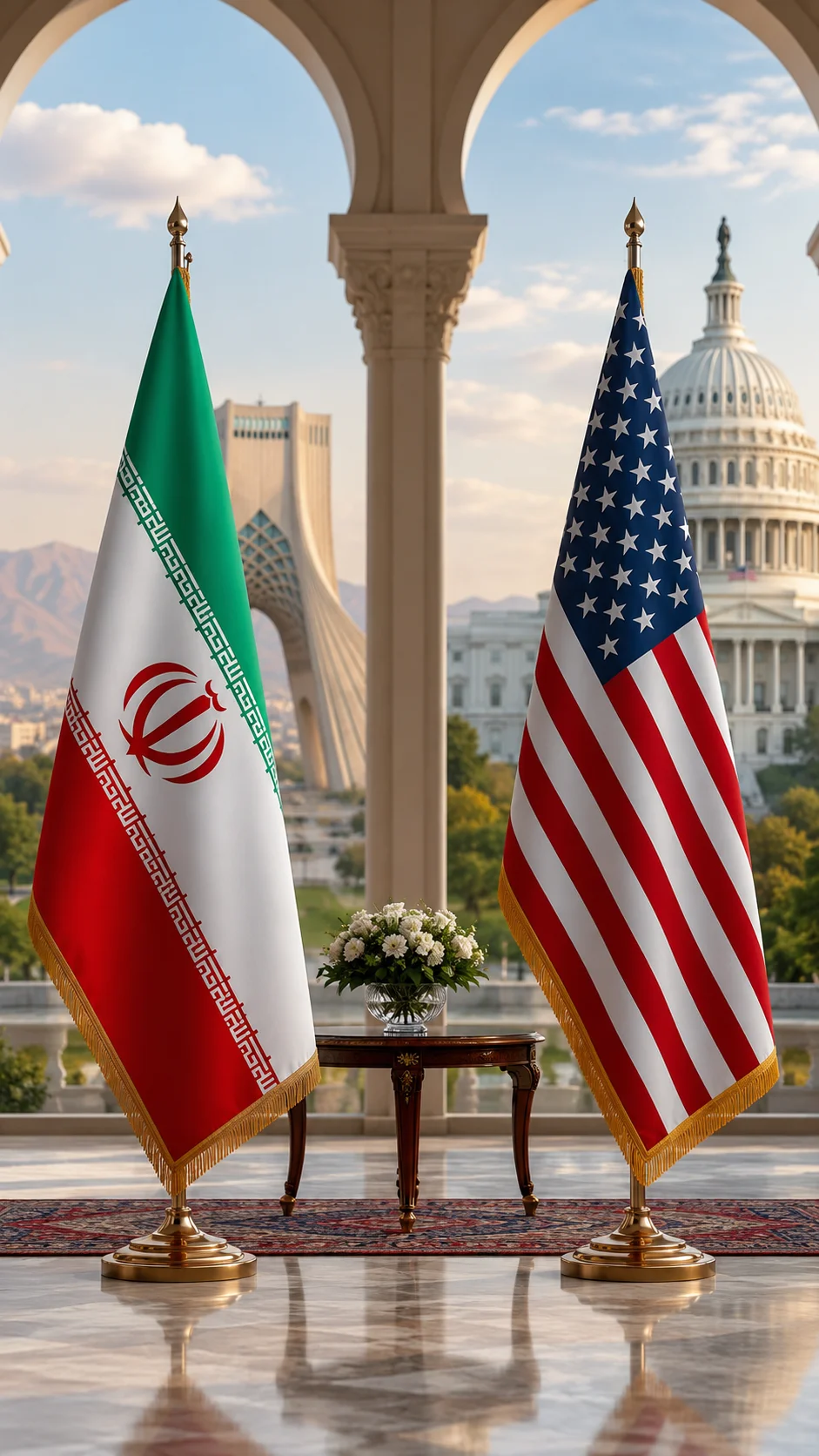
The United States and Iran have released the historic Islamabad Memorandum. Discover what the 14-point agreement means for the Strait of Hormuz, sanctions, nuclear talks, global oil markets and regional peace.
After months of tensions, military confrontations, and growing concerns about regional stability, the United States and Iran have officially unveiled the text of a landmark diplomatic agreement known as the Islamabad Memorandum of Understanding (MOU).
The 14-point framework, released by US officials on Wednesday, outlines a roadmap for ending hostilities, reopening vital maritime routes, addressing Iran’s nuclear program, and creating a path toward sanctions relief and economic recovery. The agreement is expected to be formally signed in Switzerland, after which both sides will have 60 days to negotiate a comprehensive final deal.
For many observers, the memorandum represents one of the most significant diplomatic developments in the Middle East in recent years. Yet an important question remains:
Is this truly the beginning of lasting peace, or merely a temporary pause in a long-running conflict?
Why the Agreement Matters
The relationship between Washington and Tehran has been marked by decades of mistrust, economic sanctions, military threats, and disputes over Iran’s nuclear ambitions.
Recent conflicts and disruptions in the Gulf region intensified concerns about global energy supplies, international trade routes, and broader regional security. One of the most sensitive flashpoints was the Strait of Hormuz, a strategic waterway through which a significant portion of the world’s oil exports passes.
The newly released memorandum attempts to address these concerns by creating a structured process for reducing tensions and rebuilding trust between the two nations.
What Is the Islamabad Memorandum?
The Islamabad Memorandum is a preliminary political agreement that establishes the principles and commitments both countries have agreed to follow while negotiating a final settlement.
Although it is not yet a permanent treaty, it serves as the foundation for future negotiations and outlines specific actions that both sides are expected to take immediately.
The document reportedly received attention from world leaders and diplomats due to its potential impact on global energy markets, international security, and nuclear non-proliferation efforts.
Ending Military Hostilities
One of the most important provisions in the memorandum is the commitment by both sides to permanently end military operations against one another.
The agreement states that the United States and Iran, along with their allies involved in the conflict, will refrain from initiating military action or threatening the use of force. It also emphasizes respect for sovereignty and territorial integrity.
For civilians across the region, this commitment could mean fewer security risks, greater stability, and an opportunity for reconstruction and economic recovery.
Reopening the Strait of Hormuz
Perhaps the most economically significant aspect of the agreement involves the Strait of Hormuz.
Under the memorandum, Iran has agreed to facilitate the safe passage of commercial vessels through the waterway. Maritime traffic is expected to gradually return to pre-conflict levels, helping restore confidence among shipping companies and global energy markets.
The agreement also states that commercial vessels will be allowed to pass through the route without additional charges for a temporary period while technical and security obstacles are removed.
Why Is the Strait So Important?
The Strait of Hormuz is often described as one of the world’s most strategic maritime chokepoints.
Every disruption in this narrow passage can affect oil prices, shipping costs, inflation, and economic growth around the globe.
A stable and open Strait of Hormuz benefits not only the Middle East but also economies across Asia, Europe, and North America.
Massive Economic Incentives Included
Another major element of the memorandum is its economic component.
The United States, together with regional partners, has committed to supporting a reconstruction and economic development plan for Iran that could involve investments and financing worth at least $300 billion.
Such a package, if implemented, could become one of the largest economic recovery initiatives ever linked to a diplomatic agreement in the region.
Supporters argue that economic growth and investment may encourage long-term stability, while critics question how quickly these commitments can be implemented and monitored.
What Happens to Sanctions?
For years, sanctions have been one of the most contentious issues in US-Iran relations.
The memorandum outlines a process through which sanctions could gradually be lifted as negotiations progress and commitments are fulfilled. The agreement also mentions future discussions regarding United Nations-related restrictions and other economic measures.
Additionally, the US Treasury is expected to issue waivers allowing Iranian oil exports and related financial transactions during the implementation phase.
For Iran’s economy, sanctions relief could significantly improve trade, investment opportunities, and access to international financial systems.
The Nuclear Question Remains Central
No issue has shaped US-Iran relations more than concerns surrounding Iran’s nuclear program.
The memorandum reaffirms Iran’s commitment not to develop nuclear weapons while establishing a framework for discussions regarding enriched uranium and other nuclear-related matters.
One notable addition in the official version of the text is a reference to a “minimum methodology” for handling highly enriched uranium stockpiles. The process would involve reducing enrichment levels under the supervision of the International Atomic Energy Agency (IAEA).
Why Is This Important?
The handling of enriched uranium has long been viewed as a key issue in preventing nuclear weapons development.
International observers will closely monitor future negotiations to determine whether both sides can reach a lasting and verifiable arrangement.
Frozen Assets and Financial Access
The memorandum also addresses frozen Iranian assets held under various restrictions.
According to the agreement, mechanisms will be developed to allow Iran access to these funds as implementation progresses. Necessary licenses and authorizations are expected to be issued as part of the process.
For Iran, access to these resources could support economic recovery efforts, infrastructure development, and domestic investment.
A 60-Day Countdown Begins
While the memorandum is being described as a breakthrough, it is important to remember that it is only the beginning.
The agreement creates a 60-day window during which negotiators must work toward a final comprehensive deal. This period may be extended if both sides agree.
Diplomats will now face the difficult task of converting broad commitments into detailed and enforceable agreements.
Supporters See Hope
Supporters of the memorandum argue that diplomacy has achieved what military pressure alone could not.
They believe reopening trade routes, reducing military tensions, and creating economic incentives provide a realistic pathway toward stability.
Financial markets have already shown interest in the potential impact of restored Gulf shipping and future energy exports. Analysts suggest that a successful final agreement could improve confidence across global markets.
Critics Remain Skeptical
Not everyone is convinced.
Several political figures and analysts have criticized aspects of the agreement, arguing that sanctions relief and economic incentives may be offered too early. Others worry that unresolved nuclear questions could complicate implementation.
Some critics have also questioned whether both sides will fully comply with their commitments over the long term.
Their concerns highlight the challenges that lie ahead despite the positive headlines.
What Happens Next?
The next few weeks could prove decisive.
If negotiators successfully finalize the agreement, it could lead to reduced regional tensions, expanded economic cooperation, improved maritime security, and a new phase in US-Iran relations.
However, if talks break down, many of the underlying disputes could quickly re-emerge.
For now, the Islamabad Memorandum offers something that has been rare in recent years: a genuine opportunity for diplomacy.
Final Thoughts
The release of the Islamabad Memorandum marks a potentially historic moment in Middle Eastern diplomacy.
The agreement touches on nearly every major issue dividing Washington and Tehran—from military tensions and maritime security to sanctions and nuclear oversight.
Whether it becomes a lasting peace framework or another unfinished diplomatic effort will depend on what happens during the upcoming negotiations.
The world will be watching closely as the 60-day countdown begins.
One question now stands above all others:
Can decades of mistrust be overcome through diplomacy, or is the hardest part of the journey still ahead?
Source:
Reuters, Associated Press (AP), Axios, The Guardian, CNN reports and official text of the Islamabad Memorandum.
Our audience means everything to us.
Have feedback or suggestions to make us better? We’re always listening—feel free to get in touch with us at truthora2026@gmail.com





Leave a Comment