

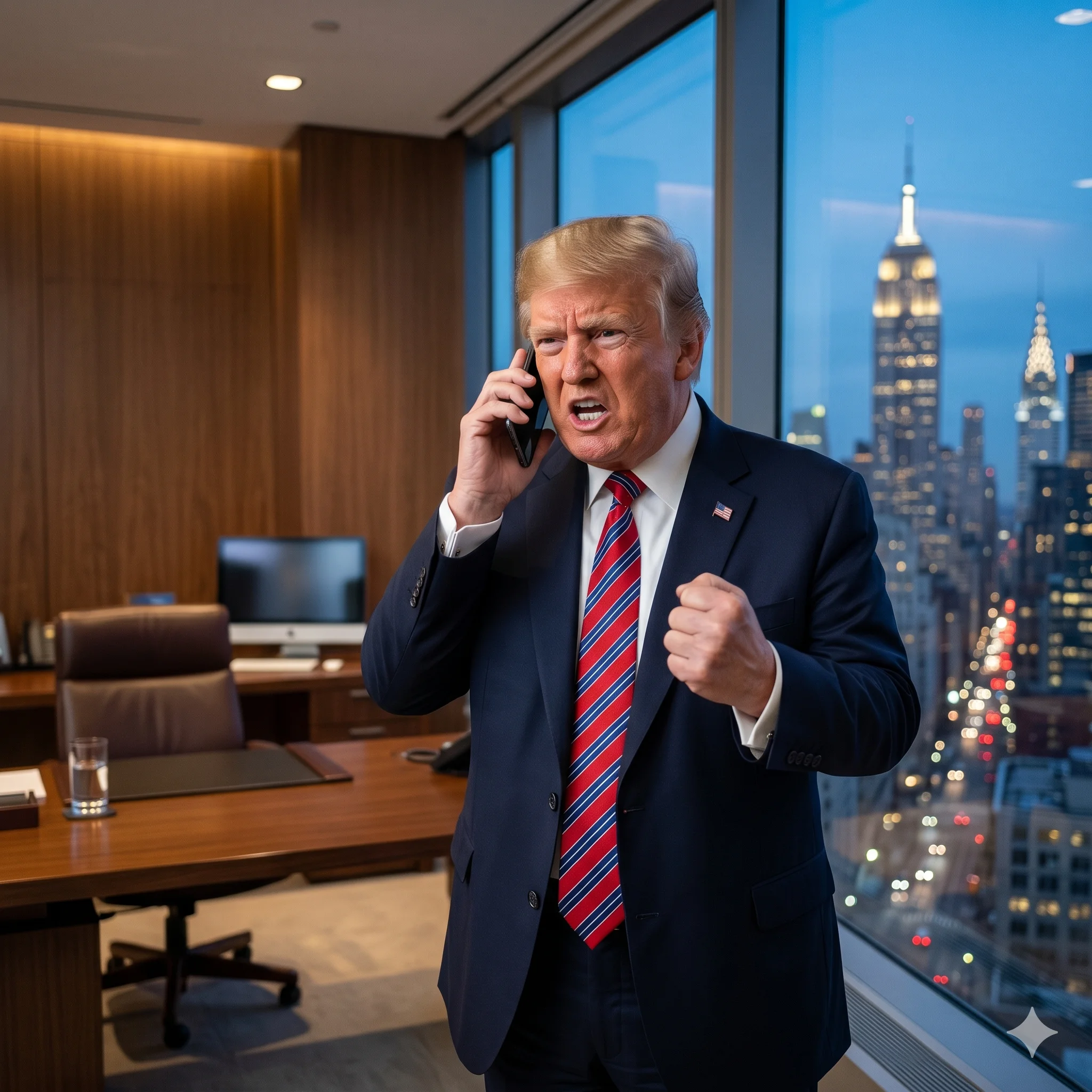
A Heated Phone Call, Growing Regional Uncertainty, and Questions About the Future of US-Israel Relations
The relationship between the United States and Israel has long been considered one of the strongest strategic alliances in modern geopolitics. But what happens when two of the world’s most influential leaders reportedly find themselves in a heated confrontation over military strategy?
That question is dominating international headlines after reports emerged that US President Donald Trump and Israeli Prime Minister Benjamin Netanyahu engaged in an unusually tense phone conversation over Israel’s military actions in Lebanon.
The reported exchange has sparked debate across diplomatic circles, international media, and political analysts worldwide. While details remain disputed, the incident highlights growing pressure on both leaders as conflict in the Middle East continues to evolve.
More importantly, it raises a critical question:
Are Washington and Tel Aviv beginning to disagree on how the current regional crisis should end?
What Triggered the Reported Dispute?
According to multiple international reports, tensions escalated after Israel signaled plans to expand military operations in Lebanon, particularly in Beirut’s southern suburbs, areas widely considered Hezbollah strongholds.
The move reportedly alarmed the Trump administration, which has been attempting to preserve fragile diplomatic efforts involving Iran, Lebanon, and regional ceasefire arrangements. Reports published by Axios claimed Trump strongly objected to the planned escalation and urged Netanyahu to avoid actions that could derail ongoing negotiations.
The reported phone conversation quickly became one of the most discussed diplomatic stories of the week.
Why Lebanon Has Become the Center of Attention
For months, southern Lebanon has remained one of the most volatile flashpoints in the region.
Cross-border exchanges between Israeli forces and Hezbollah have repeatedly threatened broader regional stability. Despite ceasefire efforts and international mediation, military operations have continued on both sides.
Israeli officials argue that Hezbollah’s attacks pose a direct security threat. Hezbollah, meanwhile, maintains that its actions are linked to wider regional conflicts involving Iran and Israel.
The situation has become increasingly complicated because developments in Lebanon are now directly influencing broader diplomatic efforts involving Washington and Tehran.
The Report That Captured Global Attention
The controversy began when Axios reported that Trump became furious during a phone call with Netanyahu.
According to sources cited by the publication, Trump allegedly criticized Israel’s planned military actions and warned that further escalation could undermine ongoing diplomatic efforts.
Several media organizations later referenced the report, including ABC News, The Guardian, and People Magazine, all noting that the reported conversation represented one of the sharpest public disagreements between the two leaders since Trump’s return to office.
However, Israeli media outlets have disputed portions of the report, suggesting that while the conversation may have been tense, the characterization of the exchange could have been exaggerated.
This highlights an important reality in international politics: details of private diplomatic conversations often become subjects of competing narratives.
Are Trump and Netanyahu Still on the Same Page?
This is perhaps the most important question emerging from the controversy.
For much of the recent conflict, Trump and Netanyahu appeared closely aligned.
Both leaders supported strong measures against Iran, and both have publicly emphasized regional security concerns.
Yet recent developments suggest their priorities may not be identical.
According to reports, Trump’s focus has increasingly shifted toward securing broader regional stability, preventing disruptions to global energy markets, and preserving diplomatic channels with Iran.
Netanyahu, meanwhile, remains under pressure from Israeli security officials, political rivals, and parts of the Israeli public to maintain a strong military posture against Hezbollah and other perceived threats.
These differing priorities may explain why tensions reportedly emerged between the two leaders.
Iran’s Role in the Crisis
Any discussion of the current situation is incomplete without understanding Iran’s position.
Iran has repeatedly warned that continued military operations in Lebanon could affect wider regional negotiations.
Recent statements from Tehran have linked developments in Lebanon directly to ongoing diplomatic discussions involving the United States.
Iranian officials have argued that ceasefire arrangements should apply across multiple fronts, including Lebanon, rather than being limited to specific areas.
This has significantly increased the stakes surrounding every military decision made in the region.
Why Global Markets Are Watching Closely
The consequences of these developments extend far beyond the Middle East.
Energy markets remain highly sensitive to geopolitical instability in the region.
Investors, shipping companies, airlines, and multinational corporations all monitor developments because any major escalation could affect:
- Oil prices
- Shipping routes
- International trade
- Aviation operations
- Global inflation trends
Even the perception of instability can trigger market reactions.
This explains why diplomatic disputes involving major regional players often receive global attention.
Domestic Pressure on Both Leaders
Another important factor often overlooked is the domestic political pressure facing both Trump and Netanyahu.
Trump’s Political Challenge
Trump faces competing expectations from different political groups within the United States.
Some supporters favor aggressive action against regional adversaries.
Others want reduced military involvement overseas and greater focus on domestic priorities.
Balancing these expectations is becoming increasingly challenging as regional tensions continue.
Netanyahu’s Political Reality
Netanyahu is also navigating a complex political environment.
Reports indicate he faces criticism from opposition figures, security debates within Israel, and ongoing legal challenges.
At the same time, many Israelis expect strong responses to security threats.
This creates significant pressure on the Israeli government whenever conflict intensifies.
Could Diplomacy Still Succeed?
Despite the heated rhetoric and military activity, diplomacy remains active.
Multiple reports indicate that discussions involving the United States, Israel, Lebanon, and regional stakeholders continue behind the scenes.
Some Lebanese officials have reportedly expressed support for broader ceasefire arrangements if reciprocal commitments can be secured.
However, achieving a lasting agreement remains difficult.
Trust between the parties remains limited.
Military operations continue.
Political pressures are intensifying.
And every new incident risks undermining diplomatic progress.
What Happens Next?
The coming days could prove critical.
Several scenarios remain possible:
Scenario 1: Diplomatic Breakthrough
Negotiations continue and produce a broader ceasefire arrangement.
Scenario 2: Limited Escalation
Military exchanges persist without expanding into a wider regional conflict.
Scenario 3: Major Regional Crisis
Further attacks trigger broader involvement from additional regional actors.
While policymakers hope to avoid the third outcome, analysts warn that the situation remains highly unpredictable.
The Bigger Picture
Beyond the headlines, the reported Trump-Netanyahu confrontation reflects a larger reality.
The Middle East is undergoing another period of significant transformation.
Traditional alliances are being tested.
Diplomatic priorities are shifting.
Regional conflicts are increasingly interconnected.
And leaders are facing difficult decisions that could shape the region’s future for years to come.
Whether the reported phone call ultimately proves to be a temporary disagreement or a sign of deeper strategic differences remains unclear.
What is certain, however, is that the world is watching closely.
Every conversation, every military move, and every diplomatic signal now carries consequences that extend far beyond the borders of Israel, Lebanon, or Iran.
As tensions continue and negotiations proceed, one question remains unanswered:
Can diplomacy keep pace with the rapidly changing realities on the ground?
Sources:
Axios, Reuters, ABC News, The Guardian, Wall Street Journal, People Magazine, Times of Israel.
Our audience means everything to us.
Have feedback or suggestions to make us better? We’re always listening—feel free to get in touch with us at truthora2026@gmail.com



Leave a Comment