

Is Nature Secretly Following Mathematical Rules?
Have you ever stared at clouds and suddenly seen faces, animals, or familiar shapes? Maybe a dragon floating across the sky, or someone you know appearing in the patterns above. Scientists call this strange but common human habit “apophenia” — the tendency to spot meaningful patterns in random things.
But what if some of those patterns are not imaginary at all?
What if nature itself is quietly built on hidden mathematical designs that humans are only now beginning to understand?
A fascinating new scientific discovery suggests exactly that.
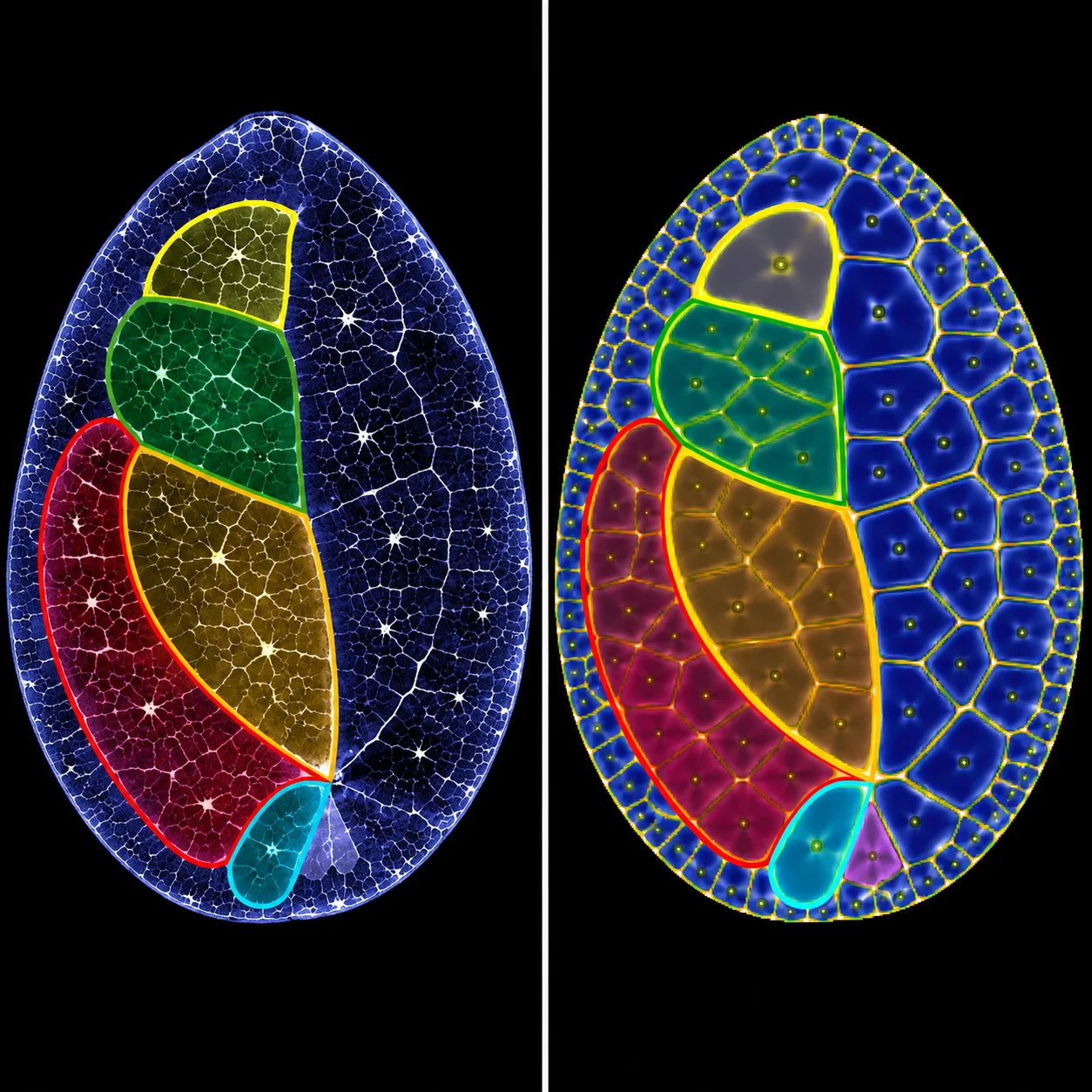
Researchers studying the popular Chinese money plant have uncovered an astonishing geometric structure hidden inside its leaves. According to scientists, the plant naturally forms a sophisticated mathematical pattern known as a Voronoi diagram — a system widely used in engineering, city planning, architecture, computer science, and even artificial intelligence.
The discovery is attracting major attention in scientific communities because it reveals how plants may solve complex biological problems without having brains, measurements, or conscious planning.
And perhaps most surprising of all, this hidden mathematical system was quietly growing inside one of the world’s most common houseplants the entire time.
What Is a Voronoi Diagram — And Why Is It Important?
To understand why scientists are excited, we first need to understand the mysterious geometric pattern at the center of the discovery.
A Voronoi diagram is a mathematical structure that divides space into organized regions around central points. Each region is designed so everything inside it stays closest to one specific center.
It may sound complicated, but people encounter this system every day without realizing it.
Imagine school districts inside a city.
Every neighborhood is assigned to the nearest school. The city naturally becomes divided into zones surrounding each school building. That is essentially a real-world Voronoi pattern.
These diagrams are used in:
- Urban planning
- Mobile network systems
- GPS technologies
- Weather forecasting
- Computer graphics
- Astronomy
- Artificial intelligence
Scientists have also spotted Voronoi-like structures throughout nature before. Similar patterns appear in cracked soil, soap bubbles, turtle shells, dragonfly wings, and even giraffe skin markings.
But until now, researchers struggled to find a natural biological example that clearly displayed both the pattern and the central organizing points together.
That changed with the Chinese money plant.
The Plant Hiding a Mathematical Secret
The plant at the center of the discovery is Chinese Money Plant, scientifically known as Pilea peperomioides.
Native to China’s Yunnan and Sichuan provinces, the plant has become extremely popular worldwide as a decorative indoor plant. Its bright green circular leaves and minimal care requirements made it a social media favorite among plant lovers.
Many people keep it in homes without realizing they may be looking at one of nature’s hidden mathematical masterpieces.
Researchers from Cold Spring Harbor Laboratory began studying tiny pores on the plant’s leaves called hydathodes.
These pores help transport water and nutrients throughout the leaf using vein-like networks.
At first glance, the leaf patterns appeared ordinary. But after carefully mapping the veins and pores, scientists realized something remarkable.
The structures naturally organized themselves into Voronoi diagrams.
Not artificial designs.
Not human-created geometry.
A living plant was building them entirely on its own.
How Can a Plant Solve Geometry Without Thinking?
This is where the discovery becomes truly mind-blowing.
Humans solve geometric problems using rulers, measurements, calculations, and computers. Plants have none of these tools.
So how does a plant organize itself into advanced mathematical patterns?
According to researchers, the answer lies in local biological interactions.
Associate Professor Saket Navlakha and former graduate student Cici Zheng discovered that the plant follows what they describe as a “natural algorithm.”
In simple terms, tiny biological processes inside the leaf interact locally with nearby cells and tissues. Over time, these interactions naturally produce highly organized vein networks.
No central planner exists.
No brain directs the process.
And yet the final result mirrors advanced mathematical systems humans use in technology and engineering.
That realization is forcing scientists to rethink how intelligence and organization appear in living systems.
Nature May Be Smarter Than Humans Expected
One of the biggest lessons from this discovery is that intelligence in nature may not always require conscious thought.
Plants cannot move around like animals. They cannot speak, measure distances, or calculate equations.
Yet somehow they still solve complicated structural problems with incredible efficiency.
Researchers believe evolution may have quietly developed biological “algorithms” over millions of years.
These systems allow plants to optimize survival automatically.
For example:
- Veins must efficiently deliver nutrients
- Water pathways must avoid waste
- Leaf structures must maximize energy distribution
- Growth systems must adapt to changing environments
The Chinese money plant appears to accomplish these tasks using geometric principles remarkably similar to those designed by human mathematicians.
That raises an uncomfortable but fascinating question:
Did humans invent these mathematical ideas, or did nature simply discover them first?
A Scientific Mystery That Lasted Decades
The discovery may also solve a long-standing mystery in plant biology.
Scientists have debated for decades how complex reticulate vein systems form inside leaves. While several theories existed, researchers lacked clear biological evidence showing exactly how the patterns developed naturally.
To investigate further, Navlakha and Zheng partnered with Przemysław Prusinkiewicz, an internationally recognized expert in plant vein formation and computational modeling.
Together, the researchers identified what they believe is the biological mechanism responsible for creating the looping vein structures around the pores.
According to Prusinkiewicz, the findings may finally provide a realistic explanation for how these intricate leaf networks emerge.
For scientists studying plant development, this is an important breakthrough.
It connects classical geometry, biology, and computer science into one unified explanation.
Why This Discovery Matters Beyond Plants
At first glance, studying leaf veins may seem like a niche scientific topic. But researchers say the implications could be far bigger.
Nature has spent billions of years refining efficient systems through evolution. Engineers and computer scientists often study natural structures because they inspire smarter human technologies.
This field is known as biomimicry.
For example:
- Bird flight inspired airplanes
- Spider silk influences material science
- Shark skin shapes modern swimwear
- Termite mounds inspire energy-efficient buildings
Now, plant vein structures may help researchers design better:
- Transportation systems
- Water distribution networks
- Computer algorithms
- Artificial intelligence models
- Urban infrastructure
Nature often discovers solutions long before humans do.
Scientists simply learn by observing them.
The Growing Connection Between Biology and Artificial Intelligence
Interestingly, this discovery arrives during a time when AI and biology are becoming increasingly connected.
Modern scientists now use machine learning and computational modeling to study patterns hidden inside nature.
Without advanced computer analysis, researchers may never have recognized the Voronoi structures inside the Chinese money plant so clearly.
This merging of disciplines is creating an entirely new scientific era where biology, mathematics, and computer science work together.
Some researchers believe these discoveries could eventually reshape how humans understand evolution itself.
Instead of seeing life as random chaos, scientists increasingly view nature as deeply structured and algorithmic.
Patterns repeat across galaxies, oceans, plants, animal behavior, and even human biology.
The universe may be far more mathematically organized than most people realize.
Could Hidden Mathematical Patterns Exist Everywhere?
The Chinese money plant discovery opens the door to many new questions.
If one common plant secretly follows advanced geometry, how many other organisms do the same?
Scientists now suspect hidden mathematical systems may exist throughout nature in ways humans have barely explored.
Future research may uncover similar patterns in:
- Trees
- Flowers
- Fungi
- Coral reefs
- Human tissues
- Animal movement systems
Some researchers even believe evolution itself may follow certain mathematical principles guiding growth, adaptation, and survival.
While these ideas remain under investigation, discoveries like this are giving scientists powerful new clues.
Why People Around the World Are Fascinated by This Story
Part of what makes this discovery so captivating is its emotional impact.
Many people see plants as passive decorations sitting quietly in homes or gardens.
But this research reminds us that living organisms may contain astonishing levels of hidden complexity.
A simple houseplant on a windowsill may quietly embody geometric systems studied by mathematicians for centuries.
That realization changes how people view the natural world.
It also creates a sense of wonder that modern audiences crave — especially in a digital age where people increasingly seek deeper connections with science and nature.
Stories like this spread quickly online because they combine:
- Mystery
- Science
- Nature
- Mathematics
- Technology
- Everyday relatability
And perhaps most importantly, they remind humanity how much remains undiscovered.
Nature Still Holds Secrets Humans Barely Understand
Despite centuries of scientific progress, discoveries like this prove nature still contains countless hidden mysteries.
The Chinese money plant may appear ordinary to most people, but inside its leaves lies evidence of sophisticated geometric organization.
Researchers now hope future studies will uncover even more about how living systems naturally solve complex biological challenges.
Could plants teach humans new ways to design cities?
Could leaf structures inspire future AI systems?
Could evolution itself operate through hidden mathematical laws?
Scientists do not yet have all the answers.
But one thing is becoming increasingly clear:
Nature is far more intelligent, structured, and interconnected than humans once believed.
And sometimes, the greatest scientific discoveries are hiding quietly inside the simplest things around us.
Source:
Research findings and scientific commentary connected to Cold Spring Harbor Laboratory, with contributions from researchers at the Allen Institute and plant modeling expert University of Calgary researcher Przemysław Prusinkiewicz.









Leave a Comment