


Russia-Pakistan rail links connecting Moscow with Karachi and Faisalabad are being developed as part of efforts to expand freight transportation and strengthen economic ties between the two countries, according to Russian Ambassador to Pakistan Albert Khorev. The proposed services would operate in both directions, while Belarus could also join the initiative.
Khorev discussed the plans in an interview with Russian newspaper Izvestia published on August 8. He said Russian and Pakistani authorities are working on arrangements for the proposed Moscow-Karachi and Moscow-Faisalabad freight routes, with discussions also underway on involving Belarus.
The proposed services are not yet operational. Officials are still working on the freight-service agreement and identifying companies that could use the route to move commercial goods.
Russia-Pakistan rail links to connect major trade centres
The planned Russia-Pakistan rail links would establish a direct land-based freight connection between Russia and Pakistan, with Karachi and Faisalabad identified as two Pakistani destinations.
Karachi is Pakistan’s principal commercial and maritime hub, while Faisalabad is one of the country’s major industrial and textile centres. A freight connection serving both locations could potentially give businesses additional options for moving goods between Pakistan and markets farther north.
Khorev said the two sides are looking at freight operations in both directions. That means the proposed network is intended not simply to facilitate Russian exports to Pakistan, but also to provide a route for Pakistani commercial shipments moving towards Russia.
The ambassador indicated that private-sector participation will be important. According to his remarks, the countries involved are currently identifying companies interested in transporting commercial cargo along the proposed corridor.
The precise commodities, schedules, tariffs and operating arrangements have not yet been publicly finalised.
Agreement and commercial arrangements still under discussion
The proposed rail services remain at the planning and negotiation stage.
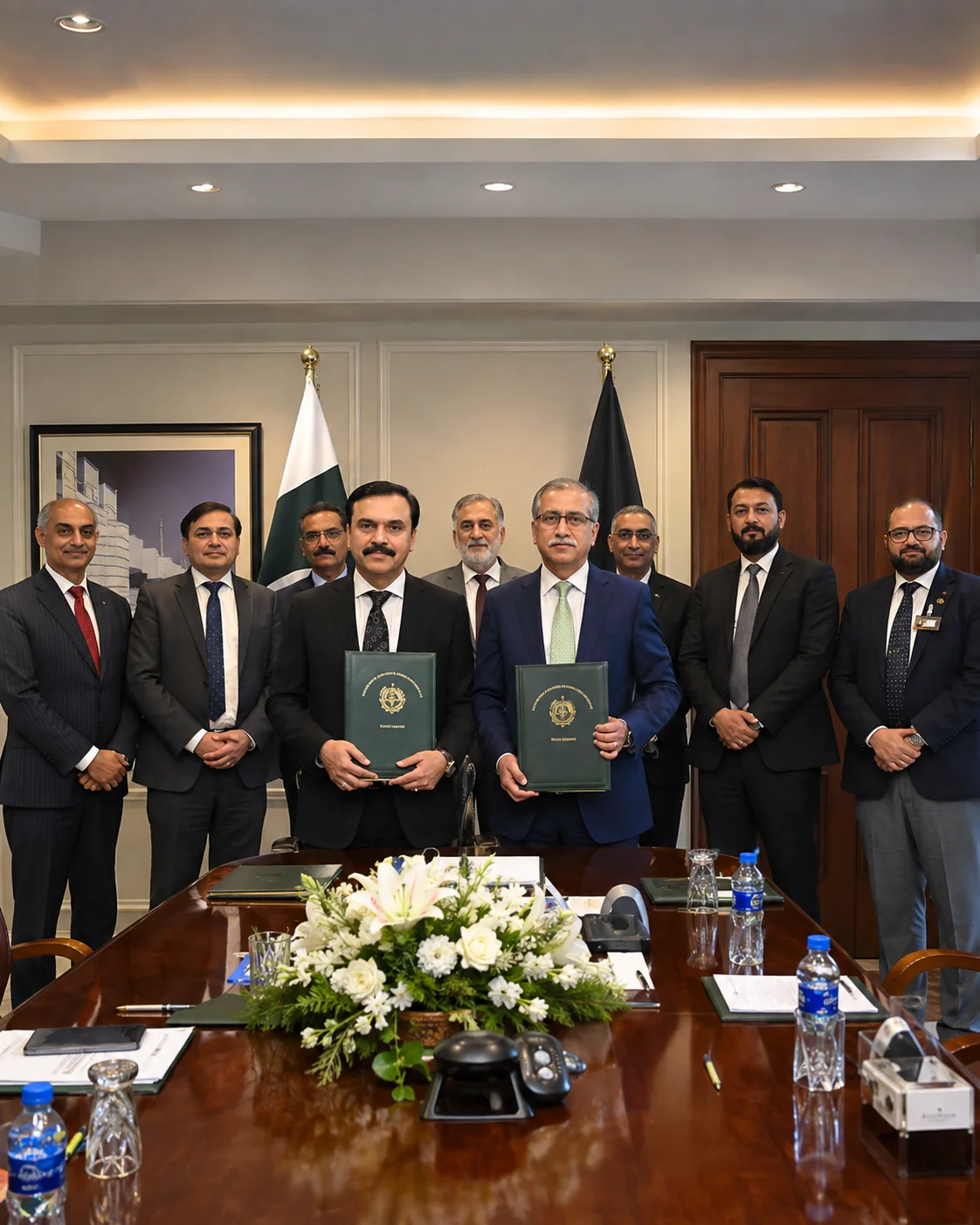
Khorev said Russia and Pakistan are finalising an agreement covering freight-related services. The process also involves identifying companies along the proposed route that have an interest in using the corridor.
This suggests that the project will require coordination beyond the two governments. Rail operators, logistics companies, freight forwarders and commercial businesses would all have a role in making the service commercially viable.
The ambassador also said the project experienced delays during 2025 and the early months of 2026, which he linked to heightened geopolitical tensions in the region.
No launch date for regular commercial freight operations was provided in the remarks reported by Izvestia.
Belarus could become part of the proposed corridor
Belarus is also being considered as a participant in the project.
The potential involvement of Belarus could give the proposed freight network a broader regional dimension, connecting Pakistan not only with Russia but potentially with another member of the Eurasian Economic Union (EAEU).
Belarus is a member of the EAEU alongside Russia, Kazakhstan, Armenia and Kyrgyzstan. The bloc has pursued trade and economic integration among its members and has also developed external trade arrangements with partner countries. The EAEU’s official website lists its institutional work on trade agreements and economic integration.
However, the precise role Belarus could play in the Pakistan-bound rail project has not been disclosed.
Why the Moscow-Karachi and Moscow-Faisalabad routes matter
A functioning freight railway between Russia and Pakistan could broaden the two countries’ transportation options and support greater bilateral trade.
For Pakistan, a northern land route could offer another channel for trade with Russia and potentially other Eurasian markets. For Russia, the connection could improve access to Pakistani markets and provide another route towards South Asia.
The proposed network could also become more significant if cargo volumes increase and additional countries or logistics operators become involved.
Karachi’s importance as a major commercial centre and Faisalabad’s industrial base make the two Pakistani destinations strategically relevant to a freight network. Faisalabad is particularly important to Pakistan’s manufacturing and textile sectors, while Karachi provides access to the country’s largest commercial and port infrastructure.
At this stage, however, it would be premature to assess the project’s eventual economic impact because the commercial terms, cargo volumes, transit arrangements and timetable have yet to be announced.
Russia and Pakistan deepen economic engagement
The rail proposal comes against the backdrop of broader efforts by Moscow and Islamabad to expand bilateral economic cooperation.
Pakistan and Russia established diplomatic relations on May 1, 1948. Their relationship has passed through several phases, including periods when Cold War geopolitical alignments limited closer cooperation.
Economic engagement has nevertheless continued to develop in areas including energy, trade, infrastructure and education.
Russian involvement in major Pakistani industrial and energy projects also has a historical dimension. Soviet specialists participated in the development of the Karachi Steel Mills and the Guddu Thermal Power Plant, projects that became notable examples of Soviet-Pakistani economic cooperation.
More recently, both countries have sought to increase trade and explore new transport and economic links.
The Russian Embassy in Pakistan has also highlighted expanding contacts between the two countries in areas including political, academic and economic cooperation.
EAEU-Pakistan trade talks add another dimension
The proposed rail corridor is also being discussed alongside efforts to strengthen trade relations between Pakistan and the wider Eurasian economic bloc.
Russian Deputy Prime Minister Alexey Overchuk said on August 6 that discussions were underway between the EAEU and Pakistan regarding a possible free trade agreement. According to the remarks cited in the supplied report, an expert group has already conducted consultations and formal negotiations are expected to begin.
An eventual trade agreement could potentially complement improved transport connectivity by reducing some trade barriers between Pakistan and EAEU markets.
However, a free trade agreement remains a separate process from the proposed railway services. Neither initiative should be regarded as completed until the relevant agreements are formally concluded and implemented.
The EAEU already operates a number of external trade arrangements. Its official information records, for example, the signing of a free trade agreement with Iran in December 2023.
A project still dependent on implementation
The proposed Moscow-Karachi and Moscow-Faisalabad freight services represent an important ambition in Russia-Pakistan economic relations, but several practical issues remain to be resolved before commercial operations can begin.
These include the final freight agreement, selection of participating companies, route coordination, customs procedures, cargo handling arrangements and the commercial viability of regular services.
The possible inclusion of Belarus could further expand the project’s scope, although details of its participation have yet to be announced.
For now, the project should therefore be viewed as a developing freight initiative rather than an operational railway service.
If the necessary agreements are completed and commercial demand is established, the proposed routes could provide Pakistan and Russia with another channel for bilateral trade and strengthen their links with wider Eurasian markets.
Source:
- Izvestia — interview with Russian Ambassador to Pakistan Albert Khorev, published August 8, 2026.
- Embassy of the Russian Federation in Pakistan — official communications concerning Russia-Pakistan cooperation.
- Eurasian Economic Union — official information on the EAEU and its external trade agreements.
Our audience means everything to us.
Have feedback or suggestions to make us better? We’re always listening—feel free to get in touch with us at editor@truthorahub.com




Leave a Comment