

From Cattle Markets to Mobile Payments: Is Pakistan Entering a New Cashless Era?
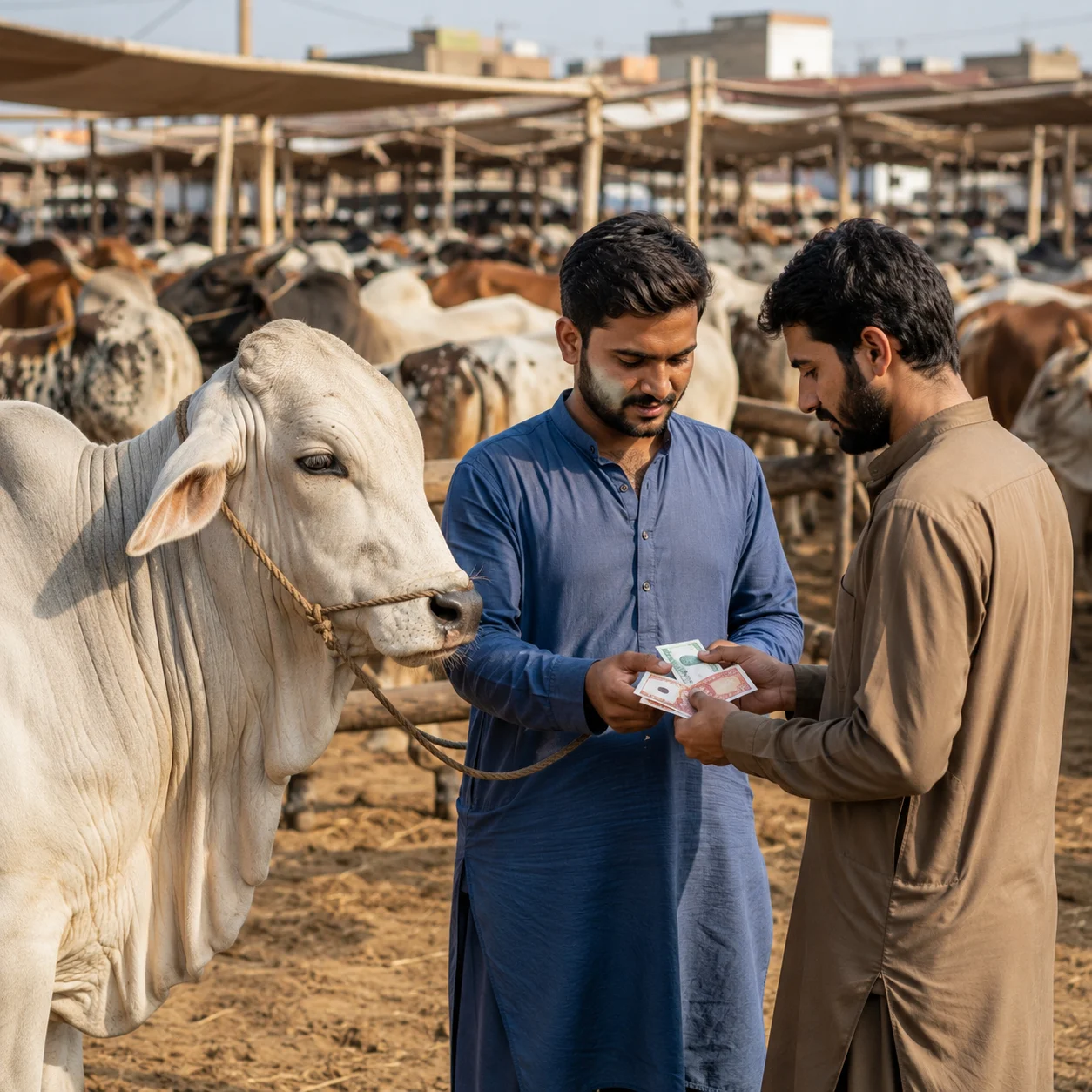
For decades, Pakistan’s cattle markets have been synonymous with cash. Buyers often arrived carrying large amounts of money, traders preferred physical transactions, and the entire ecosystem revolved around cash exchanges. However, Eid-ul-Azha 2026 may be remembered as a turning point in the country’s financial history.
According to the State Bank of Pakistan (SBP), digital transactions conducted during this year’s Eid-ul-Azha cattle market season crossed Rs34 billion, marking a dramatic rise compared to previous years. The number of digital transactions also surged more than seven times compared to 2025, highlighting the growing acceptance of technology-driven financial services among ordinary Pakistanis.
The development is more than just a statistical achievement. It reflects changing consumer behavior, increasing trust in digital banking, and the success of nationwide efforts to bring Pakistan’s economy closer to a cashless future.
A Record-Breaking Eid for Digital Payments
The numbers released by the SBP paint a remarkable picture.
During the Eid-ul-Azha 2026 season, more than 480,000 digital transactions worth over Rs34 billion were processed through various digital payment channels. In comparison, approximately 65,000 transactions worth Rs4.6 billion were recorded during the previous year’s campaign.
This means transaction volume increased more than sevenfold, while transaction value grew nearly eight times within just one year.
For a country where cash has traditionally dominated commercial activity, especially in livestock markets, these figures demonstrate a significant shift in consumer confidence.
Financial experts believe that such rapid growth indicates that Pakistanis are becoming increasingly comfortable using mobile banking applications, QR code payments, digital wallets, and instant payment systems for high-value transactions.
Why Are Cattle Markets Important?
Many people may wonder why the State Bank focuses specifically on cattle markets during Eid-ul-Azha.
The answer lies in the sheer size of economic activity generated during the festival.
Every year, millions of Pakistanis purchase sacrificial animals, creating one of the largest seasonal marketplaces in the country. Billions of rupees exchange hands within a few weeks, making cattle markets an ideal environment for promoting digital financial services.
Historically, these transactions were almost entirely cash-based. Buyers often carried substantial sums, while traders had limited access to formal banking services.
Recognizing this challenge, the State Bank has gradually transformed cattle markets into testing grounds for digital financial inclusion.
The strategy appears to be working.
The Go Cashless Campaign Explained
To encourage digital transactions during Eid-ul-Azha 2026, the SBP launched its nationwide “Go Cashless” campaign.
The initiative was designed to make digital payments easier, safer, and more accessible for both buyers and sellers. The campaign formed part of the central bank’s broader vision to reduce dependence on cash and accelerate digitization across Pakistan’s financial system.
This year, the campaign expanded significantly.
Coverage increased from 54 cattle markets in 2025 to 123 markets across Pakistan in 2026. The expansion allowed digital payment facilities to reach a much larger segment of the population.
How Banks Brought Digital Banking to the Markets
One of the most important aspects of the campaign was the active participation of commercial banks.
A total of 22 banks established dedicated camps and kiosks within cattle markets. These facilities helped buyers and sellers complete transactions without relying on physical cash.
Bank representatives assisted livestock traders, transporters, and related service providers in opening accounts and registering for digital payment services.
Through real-time biometric verification, many participants were onboarded directly at the markets without needing to visit bank branches.
Sellers also received QR codes that allowed customers to transfer money instantly using banking apps and digital wallets.
For many traders, this was their first experience using modern digital financial tools.
Mobile Banking Vans Changed the Experience
The State Bank and participating banks introduced another innovation that proved highly effective: mobile banking vans.
These mobile units were equipped with:
- Automated Teller Machines (ATMs)
- Cash Deposit Machines (CDMs)
- Cash counters
- Banking support services
The vans provided on-site financial services in areas where traditional banking facilities were not readily available.
This approach reduced inconvenience for traders and helped channel more money into the formal banking system.
Instead of carrying large sums of cash, merchants could deposit funds securely and continue business operations with greater confidence.
Building Trust Among First-Time Users
One of the biggest obstacles to digital adoption is trust.
Many Pakistanis, especially those operating in informal sectors, remain cautious about using digital platforms for large transactions.
The 2026 campaign addressed these concerns through extensive awareness programs.
The State Bank conducted nationwide outreach through television, radio, newspapers, and social media. Participating banks also ran educational campaigns explaining the benefits of digital payments and demonstrating how to use various services safely.
These efforts appear to have paid off.
The sharp increase in digital activity suggests that users are becoming more comfortable with cashless transactions and recognizing their convenience.
New Accounts Opened During the Campaign
Another important achievement was financial inclusion.
According to the central bank, approximately 12,500 new accounts were opened for cattle farmers, traders, transporters, and other service providers during the campaign.
This may seem like a small figure compared to the overall population, but its significance extends beyond the numbers.
Each newly opened account represents an individual entering Pakistan’s formal financial system.
Once connected to digital banking, these users gain access to additional financial services such as savings products, payment solutions, financing options, and digital commerce opportunities.
What Does This Mean for Pakistan’s Economy?
The success of the Go Cashless campaign highlights a broader transformation taking place across Pakistan’s economy.
Digital transactions offer several advantages:
Greater Transparency
Electronic transactions create verifiable records, reducing opportunities for fraud and improving financial transparency.
Enhanced Security
Carrying large amounts of cash poses security risks. Digital payments significantly reduce those risks for both buyers and sellers.
Improved Financial Inclusion
Digital banking enables previously underserved individuals to access formal financial services.
Faster Transactions
Payments can be completed instantly without counting cash or dealing with change.
Better Economic Documentation
A greater share of economic activity becomes visible within the formal financial system, helping policymakers understand economic trends more accurately.
Pakistan’s Digital Banking Boom Is Not Limited to Eid
The growth seen during Eid-ul-Azha is part of a much larger trend.
The State Bank’s latest quarterly report indicates that Pakistan’s retail payment ecosystem continues to expand rapidly.
During the quarter, retail transaction volume increased by 8 percent, while transaction value rose by 7 percent to reach approximately Rs167 trillion.
Digital channels accounted for 92 percent of all retail transactions, showing how deeply digital banking has become integrated into everyday economic activity.
Meanwhile, digital payments alone reached 3.1 billion transactions with a value of around Rs64 trillion.
These figures suggest that Pakistan’s transition toward digital finance is no longer limited to urban populations or younger consumers. Adoption is spreading across different demographics and sectors.
Can Pakistan Become a Truly Cashless Economy?
The question many observers are asking is simple:
Can Pakistan eventually become a predominantly cashless economy?
While a complete transition may still take years, recent trends suggest the country is moving steadily in that direction.
Government initiatives, banking sector innovation, widespread smartphone adoption, and payment platforms such as Raast are creating conditions that make digital transactions increasingly practical and attractive.
Challenges certainly remain. Internet access gaps, digital literacy issues, and resistance from some cash-dependent sectors continue to slow progress.
However, the success witnessed during Eid-ul-Azha 2026 demonstrates that meaningful change is possible when infrastructure, awareness, and incentives align.
The Road Ahead
The story of Pakistan’s digital transformation is still being written.
Just a few years ago, the idea of billions of rupees changing hands digitally within cattle markets would have seemed unrealistic. Today, it is becoming a reality.
The impressive performance of the Go Cashless campaign suggests that Pakistanis are embracing new ways to transact, save, and manage money.
As digital payment systems become more accessible and trusted, future Eid seasons may see even larger volumes flowing through electronic channels.
For now, one thing is clear: Pakistan’s journey toward a digital economy has gained significant momentum, and Eid-ul-Azha 2026 may well be remembered as one of the milestones that accelerated that journey.
Source:
State Bank of Pakistan (SBP), Dawn, Business Recorder, Geo News, ProPakistani, Pakistan Today, The Nation, and other published reports on the Go Cashless Eid-ul-Azha 2026 campaign.
Our audience means everything to us.
Have feedback or suggestions to make us better? We’re always listening—feel free to get in touch with us at truthora2026@gmail.com



Leave a Comment