

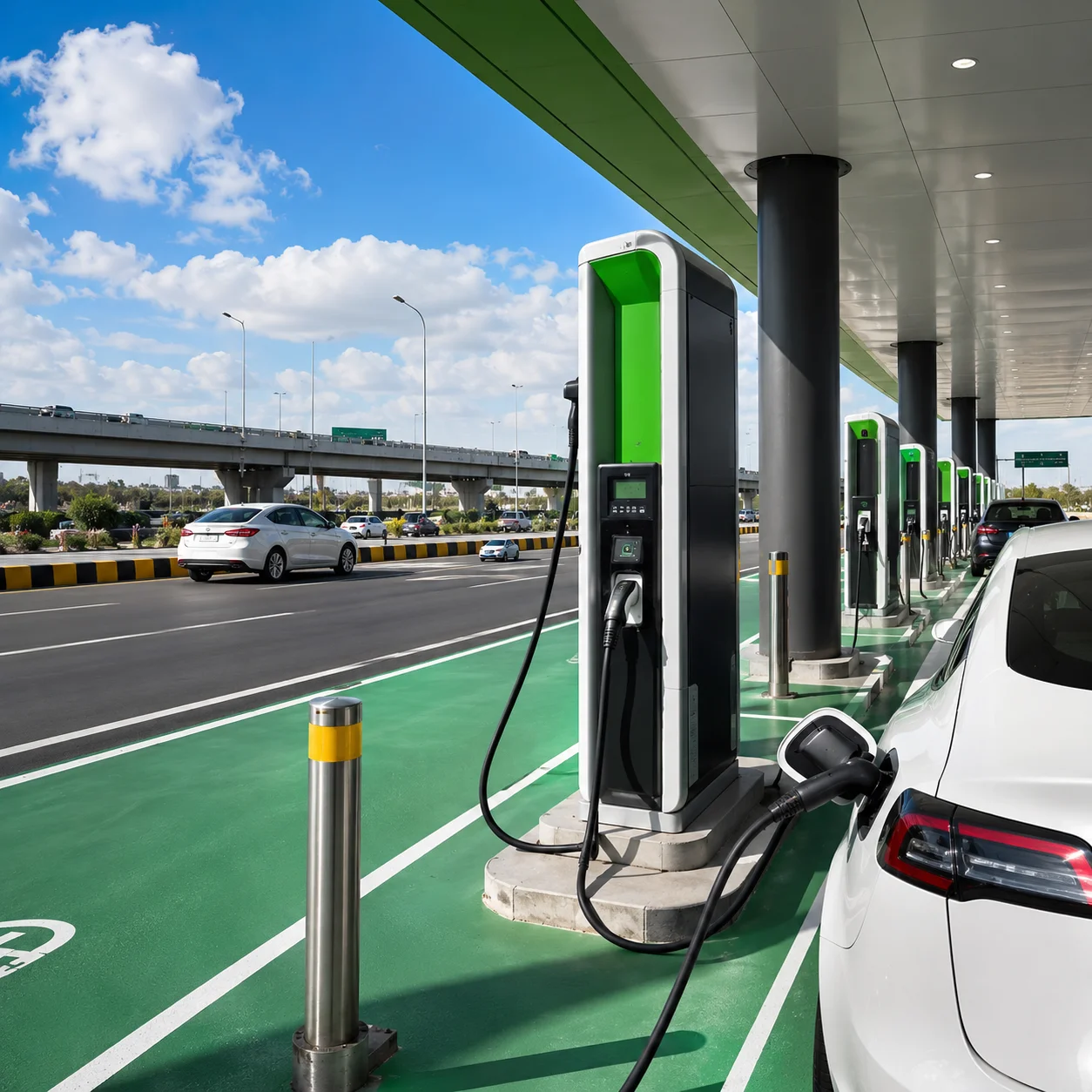
Pakistan may soon witness a major transformation in the way people travel as the federal government pushes forward with a large-scale electric vehicle charging infrastructure plan. From motorways to major highways, officials are preparing a network that could completely change the future of transport in the country.
Fast Charging Stations Every 120 Kilometers?
Imagine driving from Karachi to Lahore in an electric vehicle without constantly worrying about battery life. Sounds impossible right now? That could soon become reality.
According to official plans, around 40 Level 3 fast-charging stations are expected to be installed along motorways and the N-5 highway. These stations would reportedly appear after nearly every 120 kilometers, allowing electric vehicles to recharge in roughly 40 minutes to one hour.
For many Pakistanis, “range anxiety” has been one of the biggest reasons for avoiding electric vehicles. But if these charging points become operational, long-distance EV travel could finally become practical.
Thousands of Charging Stations Planned Nationwide
The proposal does not stop at highways only. Authorities are reportedly targeting nearly 3,000 EV charging stations across Pakistan by 2030.
The broader plan includes:
- 1,050 Level 3 fast chargers for rapid charging
- 750 Level 2 chargers for medium-duration charging
- 600 Level 1 chargers designed for overnight charging
- 600 battery swap stations for quick battery replacement
This means Pakistan is not just experimenting with EV technology anymore. The country appears to be preparing for a complete transportation shift over the next decade.
What About Petrol Pumps?
One of the most interesting parts of the proposal involves existing fuel stations.
Officials are considering making it mandatory for oil marketing companies to install fast chargers at at least 10 percent of their petrol stations in every province. If implemented, traditional fuel stations may soon begin serving both petrol vehicles and electric cars together.
This move could make charging stations easier to access for ordinary citizens while reducing the need for entirely new infrastructure.
Government Funding and Private Partnerships
A major challenge for EV infrastructure is cost. Charging stations require expensive equipment, reliable electricity, and proper maintenance.
To support the project, the government plans to provide nearly Rs. 2.25 billion under a public-private partnership model. The funding is expected to help install charging stations in locations where private investors alone may not see immediate profits.
Experts believe this approach could encourage companies to enter the EV sector faster.
Will Charging Be Affordable?
The Power Division has reportedly proposed an EV charging tariff of Rs. 39.7 per kilowatt-hour to make commercial operations financially workable.
Still, one important question remains:
Will electric vehicles actually become cheaper to operate than petrol and diesel cars in Pakistan?
For many middle-class families struggling with rising fuel prices, the answer to this question may decide how quickly EV adoption grows.
A Big Shift for Pakistan’s Future?
Around the world, countries are rapidly shifting toward electric mobility. Pakistan has been relatively slow in comparison, but these new proposals suggest the country may finally be preparing to catch up.
Cleaner air, lower fuel imports, quieter roads, and reduced dependence on fossil fuels are some of the biggest advantages supporters highlight.
However, concerns still exist regarding electricity shortages, charging reliability, battery costs, and long-term maintenance.
So the real question is:
Can Pakistan successfully build an EV ecosystem that ordinary citizens can trust?
The next few years may provide the answer.
Source:
Our audience means everything to us.
Have feedback or suggestions to make us better? We’re always listening—feel free to get in touch with us at truthora2026@gmail.com




Leave a Comment