

Government Revises Closing Hours as Summer Heat and Longer Days Change Daily Routines
Pakistan’s federal government has announced revised business closing hours across the country, allowing markets, shopping malls, retail stores, and commercial centres to remain open for longer during the summer season.
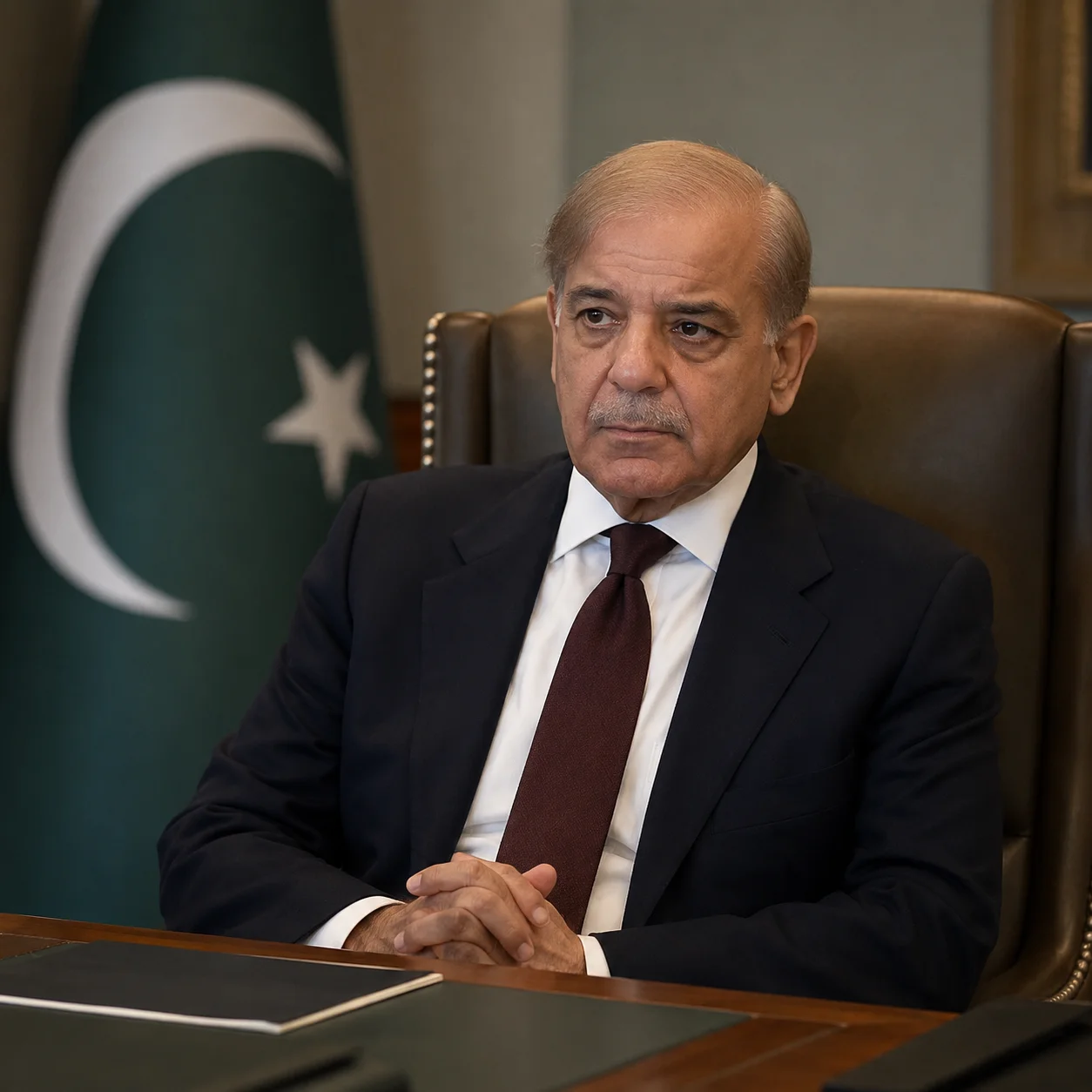
The decision, approved by Prime Minister Shehbaz Sharif, comes as authorities attempt to balance economic activity, consumer convenience, and ongoing energy conservation efforts. While many businesses have welcomed the move, others are wondering how the new timings will affect electricity consumption, market activity, and the government’s broader austerity campaign.
The announcement has quickly become a topic of discussion among traders, shopkeepers, consumers, and economists.
Will longer business hours boost sales? Can the government maintain its energy-saving goals while extending commercial operations? And what does this change mean for ordinary Pakistanis?
Let’s explore the details.
Why Were Business Timings Changed?
According to the federal government, the primary reason behind the decision is straightforward: summer.
As temperatures continue to rise across Pakistan and daylight hours become longer, authorities believe extended operating hours will better align with public activity patterns.
Many Pakistanis avoid outdoor shopping during the hottest parts of the day, especially in major cities such as Karachi, Lahore, Islamabad, Faisalabad, Peshawar, and Quetta.
By allowing businesses to stay open later, consumers can shop in relatively cooler evening hours while retailers benefit from increased customer traffic.
Officials say the decision aims to accommodate both public convenience and commercial needs.
What Are the New Business Timings?
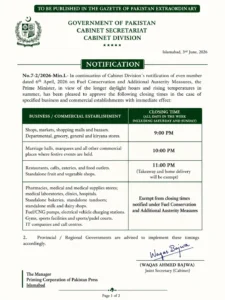
Under the revised schedule:
Markets and Retail Shops
Markets, shopping centres, malls, departmental stores, grocery outlets, general stores, and kiryana shops can remain open until 9:00 PM throughout the week.
Marriage Halls and Event Venues
Marriage halls, marquees, banquet facilities, and other event-related venues must close by 10:00 PM.
Restaurants and Food Businesses
Restaurants, cafes, eateries, food outlets, and similar establishments can continue operating until 11:00 PM.
Importantly, takeaway and home delivery services remain exempt from these restrictions.
This exemption is expected to benefit food delivery platforms and restaurants that rely heavily on online orders.
Which Businesses Are Exempt?
Not all businesses fall under the revised restrictions.
The government has exempted several essential sectors from mandatory closing times.
These include:
- Hospitals
- Clinics
- Medical laboratories
- Pharmacies
- Bakeries
- Tandoors
- Milk shops
- Dairy outlets
- Fuel stations
- Electric vehicle charging stations
- Information technology companies
- Call centres
- Sports facilities
- Fitness centres and gyms
Officials say these services are considered essential and therefore require operational flexibility.
A Decision Linked to Pakistan’s Austerity Measures?
At first glance, extending business hours may seem contradictory to Pakistan’s ongoing austerity campaign.
After all, the government has spent months encouraging energy conservation.
So why extend operating hours now?
The answer lies in balancing economic realities with changing seasonal conditions.
Government officials argue that summer daylight patterns naturally shift consumer activity into evening hours.
Instead of forcing businesses to close early when customer demand remains high, policymakers believe adjusted timings can support economic activity without significantly increasing energy consumption.
Whether this balance can be achieved remains a subject of debate.
Understanding Pakistan’s Ongoing Austerity Campaign
The timing change comes during one of Pakistan’s most extensive austerity drives in recent years.
The government introduced a series of energy-saving and cost-reduction measures after global energy markets experienced significant disruptions linked to regional instability in the Middle East.
The situation intensified following concerns surrounding shipping routes and oil supplies in the Gulf region.
To reduce expenditure and conserve energy, authorities implemented several measures, including:
Reduced Fuel Usage
Official vehicle fuel allocations were cut significantly.
Fewer Government Vehicles
A large portion of government-owned vehicles were removed from regular operation.
Restrictions on Foreign Travel
Government officials faced limitations on non-essential overseas visits.
Energy Conservation Efforts
Various public and private sectors were encouraged to adopt energy-saving practices.
The extension of business hours represents one of the first notable adjustments to these policies.
What Are Traders Saying?
Many business owners have welcomed the decision.
For months, traders across Pakistan argued that earlier closing times were affecting sales, particularly during summer when shopping activity naturally shifts toward evening hours.
Retail associations repeatedly requested greater flexibility, claiming that customer traffic often peaks after sunset.
A clothing retailer in Lahore explained that many working families only begin shopping after office hours.
Similarly, restaurant owners noted that dinner crowds typically arrive later in the evening, making earlier closing times difficult for business operations.
For many traders, the revised schedule offers an opportunity to recover revenue lost due to restricted operating hours.
The Consumer Perspective
From the consumer’s point of view, the change may bring several advantages.
More Comfortable Shopping
Summer temperatures in many parts of Pakistan frequently exceed 40 degrees Celsius.
Evening shopping allows people to avoid intense daytime heat.
Greater Convenience
Working professionals often struggle to visit markets during standard business hours.
Extended timings provide more flexibility.
Improved Family Shopping Experience
Many families prefer visiting malls and markets together after sunset, especially during summer months.
The new schedule accommodates these habits.
As a result, many consumers have reacted positively to the announcement.
Could Longer Hours Boost Economic Activity?
Economists believe the impact will depend on several factors.
Longer operating hours do not automatically guarantee increased spending.
However, they may improve access to commercial activity and encourage greater consumer participation.
Possible economic benefits include:
- Increased retail sales
- Higher foot traffic in commercial areas
- Greater restaurant revenue
- Additional employment opportunities
- Improved business confidence
Some analysts suggest that even modest increases in consumer activity could provide welcome support for sectors facing economic challenges.
The Energy Question
One concern frequently raised involves electricity consumption.
Will keeping businesses open longer increase energy demand?
Experts say the answer is not straightforward.
On one hand, extended operating hours may increase electricity usage in some commercial sectors.
On the other hand, authorities argue that longer daylight hours reduce dependence on artificial lighting during portions of the evening.
Additionally, some energy experts note that shifting consumer activity into cooler hours may reduce air-conditioning demand compared to daytime shopping.
The actual impact will likely become clearer over the coming months.
Why Summer Changes Consumer Behavior
The government’s decision reflects a simple reality of life in Pakistan.
During peak summer months, daily routines often shift dramatically.
In many cities:
- Outdoor activities decline during afternoon heat
- Shopping moves into evening hours
- Restaurants become busier after sunset
- Family outings occur later in the day
- Markets remain active well into the night
These patterns are especially noticeable in densely populated urban centres.
By adjusting business hours, authorities appear to be responding to existing consumer behavior rather than attempting to change it.
A Broader Economic Challenge
The revised business timings also highlight a larger challenge facing Pakistan’s economy.
Policymakers must constantly balance competing priorities:
- Supporting businesses
- Conserving energy
- Managing inflation
- Encouraging economic growth
- Protecting consumers
Every policy decision involves trade-offs.
Extending business hours may help retailers and consumers, but it must also align with broader economic objectives.
This balancing act has become increasingly important as Pakistan navigates economic reforms, fiscal pressures, and changing global conditions.
What Happens Next?
Provincial governments have been advised to implement the revised timings accordingly.
In the coming weeks, authorities will likely monitor:
- Business activity levels
- Consumer response
- Energy consumption trends
- Market compliance
- Economic impact
If the changes prove successful, they could influence future decisions regarding commercial operating hours.
Businesses, meanwhile, are expected to adapt quickly to the new schedule.
For shoppers, the adjustment means more flexibility and additional time to visit markets during the summer season.
The Bottom Line
Pakistan’s decision to extend business operating hours reflects both seasonal realities and economic considerations.
With longer daylight hours, rising temperatures, and changing consumer habits, the government believes revised market timings can support commercial activity while maintaining broader policy goals.
Whether the move significantly boosts economic activity remains to be seen.
However, for millions of Pakistanis, one thing is certain: evening shopping just became a little easier.
As businesses adjust and consumers adapt, the coming months will reveal whether the new schedule delivers the benefits policymakers hope to achieve.
Source:
Cabinet Division Notification, Government of Pakistan, Ministry of Parliamentary Affairs, Dawn, Express Tribune, Business Recorder.
Our audience means everything to us.
Have feedback or suggestions to make us better? We’re always listening—feel free to get in touch with us at truthora2026@gmail.com





Leave a Comment