

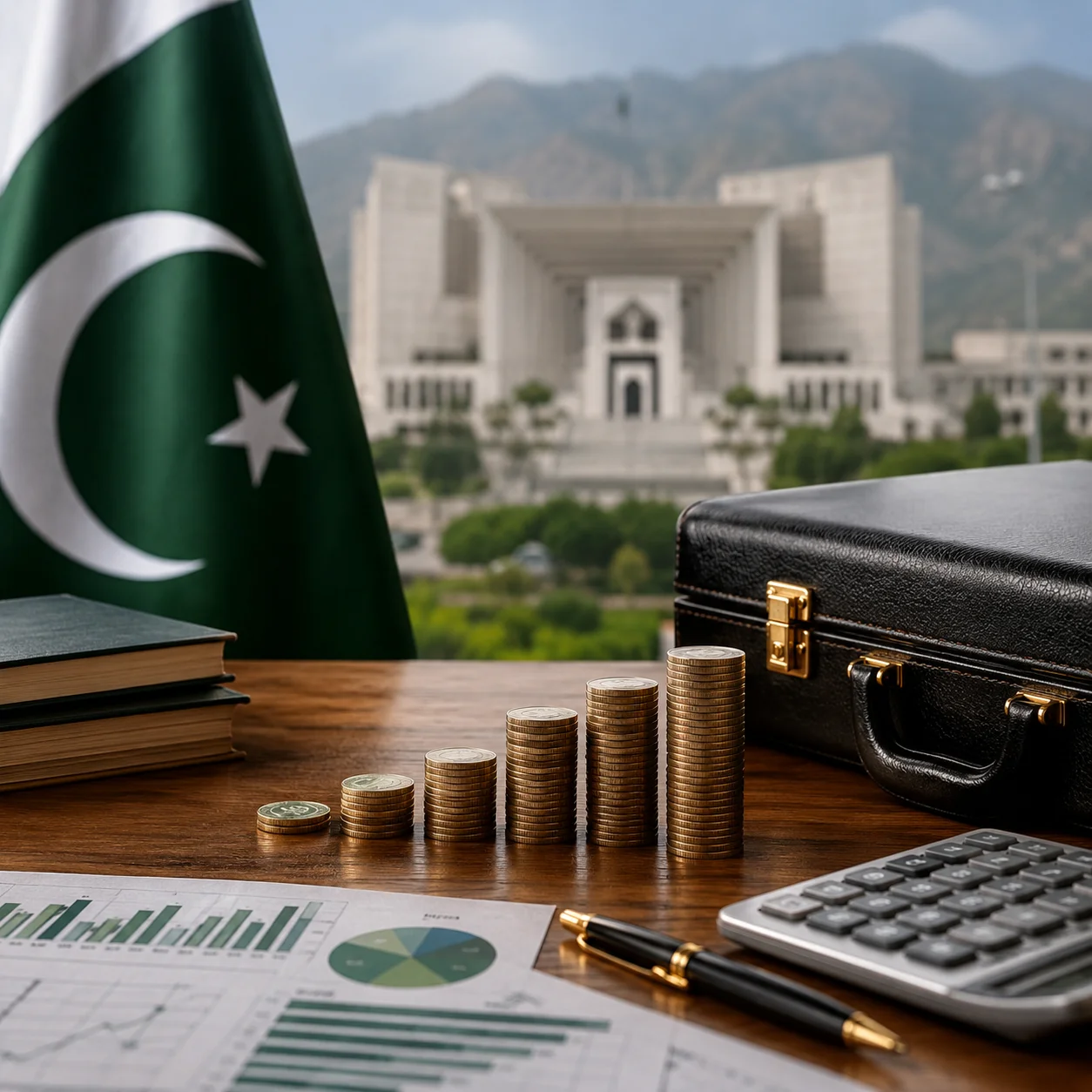
Budget Presentation Rescheduled as Key Economic Decisions Near
Pakistan’s federal budget is one of the most anticipated economic events of the year, shaping government spending, taxation policies, development projects, and relief measures for millions of citizens. This year, however, the budget process has taken an unexpected turn.
The federal government has officially postponed the presentation of the Budget 2026-27, moving it from the previously expected date of June 5 to June 10. The announcement has triggered widespread discussion among economists, business leaders, investors, taxpayers, and ordinary citizens who are eager to learn what financial measures the government plans to introduce for the upcoming fiscal year.
But why was the budget delayed? Is it merely a scheduling adjustment, or does it signal deeper political and economic negotiations behind the scenes?
Let’s take a closer look at what is happening and why this budget could become one of the most important financial roadmaps in recent years.
What Changed?
Parliamentary Affairs Minister Dr. Tariq Fazal Chaudhry confirmed that the federal budget for fiscal year 2026-27 will now be presented on June 10.
The announcement came after widespread speculation in Pakistani media regarding a possible postponement. Sessions of both houses of Parliament had initially been scheduled with expectations that the budget would be unveiled on June 5.
However, government officials later clarified that additional consultations were needed before the final budget document could be presented.
The revised schedule means policymakers now have several extra days to finalize economic targets, spending priorities, taxation proposals, and coalition consultations before the budget reaches Parliament.
Why Was the Budget Delayed?
According to government representatives, the primary reason behind the delay is political consultation.
Pakistan’s coalition government consists of multiple parties whose support is crucial for passing major financial legislation. Officials have indicated that discussions with coalition partners remain ongoing, and the government wants to ensure broad consensus before unveiling the country’s financial plan.
Political analysts note that coalition governments often require extensive negotiations before major policy announcements. Budget decisions affect every sector of society, making agreement among political stakeholders particularly important.
The government has denied reports suggesting that the delay is linked to secret legislation or hidden financial measures.
Instead, officials maintain that consultations and coordination remain the main reason for adjusting the schedule.
Why Is This Budget So Important?
The upcoming budget arrives at a critical moment for Pakistan’s economy.
Over the past few years, Pakistan has faced significant economic challenges, including inflation, fiscal deficits, external financing pressures, and currency fluctuations.
While some economic indicators have shown signs of stabilization, millions of Pakistanis continue to feel pressure from rising living costs.
As a result, expectations surrounding Budget 2026-27 are exceptionally high.
Citizens want answers to several important questions:
- Will there be tax relief for salaried individuals?
- Will electricity and gas costs decrease?
- Will development spending increase?
- Will businesses receive incentives?
- How will inflation be controlled?
- What measures will support economic growth?
The budget is expected to address many of these concerns.
Pakistan’s Economic Targets for FY2026-27
Government planning bodies have already outlined several major economic targets for the upcoming fiscal year.
According to the approved macroeconomic framework, Pakistan is targeting economic growth of approximately 4 percent during FY2026-27, compared to around 3.7 percent growth recorded during the current fiscal year. Inflation is expected to be targeted near 8.2 percent.
Achieving these goals will not be easy.
Economic experts say the government must strike a delicate balance between growth and fiscal discipline. Excessive spending could increase deficits, while aggressive taxation could slow economic activity.
Finding the middle ground will be one of the biggest challenges facing policymakers.
The IMF Factor: How Much Influence Does It Have?
One of the most closely watched aspects of this budget is the role of the International Monetary Fund (IMF).
Pakistan’s economic policy framework remains closely linked to ongoing discussions and commitments made under IMF-supported programs. Reports indicate that IMF representatives have already discussed budget strategy with Pakistani authorities.
This means the government will likely face pressure to:
- Improve tax collection
- Control fiscal deficits
- Reduce unnecessary expenditures
- Strengthen revenue generation
- Maintain economic stability
Many analysts believe the IMF’s recommendations will significantly influence the final shape of the budget.
At the same time, the government must ensure that IMF-driven reforms do not place excessive pressure on ordinary citizens already struggling with inflation.
Development Spending Under the Spotlight
Another major area of debate is the Public Sector Development Programme (PSDP).
Reports suggest that funding allocations for some sectors may be adjusted as the government seeks additional fiscal space for infrastructure projects and coalition commitments.
Development spending often plays a crucial role in:
- Creating employment opportunities
- Improving infrastructure
- Expanding transportation networks
- Supporting education projects
- Enhancing healthcare facilities
Critics argue that cuts to certain development sectors could slow long-term economic progress. Supporters, however, say the government must prioritize projects that deliver the highest economic returns.
The final budget document will reveal which sectors receive greater attention and which may face tighter allocations.
What Businesses Are Expecting
Pakistan’s business community is closely monitoring budget developments.
Many business leaders have urged policymakers to introduce reforms that encourage investment, improve ease of doing business, and simplify taxation.
Among the key demands from the private sector are:
Lower Tax Burden
Businesses want a more predictable and investor-friendly tax environment.
Export Incentives
Exporters continue to seek measures that enhance Pakistan’s competitiveness in international markets.
Industrial Support
Manufacturers are hoping for relief from rising operational costs, particularly energy expenses.
Economic Stability
Perhaps most importantly, investors are seeking policy consistency that allows them to plan for the future with confidence.
What Ordinary Pakistanis Want to Know
While economists focus on growth targets and fiscal deficits, most Pakistanis are concerned about something much simpler:
“Will life become more affordable?”
Households across the country are waiting to see whether the budget includes meaningful relief measures.
Many families are hoping for:
- Lower utility costs
- Reduced inflationary pressures
- Salary relief measures
- Affordable transportation costs
- Better employment opportunities
For millions of middle-class and low-income households, these issues matter far more than macroeconomic indicators.
The government’s challenge will be balancing public expectations with fiscal realities.
Could the Budget Bring Major Tax Changes?
Tax reforms are expected to be one of the most closely watched elements of Budget 2026-27.
Pakistan’s tax-to-GDP ratio remains a key concern for policymakers and international lenders. Therefore, the government may introduce new measures aimed at increasing revenue collection.
However, officials must carefully evaluate the impact of any new taxes on businesses and consumers.
If taxes rise significantly, inflationary pressures could increase. If taxes remain unchanged, revenue targets may become difficult to achieve.
This balancing act often defines budget-making in Pakistan.
The Bigger Picture
The delay in the federal budget may appear minor on the surface, but it reflects the complex realities of governing a modern economy.
Political negotiations, coalition management, IMF commitments, economic growth targets, development spending, and public expectations are all intersecting at the same time.
The decisions made in the coming days could influence Pakistan’s economic direction for the entire fiscal year.
Whether the final budget succeeds will depend not only on the numbers presented in Parliament but also on how effectively those policies are implemented afterward.
As June 10 approaches, businesses, investors, economists, and ordinary citizens alike will be watching closely to see what path Pakistan chooses for its economic future.
Source:
Dawn, Samaa TV, Government Statements, Parliamentary Affairs Ministry
Have feedback or suggestions to make us better? We’re always listening—feel free to get in touch with us at truthora2026@gmail.com



Leave a Comment