

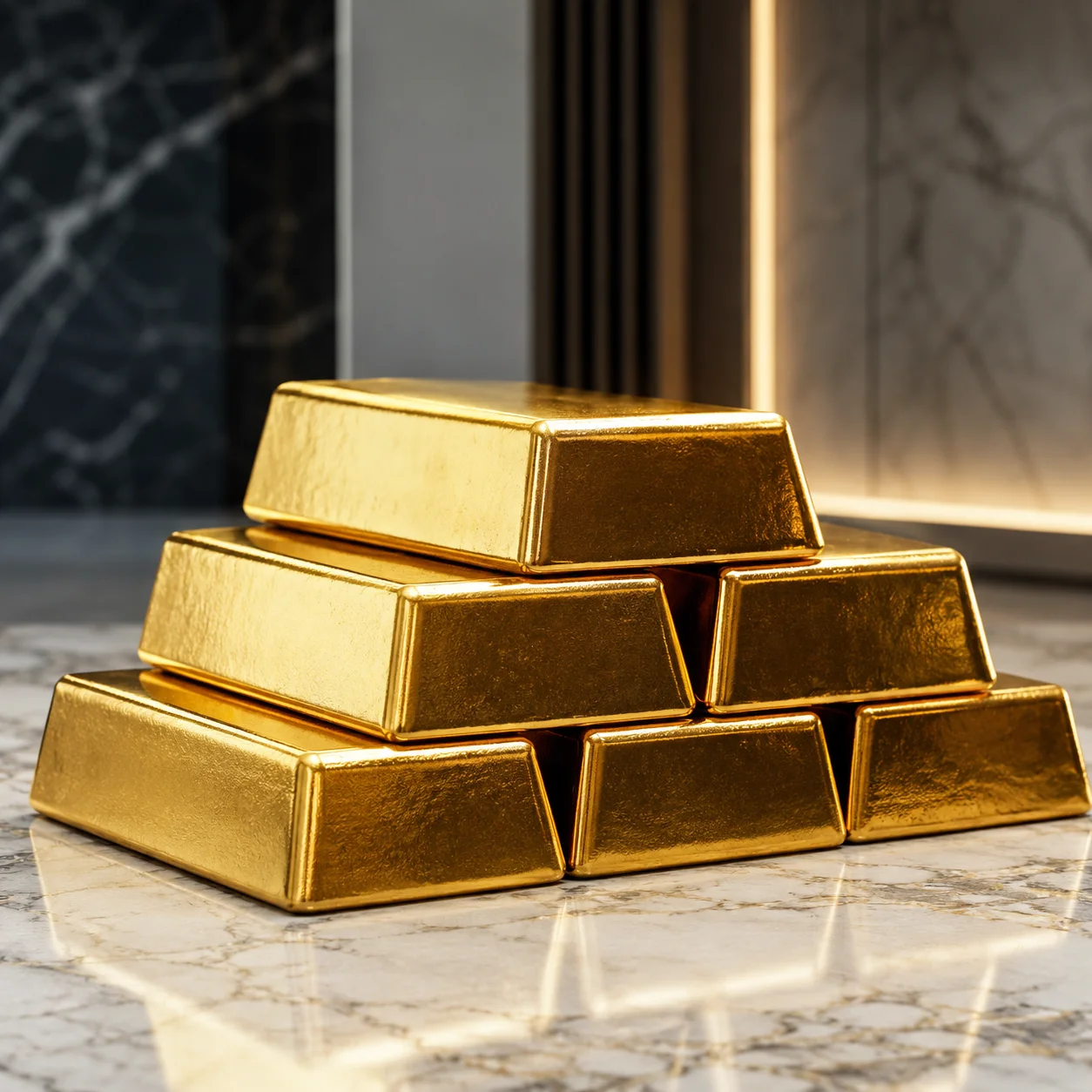
Gold Loses Momentum After Recent Rally
After reaching near-record levels earlier this week, gold prices in Pakistan witnessed a decline on Friday, reflecting weakness in the international bullion market. The drop comes as investors worldwide reassess economic signals, leading to fluctuations in one of the world’s most closely watched safe-haven assets.
According to the latest market rates released by the All Pakistan Gems and Jewellers Sarafa Association (APGJSA), the price of gold per tola decreased by Rs1,469, bringing the rate down to Rs467,816.
Similarly, the price of 10 grams of gold declined by Rs1,323 to settle at Rs401,012.
While the decrease may appear modest compared to the massive gains recorded over the past year, it has attracted significant attention from investors, jewellery buyers, and market analysts across Pakistan.
But what exactly caused the decline? And should buyers consider this a good opportunity to purchase gold?
Let’s take a deeper look.
A Small Decline After a Strong Upward Journey
Gold has been one of the strongest-performing assets globally over the last several years.
Political uncertainty, inflation concerns, central bank purchases, geopolitical tensions, and economic instability have pushed investors toward precious metals as a safe store of value.
In Pakistan, gold prices have experienced extraordinary growth due to both international market trends and fluctuations in the Pakistani rupee.
Just a day before the recent decline, gold prices had climbed sharply.
On Thursday, the price of gold per tola increased by Rs1,523, reaching Rs469,285.
That increase continued a trend that has kept gold near historic highs throughout much of 2026.
The latest fall therefore appears more like a correction rather than a dramatic market reversal.
Still, every price movement matters when gold is trading at such elevated levels.
What Happened in the International Gold Market?
The decline in Pakistan closely followed developments in global markets.
Internationally, gold prices dropped by approximately $14 per ounce, bringing the global rate to around $4,453 per ounce, including premium adjustments.
Because Pakistan’s gold market is closely connected to international pricing, any movement in global bullion rates typically affects local prices almost immediately.
Gold prices are influenced by several global factors, including:
- US economic data
- Inflation expectations
- Interest rate policies
- Currency movements
- Geopolitical tensions
- Central bank purchases
- Global investor sentiment
When investors become more optimistic about economic growth or anticipate higher interest rates, gold often faces selling pressure.
Conversely, uncertainty tends to drive investors back toward precious metals.
The recent decline appears to be linked to shifting investor expectations and profit-taking after strong gains.
Why Do Pakistanis Follow Gold Prices So Closely?
In many countries, gold is simply an investment asset.
In Pakistan, however, gold plays a much larger role.
It is deeply connected to cultural traditions, weddings, savings habits, and long-term wealth preservation.
Many families view gold as a reliable way to protect purchasing power against inflation and currency depreciation.
During periods of economic uncertainty, demand for gold often increases because people consider it a safer alternative to holding cash.
This is one reason why gold market updates consistently attract widespread public attention.
Whether someone is planning a wedding, investing for the future, or simply monitoring household savings, changes in gold prices directly affect financial decisions.
Is This a Good Time to Buy Gold?
One of the most common questions people ask after a market decline is simple:
Should I buy now?
The answer depends largely on individual circumstances and investment goals.
Some buyers view price declines as opportunities to enter the market at slightly lower levels.
Others prefer waiting for additional corrections before making purchases.
Financial experts generally suggest focusing on long-term trends rather than short-term fluctuations.
Gold markets can be volatile over days or weeks, but many investors hold gold for years rather than months.
Those purchasing gold for weddings or personal use may find even small price reductions beneficial.
However, predicting short-term market movements remains difficult, even for experienced analysts.
The Reality Behind Gold Investing
Many people assume gold prices only move upward.
The reality is more complicated.
Gold experiences regular corrections, temporary declines, and periods of consolidation.
These fluctuations are a normal part of market behavior.
Investors who have followed gold for years understand that price drops often occur after strong rallies.
In many cases, markets pause to absorb gains before determining their next direction.
The recent decline may simply represent one of these normal market adjustments.
Whether prices continue falling or resume their upward trend will depend on economic developments in the coming weeks.
What About Silver?
Gold was not the only precious metal to experience losses.
Silver prices also declined in Pakistan.
The price of silver fell by Rs67 per tola, bringing the rate down to Rs7,730 per tola.
Although silver receives less attention than gold, it remains popular among investors and industrial users.
Silver’s dual role as both an investment metal and an industrial commodity often causes its price movements to differ from gold.
However, both metals frequently respond to broader economic sentiment.
How Inflation Continues to Influence Precious Metals
One factor that continues to support long-term interest in gold is inflation.
Across many countries, consumers have faced higher living costs over recent years.
When inflation rises, investors often seek assets that can preserve value over time.
Gold has historically been viewed as a hedge against inflation because it tends to retain purchasing power better than many currencies during periods of economic uncertainty.
Although short-term price fluctuations occur, inflation concerns continue to provide underlying support for precious metals.
This is one reason many analysts remain optimistic about gold’s long-term outlook despite occasional declines.
The Role of the Pakistani Rupee
Another important factor affecting local gold prices is the exchange rate.
Even when international gold prices remain relatively stable, changes in the Pakistani rupee can influence domestic market rates.
A weaker rupee generally makes imported commodities more expensive, including gold.
A stronger rupee can have the opposite effect.
Because Pakistan imports much of its gold-related supply, exchange-rate movements play a significant role in determining local prices.
As a result, Pakistani consumers often monitor both international bullion markets and currency trends.
What Are Analysts Watching Next?
Market observers are closely monitoring several developments that could influence future gold prices.
These include:
Global Interest Rates
Central bank decisions, particularly in major economies, remain one of the biggest drivers of gold prices.
Inflation Reports
Inflation data continues to shape investor expectations regarding monetary policy.
Geopolitical Developments
International conflicts and political uncertainty often increase demand for safe-haven assets.
Currency Markets
Exchange-rate fluctuations can significantly impact local gold prices.
Investor Demand
Institutional and retail investor behavior remains a key factor in determining market direction.
The interaction of these variables will likely determine whether gold resumes its upward trajectory or experiences additional corrections.
Could Gold Reach New Highs Again?
Many investors are asking whether gold can return to record levels.
The answer depends on future economic conditions.
Supporters of gold argue that ongoing geopolitical risks, central bank buying, and inflation concerns could continue supporting higher prices.
Others believe that stronger economic growth and higher interest rates could limit gains.
What is clear is that gold remains one of the most closely watched assets in global financial markets.
Every movement attracts attention because it reflects broader economic sentiment and investor confidence.
Looking Ahead
The latest decline in gold prices offers a reminder that markets rarely move in a straight line.
After reaching impressive highs, temporary pullbacks are a natural part of the investment cycle.
For Pakistani consumers, the recent decrease may provide a welcome opportunity to purchase jewellery or invest in gold at slightly lower prices.
For investors, it serves as another example of how global economic developments can quickly influence local markets.
Whether this decline proves temporary or signals a broader trend remains uncertain.
However, one thing is certain: gold will continue to remain at the center of financial discussions across Pakistan as people seek ways to protect and grow their wealth in an ever-changing economic environment.
Source:
All Pakistan Gems and Jewellers Sarafa Association (APGJSA), international bullion market data, local bullion traders, Business Recorder, The News International, Dawn Business, and market reports published on June 6, 2026.
Our audience means everything to us.
Have feedback or suggestions to make us better? We’re always listening—feel free to get in touch with us at truthora2026@gmail.com






Leave a Comment