

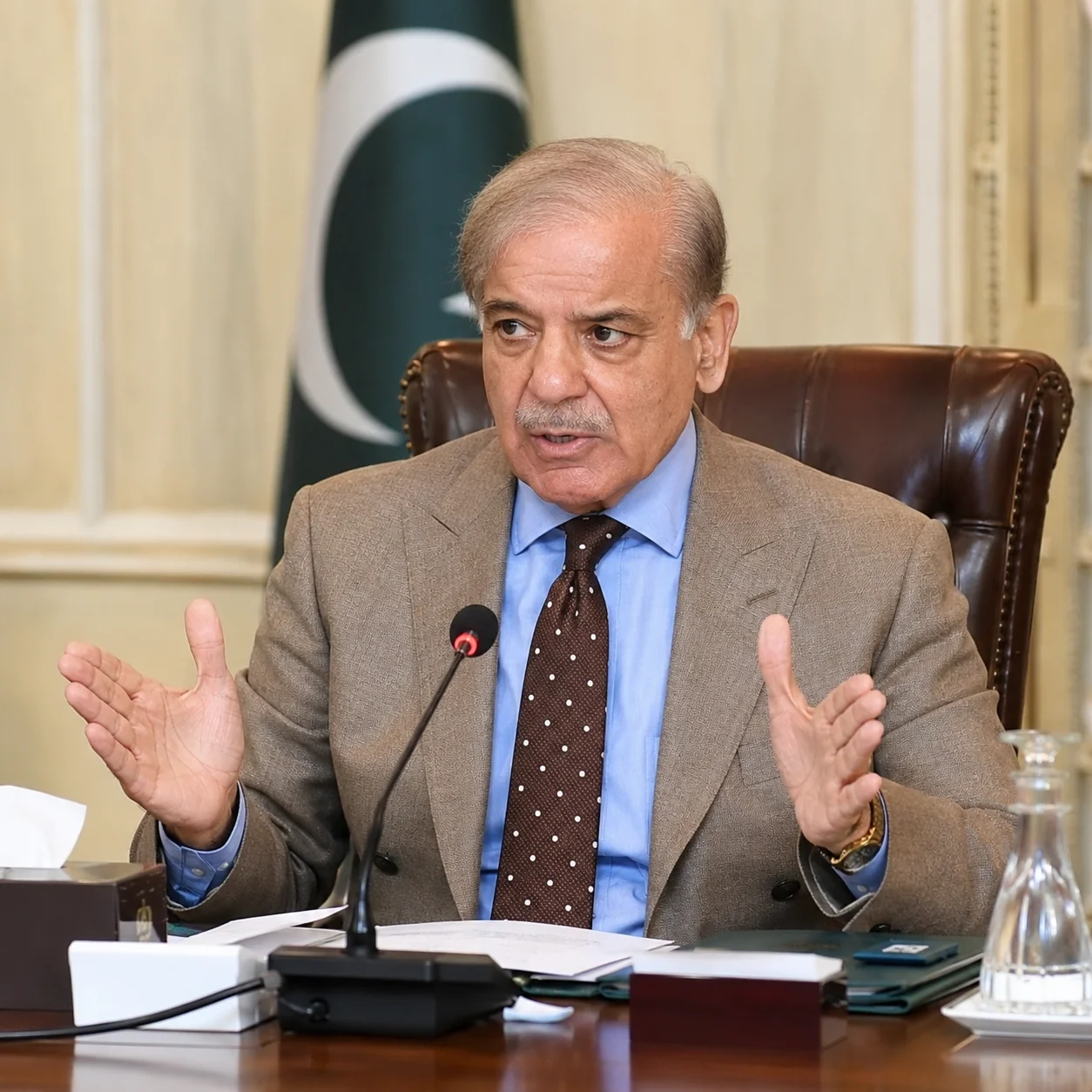
Government Signals a Pro-Business Budget Focused on Growth and Jobs
As Pakistan moves closer to unveiling its federal budget for the fiscal year 2026-27, Prime Minister Shehbaz Sharif has offered important clues about the government’s economic priorities. Speaking to some of the country’s most influential business leaders and industrialists in Islamabad, the prime minister emphasized that the upcoming budget would focus on providing relief to citizens while strengthening an export-led economic model.
The meeting, held at the Prime Minister House, comes at a critical time for Pakistan’s economy. Inflation has eased compared to previous years, foreign exchange reserves have shown improvement, and investor confidence has gradually returned. However, significant challenges remain, including economic growth, tax collection, industrial competitiveness, and job creation.
Against this backdrop, the government appears determined to present a budget that balances public relief with long-term economic reforms.
But what exactly can Pakistanis expect from the upcoming budget? And why are exports, documentation, and artificial intelligence suddenly becoming central themes in economic discussions?
Let’s take a closer look.
Why Is the Government Focusing on Export-Led Growth?
For decades, Pakistan has struggled with a recurring economic problem: imports often grow faster than exports.
This imbalance places pressure on foreign exchange reserves and contributes to external financing challenges. Economists have repeatedly argued that sustainable economic growth can only be achieved if Pakistan significantly increases its exports.
Prime Minister Shehbaz Sharif reiterated this position during his meeting with business leaders.
According to the premier, export-led growth will remain the cornerstone of the government’s economic strategy. The goal is simple: produce more goods locally, increase exports, generate foreign exchange earnings, and create employment opportunities.
Experts believe that countries that successfully expand exports tend to experience stronger economic growth, higher investment levels, and better resilience during global economic shocks.
Pakistan’s textile sector remains the country’s largest export earner, but policymakers are increasingly looking toward technology, information technology services, manufacturing, agriculture, and value-added industries to diversify export revenue streams.
Public Relief Remains a Key Priority
While economic growth remains important, the government also recognizes that many households continue to face financial pressures.
The prime minister indicated that the upcoming budget would contain measures aimed at providing relief to ordinary citizens.
Although specific measures have yet to be officially announced, analysts expect policymakers to focus on initiatives that support economic stability while reducing burdens on consumers and businesses.
Many Pakistanis are closely watching for potential announcements related to:
- Utility costs
- Tax adjustments
- Employment opportunities
- Business incentives
- Inflation management
- Development projects
The challenge for policymakers will be balancing public expectations with fiscal discipline, especially as Pakistan continues implementing reforms under international financial commitments.
Expanding the Tax Net: A Long-Standing Goal
One of the strongest messages from the meeting was the government’s intention to bring more economic activity into the documented economy.
Pakistan has historically faced difficulties in tax collection compared to many other countries of similar size.
A large portion of economic transactions still take place outside formal documentation systems, reducing government revenues and increasing the burden on registered taxpayers.
Prime Minister Shehbaz Sharif stressed that efforts are underway to integrate more sectors into the tax system.
Why is this important?
A broader tax base can help:
- Increase government revenues
- Reduce dependence on borrowing
- Improve fiscal stability
- Create a fairer taxation system
- Support public services and infrastructure spending
Business leaders have long argued that expanding documentation is essential for creating a level playing field across the economy.
Government and Private Sector: A Partnership for Growth?
A major theme emerging from the meeting was cooperation between the government and the private sector.
The prime minister thanked business leaders for supporting the economy during challenging periods and described public-private collaboration as a key driver of economic progress.
This approach reflects a growing recognition that economic growth cannot be achieved through government action alone.
Private sector investment plays a critical role in:
- Job creation
- Industrial expansion
- Export growth
- Innovation
- Technology adoption
Many economists argue that successful economies are built on strong partnerships between policymakers and businesses.
The government appears eager to strengthen this relationship as it prepares the next budget.
Business Community Welcomes Key Reforms
During the discussions, business representatives reportedly expressed confidence in the government’s economic recovery efforts.
Several recent reforms received positive feedback, including:
Faster Tax Refunds
Delayed tax refunds have long been a concern for businesses, particularly exporters. Improvements in refund processing can enhance cash flow and support business operations.
Tax Tribunal Reforms
Officials informed participants that reforms had been introduced to speed up the resolution of tax-related disputes.
Business groups have frequently argued that lengthy legal and tax proceedings create uncertainty and discourage investment.
Ease of Doing Business
The delegation also welcomed ongoing efforts aimed at reducing bureaucratic hurdles and improving the overall business environment.
These reforms are considered crucial for attracting both domestic and foreign investment.
Infrastructure Projects Take Center Stage
Infrastructure development remains a major component of the government’s economic strategy.
Officials briefed business leaders on several large-scale projects currently under development.
Karachi Connectivity Improvements
Plans to upgrade the M-10 Motorway and the Pipri Freight Corridor are expected to improve transportation links between Karachi’s ports and inland commercial centers.
Efficient logistics systems are essential for exporters and manufacturers, helping reduce transportation costs and delivery times.
M-13 Motorway Project
The planned M-13 Motorway connecting Kharian and Rawalpindi is expected to improve connectivity and shorten travel times between major cities.
Improved transportation networks often contribute to economic activity by facilitating trade and movement of goods.
Railway Modernization
The government also highlighted ongoing efforts to upgrade Pakistan Railways through improvements to the ML-1 and ML-2 railway lines.
Rail transport remains one of the most cost-effective methods for moving commercial goods over long distances.
Modernized railway infrastructure could enhance Pakistan’s logistics capabilities and support export growth.
The Digital Economy Is Becoming a National Priority
Perhaps one of the most interesting aspects of the meeting was the strong emphasis on technology and digital transformation.
Pakistan’s digital economy has expanded rapidly in recent years.
From fintech startups to software exports, technology has emerged as one of the country’s most promising growth sectors.
Government officials informed business leaders that efforts are underway to promote digital payments and accelerate economic documentation through technology-driven solutions.
Digital payment systems can:
- Improve transparency
- Reduce cash-based transactions
- Enhance tax collection
- Increase financial inclusion
- Strengthen economic monitoring
Many countries have successfully leveraged digital payments to formalize economic activity and improve revenue collection.
Pakistan appears eager to follow a similar path.
A Rs300 Billion Push for Artificial Intelligence
One announcement from the meeting generated particular attention.
According to Jazz World CEO Amir Ibrahim, the prime minister assured support amounting to Rs300 billion for the promotion of Pakistan’s artificial intelligence industry.
If implemented, this could represent one of the most significant investments in emerging technology sectors in Pakistan’s history.
Artificial intelligence is increasingly reshaping industries worldwide, including:
- Healthcare
- Education
- Agriculture
- Manufacturing
- Finance
- Transportation
Governments around the world are investing heavily in AI infrastructure and talent development to remain competitive in the global economy.
For Pakistan, a serious commitment to AI could create opportunities for:
- High-value exports
- Technology startups
- Skilled employment
- Research and innovation
- Foreign investment
However, experts note that successful implementation will require strong policies, educational reforms, digital infrastructure, and private-sector participation.
Can AI Become Pakistan’s Next Export Success Story?
The global AI market is expanding at an extraordinary pace.
Countries that establish strong AI ecosystems today may enjoy significant economic advantages tomorrow.
Pakistan already has a growing pool of software engineers, freelancers, and technology professionals.
With proper investment and policy support, some analysts believe AI could become a major contributor to future export growth.
The government’s reported commitment to supporting this sector suggests policymakers are beginning to view technology as a strategic economic asset rather than merely a supporting industry.
Looking Ahead to Budget 2026-27
As the federal budget approaches, expectations continue to rise.
Businesses want policies that encourage investment and competitiveness. Citizens hope for relief from economic pressures. Investors seek stability and predictability.
The government’s challenge is to address all these priorities while maintaining fiscal discipline and sustaining economic recovery.
The signals emerging from Islamabad suggest that Budget 2026-27 may focus on five major themes:
- Public relief measures
- Export-led growth
- Economic documentation
- Infrastructure development
- Digital transformation and AI investment
Whether these goals translate into measurable economic gains will depend on execution, consistency, and cooperation between the public and private sectors.
Final Thoughts
Prime Minister Shehbaz Sharif’s meeting with Pakistan’s leading business figures offers an early glimpse into the government’s economic vision for the coming fiscal year.
The emphasis on exports, business reforms, infrastructure, documentation, and artificial intelligence reflects an ambitious strategy aimed at strengthening long-term economic growth.
For many Pakistanis, however, the real test will be whether these policies lead to more jobs, greater investment, lower costs, and improved living standards.
As the official budget announcement draws closer, businesses, investors, and citizens alike will be watching carefully to see how these promises translate into concrete policy decisions.
The coming weeks could provide important clues about the direction of Pakistan’s economy and its future growth trajectory.
Source:
Dawn, Associated Press of Pakistan (APP), Business Recorder, The News International, Ministry of Finance briefings, Prime Minister’s Office statements
Our audience means everything to us.
Have feedback or suggestions to make us better? We’re always listening—feel free to get in touch with us at truthora2026@gmail.com




Leave a Comment