

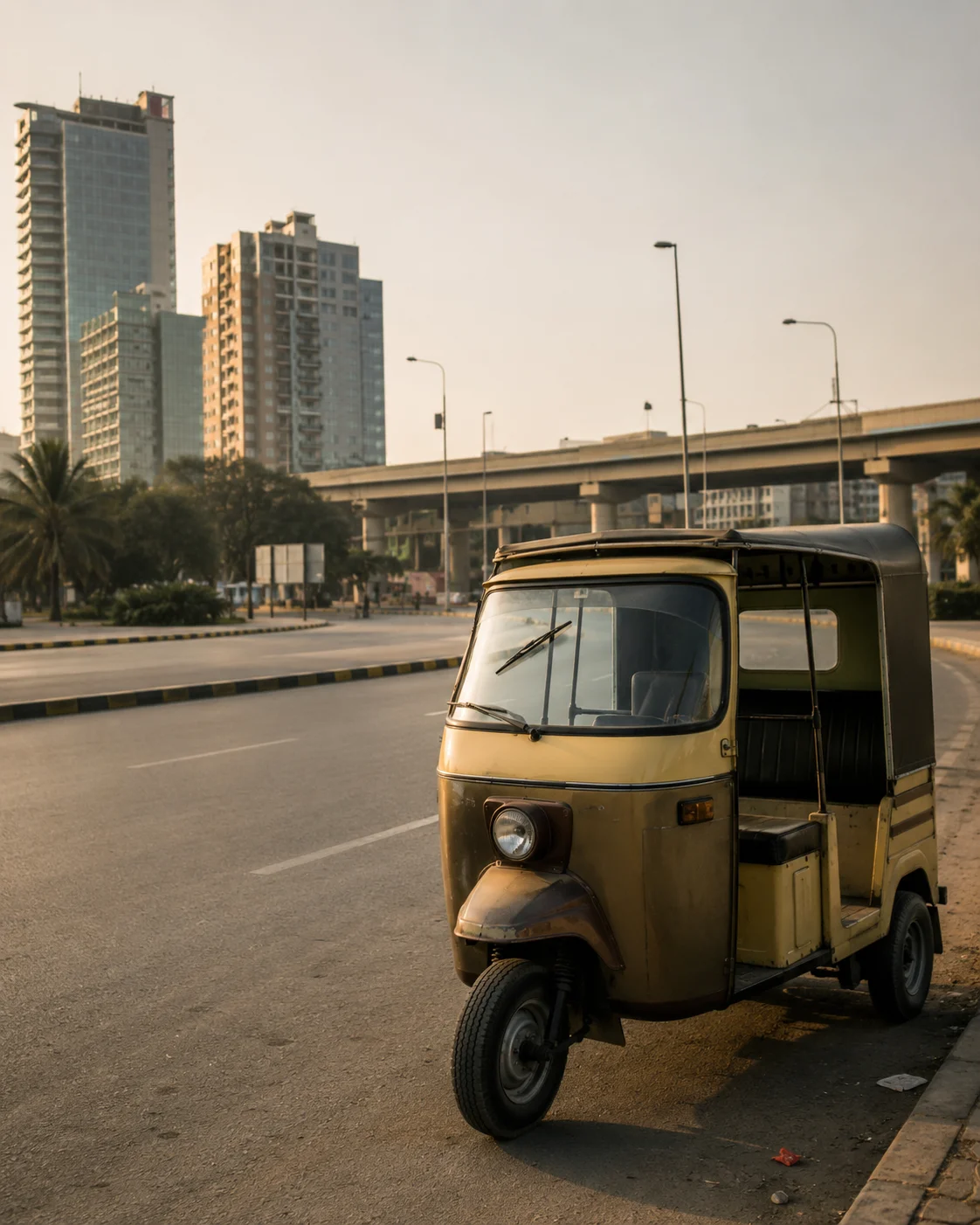
Karachi Rickshaw Crackdown Plan Targets Unregulated Three-Wheelers
The Karachi Rickshaw Crackdown Plan is under consideration as traffic authorities prepare a broader policy aimed at regulating three-wheelers across the city. Officials say the proposal would gradually restrict different categories of rickshaws from major roads while allowing vehicles fitted with approved fare meters to continue operating under the proposed framework.
At this stage, the plan has not been formally implemented. No official notification, enforcement schedule, or detailed implementation strategy has been issued. Traffic police have indicated that any action will only begin after advance notice is given to operators.
What Authorities Have Proposed
According to traffic officials, the proposed policy would initially target Qingqi rickshaws, which are expected to be removed from major roads in Karachi. The proposal would later expand to cover other types of three-wheelers operating across the city.
DIG Traffic Pir Muhammad Shah said the department is working on a broader regulatory framework intended to improve traffic management and reduce congestion on key roads.
Under the proposal, rickshaws equipped with officially approved fare meters may be exempt from the wider restrictions.
However, authorities have not yet confirmed when the policy will take effect or released detailed operational guidelines.
Meter-Fitted Rickshaws Could Be Allowed
What Is a Meter-Fitted Rickshaw?
A meter-fitted rickshaw is equipped with an approved fare meter that automatically calculates the passenger fare according to the distance travelled instead of relying on a negotiated price between the driver and passenger.
Traffic officials believe allowing metered rickshaws to continue operating could help formalise the sector while improving transparency in fare collection.
Before enforcement begins, authorities say rickshaw owners will be given time to install approved fare meters if the proposal moves forward.
Wider Restrictions Beyond Previous Measures
The proposed policy appears broader than earlier traffic restrictions that applied only to selected roads.
In recent years, authorities have introduced route-specific restrictions on rickshaws along several major corridors, including:
- Shahrah-e-Faisal
- University Road
- Rashid Minhas Road
- Korangi Road
The latest proposal suggests that regulations may eventually extend beyond these routes and apply to additional areas across Karachi.
Officials say the objective is to improve traffic flow, reduce road congestion, and bring unregulated rickshaw operations under a more structured transport system.
Why Authorities Say the Changes Are Needed
Karachi remains Pakistan’s largest city, with millions of daily commuters relying on a combination of buses, motorcycles, ride-hailing services, and rickshaws.
Traffic congestion has become a persistent challenge, particularly during peak hours on major roads. Officials argue that regulating certain categories of three-wheelers could improve traffic movement and enhance road safety.
Authorities also believe introducing approved fare meters could reduce fare disputes between passengers and drivers by replacing informal price negotiations with distance-based charges.
However, traffic police have not yet announced how meter approval, inspections, or compliance checks would be managed.
Fare Meters Alone May Not Solve Existing Issues
Although fare meters could make pricing more transparent, transport experts have long noted that additional measures would be necessary for the system to work effectively.
These could include:
- Official government-approved fare rates.
- Regular inspection and certification of fare meters.
- Enforcement against meter tampering.
- Clear procedures for passenger complaints.
Without these supporting mechanisms, simply installing fare meters may not fully address concerns about fare disputes or pricing consistency.
No such regulatory framework has yet been announced alongside the proposed crackdown.
Possible Impact on Daily Commuters
Rickshaws continue to play a significant role in Karachi’s transport network, particularly in neighbourhoods where public buses operate infrequently or do not reach residential streets.
Students, office workers, elderly passengers, and low-income residents often depend on rickshaws for short-distance or “last-mile” travel between bus stops and their destinations.
If broader restrictions are eventually introduced, commuters in these areas could experience reduced transport options unless alternative public transport services are expanded.
The overall impact will depend on the final scope of the government’s policy once officially announced.
Concerns Among Rickshaw Operators
The proposed restrictions could also affect thousands of drivers who rely on rickshaw operations as their primary source of income.
Operators may need to invest in approved fare meters if exemptions are linked to metered vehicles. Others could face route restrictions depending on the final implementation plan.
At present, authorities have not released details regarding registration requirements, installation costs, financial assistance, or transition arrangements for drivers.
These issues are expected to become clearer only after the government issues a formal notification.
No Citywide Ban Has Been Announced
Despite public discussion surrounding the proposal, Karachi’s rickshaws have not been banned across the city.
Traffic police have only outlined a proposed regulatory plan, and no official order has been issued introducing citywide restrictions.
Authorities have stated that an enforcement date will be announced before any crackdown begins, allowing operators time to prepare for any new requirements.
Until an official notification is released, existing rickshaw operations remain unchanged.
What Happens Next?
The proposed Karachi Rickshaw Crackdown Plan remains under consideration and is expected to undergo further administrative steps before implementation.
Key details—including the final scope of restrictions, exemption criteria for meter-equipped rickshaws, approved fare standards, inspection procedures, and enforcement timelines—have yet to be announced.
For commuters and drivers alike, the next official notification will determine how the policy will affect transport across Karachi and whether exemptions for meter-fitted rickshaws become part of the final regulations.
Source:
- Traffic Police officials
- Statements by DIG Traffic Pir Muhammad Shah
Our audience means everything to us.
Have feedback or suggestions to make us better? We’re always listening—feel free to get in touch with us at editor@truthorahub.com






Leave a Comment