

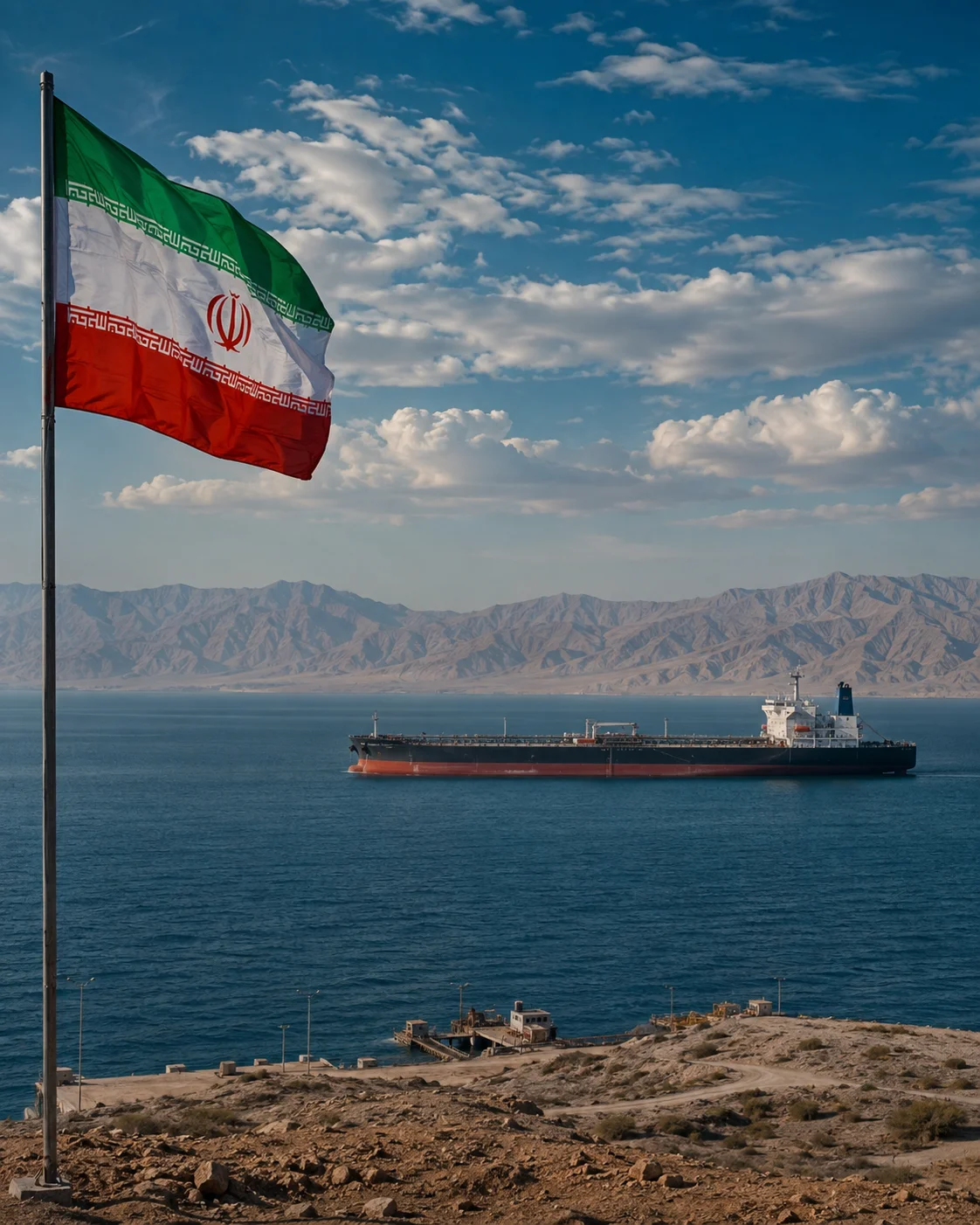
Strait of Hormuz tensions deepen as Iran rejects Trump claim
The Strait of Hormuz has become the latest flashpoint in the escalating confrontation between Iran and the United States, after President Donald Trump said he could declare the strategic waterway US territory once Washington defeats Tehran. Iran rejected the suggestion, while a maritime security organisation reported that a bulk carrier had been struck by an unidentified projectile in the strait.
The developments come as diplomatic efforts between Washington and Tehran remain stalled. Iranian Foreign Minister Abbas Araghchi said there had been no decision to resume negotiations with the United States, although Qatar and Pakistan have been communicating messages between the parties.
The situation has also raised fresh concerns for international shipping and energy markets because the Strait of Hormuz is a critical route for global oil and gas transportation. Reuters reported that tanker traffic through the waterway has been severely disrupted amid the ongoing conflict.
Iran rejects Trump’s Strait of Hormuz claim
Iranian Deputy Foreign Minister Kazem Gharibabadi rejected Trump’s remarks in a post on X, asserting that Iran would continue to control decisions concerning access through the waterway.
Trump had said that after what he described as a US victory over Iran, he would soon declare the Strait of Hormuz a US territory.
The Iranian response reflects the sharply opposing positions of the two countries over the strategic waterway. Tehran has repeatedly linked any reopening of the strait to conditions involving the US military presence, sanctions and the broader conflict.
Iranian officials have also rejected suggestions that indirect contacts with countries such as Qatar and Pakistan amount to renewed negotiations with Washington.
Trump’s comments came amid an already tense dispute over shipping access. The US administration has been maintaining pressure on Iran through military and economic measures, while Tehran has sought to retain leverage over the waterway.
Bulk carrier reportedly hit in the strait
The diplomatic dispute coincided with another maritime security incident.
The United Kingdom Maritime Trade Operations Centre (UKMTO) said it had received a verified report that a bulk carrier was struck by an unknown projectile, with the impact hitting the vessel’s hull.
The information identifies the projectile as unknown and does not, by itself, establish who was responsible for the incident.
Separately, the United Arab Emirates accused Iran of attacking a vessel belonging to Abu Dhabi National Oil Company (ADNOC) while it was travelling through the Strait of Hormuz. Reuters reported that the vessel was damaged but no injuries were reported.
The incidents underscore the continuing risks facing commercial shipping in the region.
Shipping remains under pressure
The Strait of Hormuz connects the Persian Gulf with the Gulf of Oman and Arabian Sea and is one of the world’s most important energy corridors.
Before the current conflict, a significant share of internationally traded oil passed through the waterway. Reuters reported that traffic has fallen sharply during the conflict, with oil tanker movement particularly affected.
Reduced shipping through the strait has implications beyond the immediate region. Disruptions can affect crude oil supplies, tanker insurance costs, freight rates and ultimately fuel prices in importing countries.
For countries such as Pakistan, which relies heavily on imported energy, prolonged disruption in international oil markets can create additional pressure on import costs and domestic fuel prices.
US-Iran negotiations remain stalled
The latest developments also indicate that diplomatic efforts remain fragile.
Iranian Foreign Minister Abbas Araghchi said Tehran had not decided to resume negotiations with Washington. He acknowledged that Qatar and Pakistan were communicating between the sides but stressed that such communication did not amount to formal negotiations.
The lack of direct talks comes despite continued international efforts to reduce tensions and restore shipping through the strait.
Earlier in August, Reuters reported that mediators had been working on arrangements involving Iran and Oman aimed at addressing shipping through Hormuz. However, Tehran and Washington remained divided over broader issues related to the conflict.
The latest statements suggest that a diplomatic breakthrough has yet to materialise.
Trump warns Americans about higher fuel prices
The dispute over Hormuz is also affecting the political debate over energy prices in the United States.
Trump said Americans may have to accept somewhat higher gasoline prices while Washington maintains pressure on Iran.
According to the source report, the average US gasoline price was around $4.07 per gallon on Saturday, compared with $3.15 a year earlier.
Reuters similarly reported that US gasoline prices had risen significantly compared with the previous year amid the disruption surrounding the Iran conflict and Strait of Hormuz.
The remarks highlight the domestic economic consequences of the confrontation. While the US administration has framed higher energy costs as a consequence of confronting Iran, elevated fuel prices can also increase transportation and consumer costs.
Washington maintains pressure on Tehran
The US administration has continued to combine military pressure with economic sanctions.
Treasury Secretary Scott Bessent said Washington would impose further economic measures on Iran, while also describing the naval blockade of Iranian ports as part of the broader pressure campaign.
Defense Secretary Pete Hegseth has reportedly said the US military could maintain the naval blockade indefinitely, with ships rotated as necessary.
The Pentagon’s continued naval presence is therefore an important part of Washington’s strategy.
The deployment of US carrier strike groups has also attracted attention. The USS George Washington strike group departed Vietnam on August 12, according to the US Navy, amid reports that it would replace the USS Abraham Lincoln in the region.
The Lincoln has spent an extended period deployed in the Middle East, generating separate concerns over the conditions faced by its crew.
Reports about USS Abraham Lincoln remain disputed
Questions surrounding the USS Abraham Lincoln have added another layer to the broader military story.
Media reports and statements from military families have raised concerns about conditions aboard the carrier, including alleged shortages, maintenance problems and fatigue among personnel.
Defense Secretary Hegseth has rejected what he described as inaccurate portrayals of conditions aboard the ship.
US Central Command has also denied reports that a deadly brawl occurred aboard the carrier and said no service members had died in such an incident.
Iranian media had previously reported claims that several US Navy personnel were killed in a confrontation aboard the Lincoln. Those claims have not been substantiated by US military authorities and were explicitly rejected by US Central Command.
The conflicting accounts illustrate the importance of distinguishing verified military statements from claims circulated by opposing sides during an active conflict.
Why the Strait of Hormuz matters
The continuing confrontation around Hormuz has implications well beyond Iran and the United States.
The waterway is a major passage for global energy shipments. Any prolonged disruption can affect crude oil and liquefied natural gas markets, shipping costs and inflationary pressures.
For Asian economies that import large quantities of energy from the Gulf, the stakes are particularly high.
Higher international oil prices can increase the cost of importing fuel and put pressure on currencies and external balances in energy-importing countries.
The impact can eventually reach consumers through petrol, diesel, electricity generation, transportation and other goods and services.
The ongoing uncertainty therefore makes the Strait of Hormuz both a military flashpoint and an important economic concern.
What happens next
The immediate outlook remains uncertain.
Iran continues to reject Trump’s claim regarding US control of the Strait of Hormuz, while Washington maintains military and economic pressure on Tehran.
Commercial shipping remains exposed to security risks, and the latest reported vessel incident adds to concerns about safe passage.
At the same time, Qatar and Pakistan are continuing to communicate with the parties, according to Iran’s foreign minister, although Tehran says these contacts do not constitute renewed negotiations.
For global energy markets, the key question will be whether shipping through Hormuz can return to normal and whether Washington and Tehran can find a diplomatic path out of the conflict.
Until then, developments around the waterway will remain closely watched by governments, shipping companies, energy markets and countries dependent on Gulf oil supplies.
Source:
- CNBC — Report and material supplied regarding Trump’s remarks, US policy, fuel prices and the Iran conflict.
- Reuters — Reporting on Iran’s position, Strait of Hormuz shipping disruption, US-Iran tensions and energy prices.
- Al Jazeera — Reporting on Iranian Foreign Minister Abbas Araghchi’s comments regarding negotiations with the United States.
- UK Maritime Trade Operations (UKMTO) — Maritime warning regarding a bulk carrier reportedly struck by an unidentified projectile.
- U.S. Navy — Statement concerning the departure of the USS George Washington strike group from Vietnam.
- U.S. Central Command — Statement disputing reports of a deadly brawl aboard the USS Abraham Lincoln.
- UAE / ADNOC reporting — Information concerning the reported attack on an ADNOC vessel in the Strait of Hormuz.
Our audience means everything to us.
Have feedback or suggestions to make us better? We’re always listening—feel free to get in touch with us at editor@truthorahub.com








Leave a Comment