

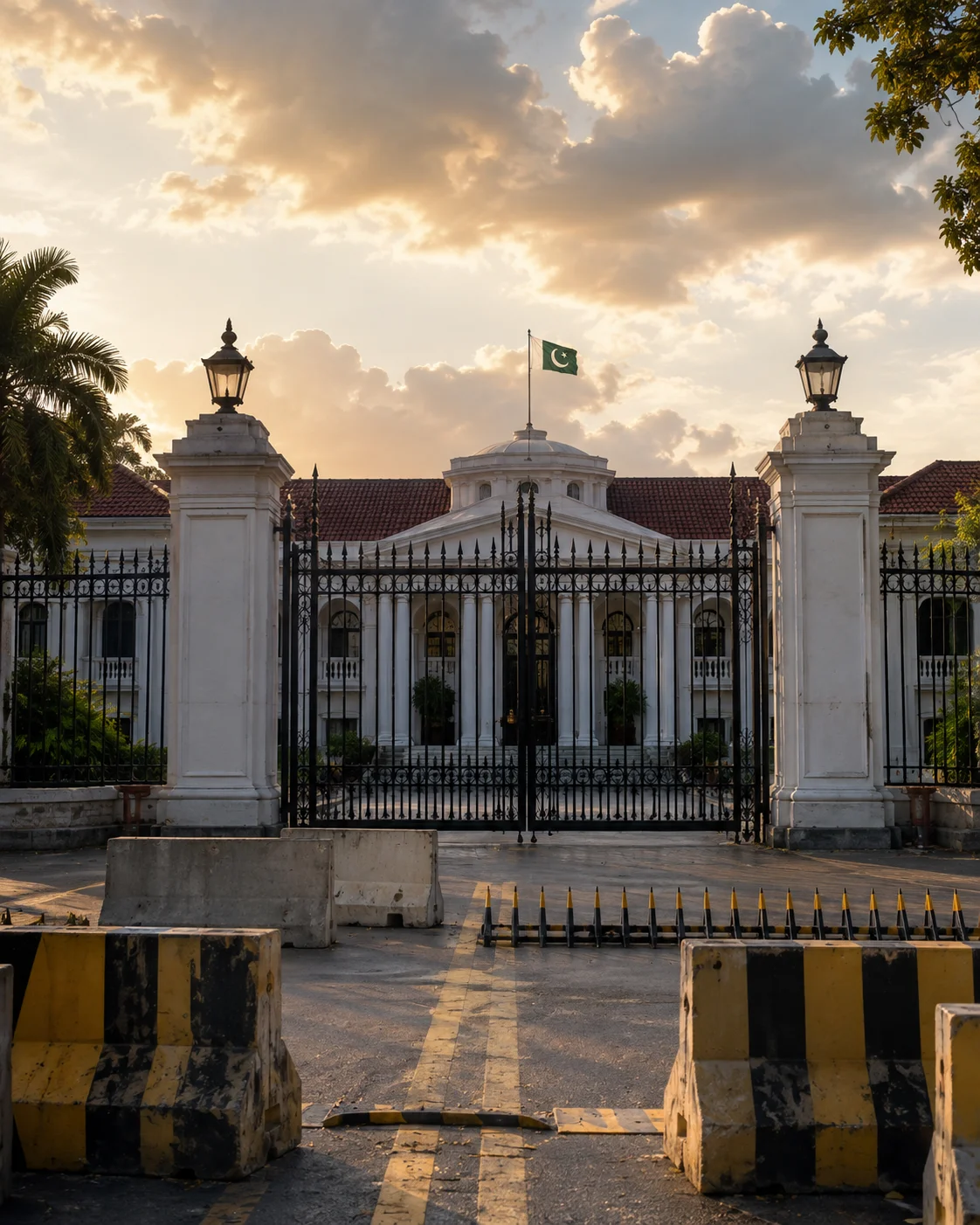
JI protests fuel prices with sit-ins planned from August 16
Jamaat-e-Islami (JI) Emir Hafiz Naeemur Rehman has announced a fresh round of sit-ins against rising fuel prices and the petroleum levy, with demonstrations planned outside the chief minister’s residence in Lahore and governors’ houses in the other provinces from August 16. The announcement comes as political pressure over fuel costs and the broader cost-of-living crisis continues to grow.
Rehman made the announcement on Saturday at a press conference at JI’s central headquarters in Mansoorah, Lahore. He was accompanied by JI Deputy Emir Liaquat Baloch, Lahore Emir Ziauddin Ansari and other senior party leaders.
The Lahore protest is scheduled to begin at 3pm from Masjid-e-Shuhada before demonstrators move towards the Chief Minister’s House.
The party has not announced a closing date for the sit-ins. Rehman said the demonstrations would continue until the government responded to JI’s demands.
JI targets petroleum levy and rising living costs
The central issue behind the latest protest campaign is the rising cost of petroleum products and what JI describes as an excessive burden created by taxes and levies on fuel.
Rehman claimed that the government had collected Rs1,567 billion through petroleum levies, arguing that the amount was higher than what had been envisaged under the International Monetary Fund programme.
The figure was presented by the JI emir as part of his criticism of the government’s fuel pricing policy. The claim represents the party’s position and has not been independently verified in the information available for this report.
JI is demanding an immediate reduction in petrol and other fuel prices, along with relief on electricity costs and essential commodities.
The party has increasingly made inflation, electricity prices and petroleum taxation central themes of its political campaign. Earlier in July, JI had announced nationwide protests and road blockades as part of a broader campaign against the petroleum levy and inflation.
Party warns against attempts to stop protests
During Saturday’s press conference, Rehman warned the government against obstructing the demonstrations.
He said JI had previously organised sit-ins at 510 locations and claimed that those protests did not result in damage to public or private property. He also warned that any attempt to disrupt the new campaign could have wider political consequences.
According to Rehman, if the government attempted to sabotage or forcibly stop the demonstrations, the campaign could develop into a movement demanding the removal of the government.
The statement marks an escalation in the rhetoric surrounding JI’s anti-inflation campaign, although it remains to be seen how the government and law-enforcement authorities will respond to the planned gatherings.
JI has previously warned that attempts to suppress its protests could broaden the scope of its campaign. In July, Rehman similarly said that undemocratic action against demonstrators could transform the anti-inflation campaign into a movement against the government.
Lahore protest to begin from Masjid-e-Shuhada
For the Lahore demonstration, JI has announced a specific starting point and route.
Participants are expected to gather at Masjid-e-Shuhada at 3pm on August 16 before proceeding towards the Chief Minister’s House.
The party also plans demonstrations outside governors’ houses in the other provinces, making the latest call broader than a single-city protest.
The decision to target provincial government residences has prompted a response from the Punjab government, which has stressed that the petroleum levy is a federal matter.
Punjab government rejects JI criticism
Punjab Information and Culture Minister Azma Zahid Bukhari criticised JI’s decision to protest outside the chief minister’s residence.
Speaking to journalists at an exhibition at Lahore’s Expo Centre, Bukhari said the petroleum levy was a federal issue and did not fall under the Punjab government.
She said peaceful protest was a democratic right but warned that protesters would not be allowed to violate the law, block roads or cause difficulties for members of the public.
Her remarks indicate that the provincial government is drawing a distinction between lawful demonstrations and activities that could disrupt traffic or public services.
Bukhari also criticised the political strategy behind the protests, describing the current wave of sit-ins as an attempt by political parties to revive what she called “dead politics”.
She further questioned JI’s electoral performance and referred to the party’s results in recent elections while criticising its political standing.
The exchange reflects a wider dispute over responsibility for rising prices, with JI directing its criticism at government fuel and taxation policies while the Punjab government maintains that the petroleum levy is controlled at the federal level.
JI expands campaign through social media
Alongside its street protests, JI is also seeking to increase public participation through social media.
The party’s official account on X called for a nationwide online campaign against the petroleum levy. The party urged supporters to participate in an X trend and raise public awareness about what it describes as the economic burden created by the levy.
The combination of physical demonstrations and online mobilisation suggests that JI intends to maintain pressure on the government beyond individual protest events.
The latest announcement also follows several weeks of organised JI activity focused on fuel prices, inflation and electricity costs. In July, the party announced nationwide highway blockades and sit-ins as part of a second phase of its campaign.
Why the protests matter
Fuel prices have a direct impact on household budgets as well as transportation, food distribution and business costs. Changes in petrol and diesel prices can therefore affect a wide range of consumer prices and add to existing inflationary pressures.
For JI, the petroleum levy has become a major political issue. The party has repeatedly demanded its abolition or reduction and has linked fuel taxation with the broader cost-of-living pressures facing households.
The government, meanwhile, faces the challenge of balancing revenue requirements with demands for lower consumer prices. Petroleum taxation forms part of the government’s wider fiscal framework, while Pakistan is also operating under commitments associated with its IMF programme.
Earlier reporting on JI’s campaign shows that the party has sought to connect the petroleum levy with other economic grievances, including electricity costs, inflation and power shortages.
What happens next
The immediate focus will be on the protests scheduled for August 16 and whether they proceed without major disruption.
JI has said it intends to continue the sit-ins until its demands are addressed, while the Punjab government has warned that road blockades and violations of the law will not be permitted.
The outcome could depend on the size of public participation, the response from government authorities and whether negotiations take place between the protesters and officials.
For now, the dispute remains centred on fuel prices and petroleum taxation, but JI’s warnings indicate that the party views the campaign as part of a broader political movement over inflation and the cost of living.
Source:
- Dawn — reporting on JI’s nationwide petroleum levy and inflation protest campaign.
- Pakistan Today — reporting on JI’s nationwide road-blockade and sit-in plans.
- Business Recorder — reporting on JI’s campaign against the petroleum levy.
- Information provided in the supplied news report, including Saturday’s statements by Hafiz Naeemur Rehman and Azma Zahid Bukhari.
Our audience means everything to us.
Have feedback or suggestions to make us better? We’re always listening—feel free to get in touch with us at editor@truthorahub.com




Leave a Comment