

How Many More Lives Will Karachi’s Roads Take?
Another tragic road accident involving a heavy vehicle has once again shaken Karachi, raising painful questions about traffic safety, reckless driving and the growing menace of speeding dumpers across the city.
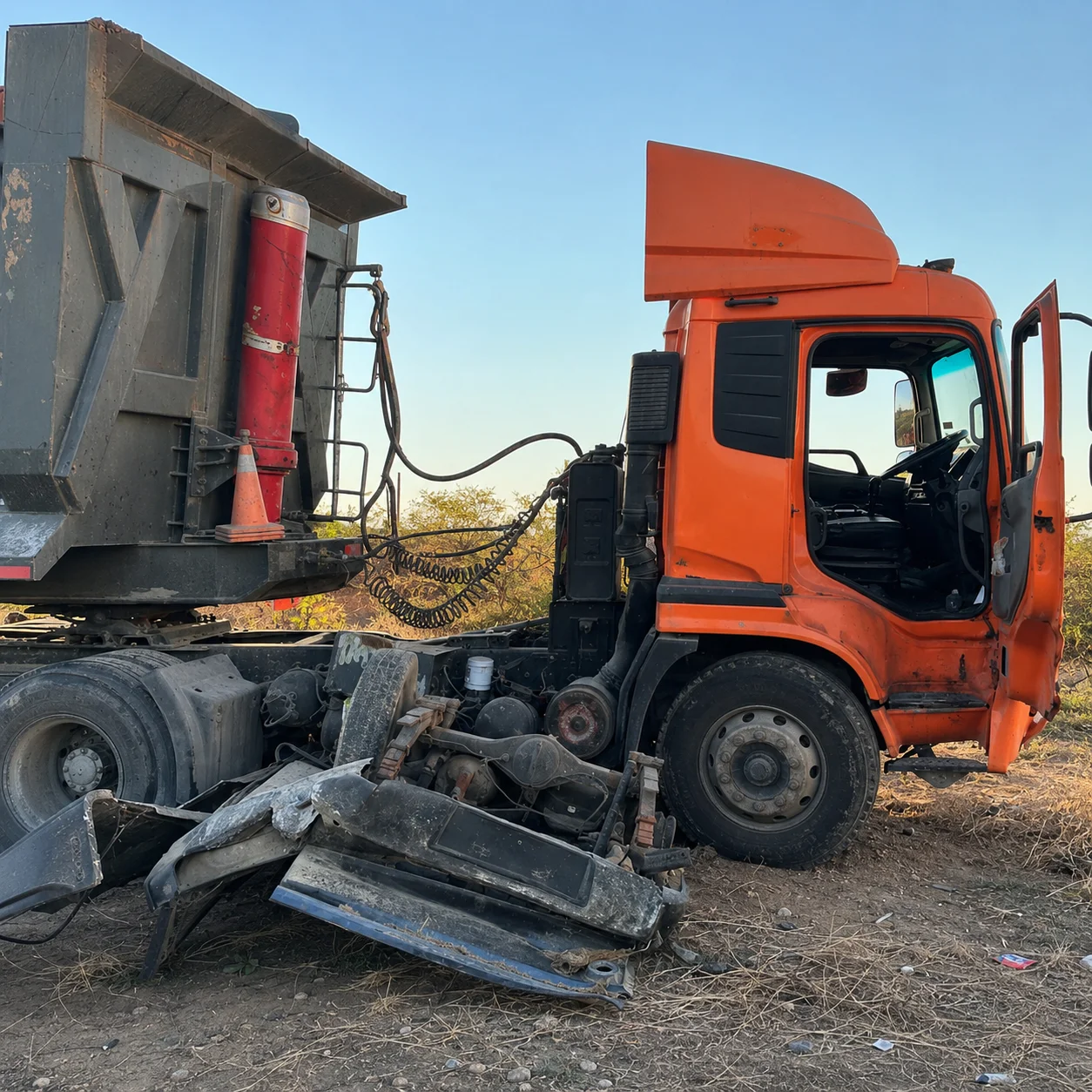
Two police officers lost their lives early Monday morning after a speeding 22-wheel trailer crashed into a police mobile van stationed near Chakwal Pump on the Super Highway.
The horrifying collision has reignited public anger over Karachi’s worsening heavy-traffic crisis — a problem many citizens say authorities have failed to control despite repeated fatal accidents.
For residents of Karachi, the question is becoming disturbingly familiar: how many more people must die before serious action is finally taken?
A Routine Police Check Turned Into a Nightmare
According to police officials and multiple local media reports, the incident took place around 5:40am on the Hyderabad–Karachi Super Highway near Chakwal Pump.
A police mobile van from Sindh Police was reportedly parked during routine checking operations when a speeding trailer rammed directly into it.
The impact was so severe that the police vehicle was crushed beneath the massive truck, trapping officers inside the wreckage.
Authorities confirmed that Sub-Inspector Sahib Khan died instantly at the scene, while Constable Wajid suffered critical injuries and later passed away during rescue efforts.
A third officer, Constable Parwarish, miraculously survived the crash.
Driver Claims He Fell Asleep
Police arrested the trailer driver, identified as Shahabuddin, shortly after the accident.
According to investigators, the driver initially claimed he had fallen asleep behind the wheel moments before the collision.
If confirmed, the incident would once again expose a dangerous reality on Pakistan’s highways: exhausted heavy-vehicle drivers operating for long hours with little oversight or proper enforcement.
Road safety experts have repeatedly warned that driver fatigue remains one of the leading causes of fatal highway accidents involving commercial vehicles.
Rescue Teams Faced a Horrifying Scene
Witnesses described the crash site as devastating.
Emergency responders from Rescue 1122 and the Edhi Foundation rushed to the location along with ambulances and recovery teams.
Officials said cranes and heavy lifting machinery were required to separate the trailer from the destroyed police vehicle.
The rescue operation reportedly took hours due to the intensity of the impact.
Even experienced rescue workers were said to be deeply shaken by the condition of the crushed police mobile.
Karachi’s Dumper Truck Problem Is Growing Worse
The latest tragedy has once again focused attention on Karachi’s long-running heavy vehicle crisis.
Residents have repeatedly complained about reckless dumper and trailer drivers operating across the city without strict monitoring, proper licensing checks or traffic discipline.
In recent years, multiple deadly accidents involving dumpers have triggered protests, public outrage and demands for tougher regulations.
Several incidents have involved motorcyclists, pedestrians and even law enforcement personnel being crushed by speeding heavy vehicles.
Yet despite repeated promises from authorities, citizens say meaningful improvements remain limited.
Why Are Heavy Vehicle Accidents So Common in Karachi?
Traffic experts point to several major issues contributing to the crisis:
- Poor enforcement of traffic laws
- Drivers operating without valid heavy transport licences
- Fatigue caused by long working hours
- Weak vehicle fitness inspections
- Overloaded or poorly maintained trucks
- Lack of strict monitoring on highways and city roads
Karachi’s rapidly expanding population and increasing commercial traffic have only made the situation more dangerous.
For many citizens, driving near dumpers and trailers has become a daily fear.
Police Officers Continue Risking Their Lives
The deaths of the two officers also highlight the dangers faced daily by Pakistani police personnel.
Whether stationed at checkpoints, controlling traffic or responding to emergencies, officers often work under hazardous conditions with limited protection.
Sub-Inspector Sahib Khan and Constable Wajid were reportedly performing routine duty checks when the accident occurred.
Their deaths have sparked condolences from police officials and citizens alike, many of whom praised their service and sacrifice.
The bodies of the officers were shifted to Abbasi Shaheed Hospital and another nearby hospital before funeral arrangements were initiated.
Both officers were posted at Gadap City police station.
Karachi’s Road Safety Debate Returns Again
Every major dumper accident in Karachi triggers the same cycle: outrage, promises, temporary crackdowns and then silence.
Citizens often question why dangerous heavy vehicles continue moving through busy roads without stricter control.
Should heavy transport vehicles be restricted during certain hours? Should stricter fitness checks and digital monitoring systems be introduced? Should companies employing negligent drivers face harsher punishment?
These questions continue resurfacing after every tragedy.
Yet for families who lose loved ones, policy debates offer little comfort.
The Human Cost Behind the Headlines
Behind every accident statistic are grieving families, shattered households and lives changed forever.
For the families of the two slain police officers, Monday’s tragedy was not just another news headline — it was a devastating personal loss.
Colleagues described the officers as committed personnel who were simply carrying out their duties when disaster struck.
Meanwhile, ordinary Karachi residents say fear on the roads is becoming part of everyday life.
Parents worry about children travelling to school. Office workers fear speeding dumpers during morning commutes. Motorcyclists often describe heavy vehicles as moving “death machines” across the city.
Can Karachi Finally Solve Its Traffic Crisis?
Karachi remains Pakistan’s economic backbone, handling enormous commercial and transport activity every day.
But with increasing heavy traffic, weak enforcement and overcrowded roads, experts warn that fatal accidents may continue unless urgent reforms are introduced.
Some traffic analysts suggest:
- Stricter monitoring of heavy vehicle drivers
- Mandatory rest periods for commercial transport operators
- AI-based traffic surveillance systems
- Improved highway policing
- Dedicated heavy-vehicle routes
- Tougher penalties for negligence
Without structural reforms, many fear Karachi’s roads will continue claiming lives.
A City Tired of Tragedies
This latest accident is not an isolated event. It reflects a broader problem Karachi has struggled with for years.
The city’s residents are increasingly frustrated with what they see as a lack of accountability and long-term planning.
Every new tragedy adds to growing public anger — but also to public exhaustion.
People no longer just want statements and condolences. They want visible action.
Will This Incident Finally Trigger Change?
The deaths of two police officers may once again push authorities to review road safety measures for heavy vehicles.
But whether meaningful reforms actually follow remains uncertain.
For now, Karachi mourns another tragic morning on its roads — one that once again exposed how dangerous the city’s highways have become for both civilians and law enforcement personnel alike.
And until deeper reforms are introduced, many fear the next deadly accident may only be a matter of time.
Source:
Our audience means everything to us.
Have feedback or suggestions to make us better? We’re always listening—feel free to get in touch with us at ayesha@linen-rat-910062.hostingersite.com





Leave a Comment