

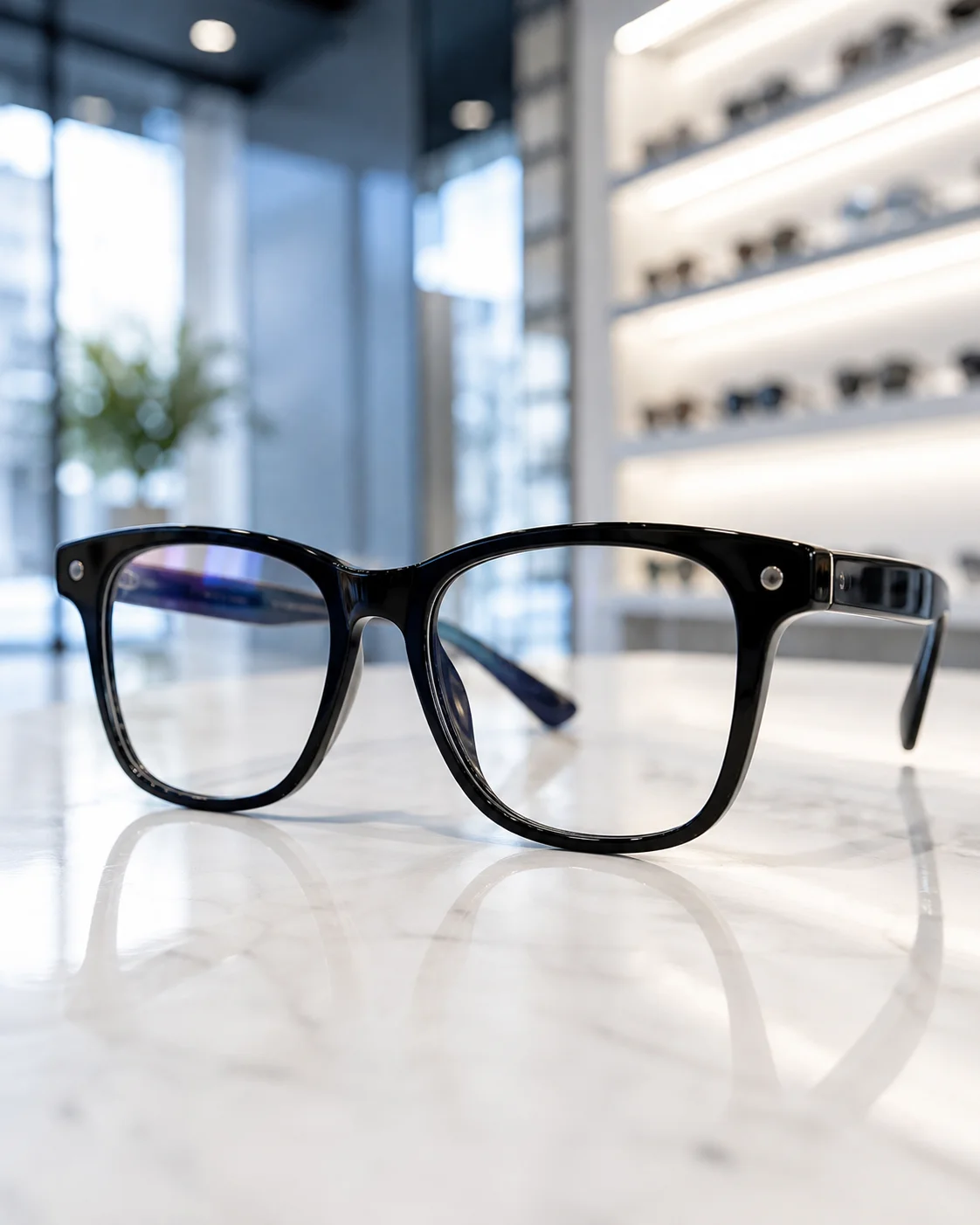
Smart glasses are increasingly moving beyond entertainment and hands-free AI assistance, with the technology showing potential applications in healthcare, vision support and everyday wellness. Apple’s upcoming leadership transition could add momentum to this trend as the company prepares to move from Tim Cook to hardware engineering chief John Ternus as CEO on September 1, 2026.
The transition comes at a time when competition in wearable technology is intensifying. Meta has established a strong presence in consumer smart glasses through its Ray-Ban partnership, while Google is also developing AI-powered eyewear with fashion and eyewear partners.
Apple, meanwhile, has already entered spatial computing with the Vision Pro and is reportedly working on smart glasses of its own. These developments are helping move smart eyewear from a niche category toward a broader consumer technology market.
The potential significance goes beyond cameras, voice assistants and augmented reality. Smart glasses could eventually become another platform for health monitoring and assistive technology, much as smartwatches have evolved from simple fitness accessories into increasingly capable health devices.
Smart glasses enter a new phase of wearable technology
The growth of smart glasses reflects a broader shift in how people interact with computers.
Unlike smartphones, which require users to look down at a screen, glasses sit directly within the user’s field of view. Cameras can capture information about the surrounding environment, microphones can support voice interaction, and AI systems can interpret visual information.
This combination has already created practical applications such as describing surroundings, reading text aloud and assisting people with visual impairments.
The next stage could involve more sophisticated sensors and health-related functions. However, many of these potential applications remain developmental rather than established consumer medical capabilities.
That distinction is important. Smart glasses currently available to consumers should not be treated as replacements for medical examinations or professionally prescribed treatment.
Apple’s leadership transition puts hardware in focus
Apple’s planned CEO transition is adding another dimension to the company’s hardware strategy.
Apple announced that Tim Cook will step down as chief executive on September 1, 2026, with John Ternus, the company’s senior vice president of hardware engineering, set to take over. Cook is expected to become executive chairman.
Ternus has been closely involved with Apple’s hardware development and several major product launches. His appointment has led to industry discussion about whether Apple’s next phase could place greater emphasis on new hardware categories.
That does not establish that Apple will launch a healthcare-focused smart-glasses product, nor does it confirm a specific product roadmap. However, the leadership change comes as the company faces increasing competition in AI and wearable computing.
Apple’s earlier move into spatial computing with Vision Pro demonstrated its willingness to develop products outside its traditional smartphone, computer and smartwatch categories.
The Apple Watch offers a possible roadmap
Apple’s experience with the Apple Watch provides an important example of how a consumer device can gradually acquire health-related functions.
The smartwatch began primarily as a connected wearable but has expanded into areas including heart-rate monitoring, fall detection and cardiac rhythm notifications.
This progression illustrates a broader pattern in consumer technology: features initially introduced for convenience or fitness can eventually become useful for health management.
Smart glasses could follow a similar path, although the technology and regulatory requirements are different.
A camera positioned in front of the user’s eyes can collect visual information, while sensors located around the temples and frame could potentially provide additional information about the wearer.
Researchers and companies are exploring concepts involving eye movement, pupil behaviour and other physiological signals. But potential sensor capabilities should not be confused with clinically validated medical monitoring.
Why the glasses format matters for healthcare
Smart glasses have one feature that separates them from many other wearables: their position on the face.
The device naturally has access to the user’s visual field while also being positioned close to the eyes, temples and head. This could make the form factor useful for applications involving vision, accessibility and certain types of human-computer interaction.
Potential future applications could include monitoring eye movement, delivering visual or audio prompts and providing context about a user’s surroundings.
Some proposed health applications go further, including monitoring physiological signals. Such possibilities remain an area of research and development, and their usefulness would depend on sensor accuracy, clinical validation, privacy protections and regulatory approval where medical claims are involved.
A major global need for better vision support
The potential role of smart glasses is particularly relevant because vision impairment remains a major global health issue.
The World Health Organization says at least 2.2 billion people worldwide have near or distance vision impairment. It estimates that at least 1 billion of those cases could have been prevented or have yet to be addressed.
Access to basic vision correction is also uneven. WHO reports that about two-thirds of people in low-income countries who need eyeglasses do not have access to them.
This creates an opportunity for assistive technologies, although smart glasses are unlikely to replace conventional eyeglasses or clinical eye care.
Devices that use cameras and AI can potentially help some users interpret printed text, identify objects or receive audio descriptions of their surroundings. For people with significant vision loss, these functions could provide additional independence in everyday situations.
The technology’s real-world impact, however, will depend heavily on affordability, accuracy and accessibility.
Vision correction is also becoming more technology-driven
Smart eyewear is developing alongside advances in conventional vision correction.
The American Academy of Ophthalmology notes that FDA-approved eyeglasses are available to slow myopia progression in children aged 6 to 12. These lenses combine normal distance correction with optical designs intended to influence eye growth.
Such developments demonstrate that eyewear is no longer limited to simply correcting blurry vision. Lens design itself can play a role in managing particular eye conditions.
This does not mean smart glasses can perform the same function. Instead, it shows how the broader eyewear industry is increasingly incorporating technology and specialised optical engineering.
AI glasses are becoming more mainstream
The competitive landscape is already changing rapidly.
Meta’s Ray-Ban smart glasses have helped bring camera-equipped and AI-enabled eyewear into the mainstream consumer market. The product combines a familiar glasses design with cameras, microphones, speakers and AI features.
Google is also pursuing AI-powered smart glasses through partnerships with eyewear companies including Warby Parker and Gentle Monster.
Apple is widely expected to be exploring smart glasses as part of its longer-term wearable strategy, although the company has not publicly confirmed a consumer smart-glasses product matching every reported feature or timeline.
The growing number of major technology companies entering the category suggests that competition could increasingly centre on design, AI capabilities, battery life, privacy and practical everyday uses.
Smart glasses could become assistive tools
One of the clearest areas of potential value is accessibility.
AI-powered glasses can potentially recognise objects, interpret text and provide spoken descriptions. For someone with low vision, these functions could supplement existing assistive tools.
Other possible applications include reminders, navigation assistance and contextual information about people or places.
Some companies are already developing specialised wearable systems for people with significant visual impairment. However, these products can be expensive, which limits their accessibility.
The longer-term challenge for the industry will therefore be integrating useful assistive functions into everyday eyewear without making the products prohibitively expensive or difficult to use.
Could smart glasses help with migraines?
Another area receiving attention is eyewear designed to reduce sensitivity to light.
Specialised lenses can filter particular wavelengths associated with discomfort for some people who experience light sensitivity or migraines. Products such as Avulux have been developed around this concept.
Some newer eyewear technologies also explore adaptive or photochromic lenses that respond to changing lighting conditions.
These products illustrate how glasses can be designed around specific health and comfort needs. However, claims about treating or preventing medical conditions should be distinguished from general wellness features and evaluated according to available clinical evidence.
Privacy will be as important as healthcare
The expansion of health-related smart glasses also raises difficult questions about privacy.
A device that can see what the user sees and continuously collect information about the surrounding environment could potentially process highly sensitive data.
If future glasses also collect physiological information, the privacy implications would become even greater.
Manufacturers would need to address questions around data storage, consent, security and the use of information for AI services.
For consumers, trust could become as important as hardware specifications when deciding whether to wear cameras and sensors throughout the day.
What comes next for smart glasses
The smart-glasses market is still developing, and many of the most ambitious healthcare applications remain potential future uses rather than established capabilities.
Apple’s leadership transition, Meta’s growing consumer presence and Google’s entry into AI eyewear all point to increasing competition around the next generation of wearable computing.
For Apple, the challenge will be turning its expertise in hardware, software and health-related features into products that offer clear everyday benefits.
The Apple Watch demonstrated that wearable technology can evolve considerably after its initial launch. Smart glasses may undergo a similar transformation, beginning with cameras and AI assistants before potentially expanding into accessibility, wellness and other health-related applications.
But the path will depend on more than technical progress. Affordability, battery life, comfort, privacy, clinical evidence and regulatory requirements will determine how far smart glasses can move into healthcare.
For now, the technology is best viewed as an emerging platform with significant potential rather than a replacement for established medical devices or professional care.
Sources:
- Forbes — Apple CEO transition and appointment of John Ternus
- Forbes — John Ternus and Apple’s challenge in the AI era
- World Health Organization — Blindness and vision impairment
- World Health Organization — Global access to eyeglasses and refractive-error data
- American Academy of Ophthalmology — Myopia control in children
- Material supplied in the original article regarding Meta, Google, Apple, Vision Pro, Ray-Ban Meta, Avulux, eSight and Envision
Our audience means everything to us.
Have feedback or suggestions to make us better? We’re always listening—feel free to get in touch with us at editor@truthorahub.com









Leave a Comment