

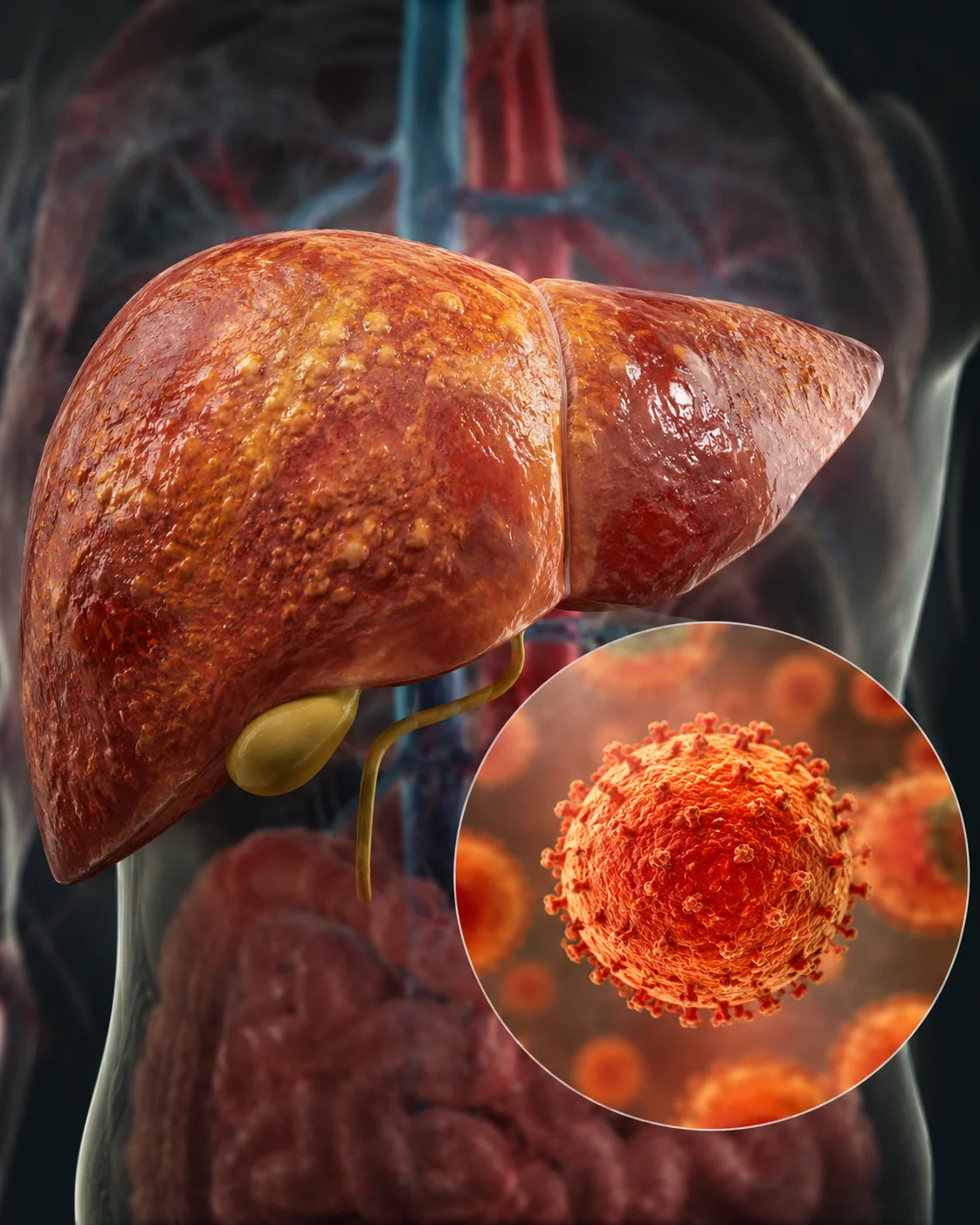
Hepatitis C treatment has transformed the outlook for a blood-borne infection that can cause serious liver disease, with England making substantial progress toward the World Health Organization’s goal of eliminating hepatitis C as a public health threat by 2030. NHS England’s testing and treatment programme has already treated more than 80% of known cases, while deaths linked to the infection in England have fallen by 36%, according to figures discussed in an interview with consultant hepatologist Will Gelson of Addenbrooke’s Hospital in Cambridge.
The progress reflects a major change in how hepatitis C is managed. New antiviral medicines introduced over the past decade can cure the infection in most patients after a relatively short course of treatment.
Globally, however, the challenge remains considerable. The WHO estimates that 47 million people were living with hepatitis C infection in 2024, equivalent to about 0.6% of the world’s population. An estimated 240,000 people died from hepatitis C-related causes that year, mainly from liver cirrhosis and liver cancer.
What is hepatitis C?
Hepatitis C is a virus that primarily affects the liver. Because infection can remain unnoticed for years, people may not realise they are carrying the virus until liver damage has developed.
According to the discussion with Dr Will Gelson, around one in five people infected with hepatitis C may eventually develop cirrhosis, a serious condition in which healthy liver tissue is replaced by scar tissue.
Cirrhosis can impair liver function and increase the risk of complications, including liver failure and liver cancer.
The infection is transmitted through infected blood. Because symptoms can be absent or mild for long periods, identifying people who have the virus is one of the central challenges in efforts to eliminate it.
Hepatitis C treatment can cure most patients
One of the biggest advances in hepatitis C care has been the development of antiviral medicines that directly target the virus.
Gelson explained that an initial treatment course generally lasts between eight and 12 weeks. Depending on the medication used, patients may take a tablet or several tablets once a day.
The treatment cures approximately 95% of patients, according to the figures discussed in the interview.
For the small group who do not clear the virus after their initial treatment, another course of therapy can be offered. That second treatment is also highly effective, meaning only a very small proportion of patients remain unable to achieve a cure.
The development of these medicines has fundamentally changed hepatitis C from a long-term disease that could lead to severe complications into an infection that can usually be cured with a short course of treatment.
WHO also describes hepatitis C as a curable infection and recommends short-course treatment for people living with the virus.
UK hepatitis C programme makes significant progress
England has become an important example of how systematic testing and treatment can accelerate progress against hepatitis C.
According to the interview, NHS England established a programme combining testing, diagnosis and treatment, supported by efforts to obtain value from the medicines being used.
More than 80% of known hepatitis C cases in England have reportedly been treated. The country has also recorded a 36% reduction in deaths associated with the infection, putting it on a strong trajectory toward the WHO’s 2030 target.
WHO’s global strategy aims for a 65% reduction in hepatitis-related mortality by 2030 compared with the 2015 baseline. For hepatitis C specifically, the strategy also calls for a substantial reduction in new infections and wider access to diagnosis and treatment.
The progress in England does not mean hepatitis C has been eliminated. Rather, it indicates that the country has made considerable progress toward the international definition of elimination as a public health problem.
Finding people with hepatitis C remains a major challenge
Effective treatment can only help people who are diagnosed.
Hepatitis C is often described as a silent infection because many people may have few or no obvious symptoms while the virus continues to damage the liver. This makes targeted testing particularly important.
Several approaches are being used in England to identify people who may otherwise remain undiagnosed.
These include testing in emergency departments in areas where hepatitis C prevalence is higher. Testing and treatment initiatives are also being carried out through some general practices, prisons, and drug and alcohol services.
The interview also highlighted a decentralised approach in which local areas receive funding to develop testing and treatment strategies suited to the needs of their populations.
This type of targeted approach is important because simply making treatment available does not guarantee that people with undiagnosed infection will reach healthcare services.
Why eliminating hepatitis C is different from eradicating it
The terms “elimination” and “eradication” are sometimes used interchangeably, but they describe different public health goals.
Global health authorities are working toward eliminating viral hepatitis as a public health threat rather than completely eradicating the viruses worldwide.
WHO’s 2030 strategy defines elimination as major reductions in new infections and deaths, supported by high coverage of prevention, diagnosis and treatment services.
Hepatitis C presents an unusual opportunity because humans are the only known host for the virus and there is no animal reservoir that needs to be controlled.
However, achieving global elimination remains difficult. Countries need effective testing systems, access to affordable treatment, prevention programmes and sustained public-health investment.
WHO’s 2026 global hepatitis report warned that the world is not currently on track to meet all of the 2030 elimination targets. The report said only about 20% of people living with hepatitis C had been treated since 2015, despite the availability of highly effective curative treatment.
Impact on liver transplants and cancer care
The improvement in hepatitis C treatment has already changed specialist liver care in England.
Gelson said that earlier in his career, hepatitis C was responsible for a significant proportion of liver transplants performed for liver failure. Treating patients after transplantation was also complicated because the virus could return and some older therapies could create additional problems for transplant recipients.
Modern antiviral treatment has changed that situation.
Patients can now be treated successfully even after a liver transplant, while effective treatment earlier in the course of infection can prevent many patients from progressing to the point where transplantation is required.
The effect on liver cancer has also been significant. Although hepatitis C has not disappeared as a cause of liver cancer, Gelson said it has become comparatively uncommon among the cases he sees.
WHO notes that cirrhosis and liver cancer remain the principal causes of hepatitis C-related deaths, highlighting why early diagnosis and treatment remain important.
Global elimination remains a bigger challenge
England’s progress demonstrates what can be achieved when testing, treatment and public-health programmes are combined, but the global situation is more uneven.
WHO’s latest data show that hepatitis C remains a significant cause of illness and death worldwide. In 2024, about 0.9 million people were newly infected with hepatitis C, while approximately 240,000 died from the infection.
Access to diagnosis and treatment is a major barrier, particularly in countries where healthcare resources are limited.
The WHO has therefore emphasised the need to expand testing and treatment beyond specialist hospitals and make services easier to access through primary healthcare, prisons and harm-reduction programmes.
For countries to reach the 2030 goal, identifying undiagnosed infections will be just as important as maintaining access to effective medicines.
A major change in the fight against hepatitis C
The story of hepatitis C has changed dramatically over the past decade.
An infection that could once progress to cirrhosis, liver failure and cancer can now usually be cured with a short course of highly effective antiviral treatment.
England’s experience suggests that organised testing and treatment programmes can produce measurable reductions in deaths and serious liver complications. Yet the latest global data also show that medical advances alone are not enough.
The remaining challenge is finding people who do not know they are infected, ensuring they can access treatment and preventing new infections.
If countries can combine those efforts with sustained investment, the WHO’s goal of eliminating viral hepatitis as a public health threat by 2030 remains possible, although global progress is currently uneven.
Source:
- World Health Organization (WHO) — Global Hepatitis Report 2026
- World Health Organization — Hepatitis health topic and elimination targets
- World Health Organization — Global hepatitis elimination guidance
- World Health Organization — Updated guidance on hepatitis C treatment
- Interview with Dr Will Gelson, consultant hepatologist at Addenbrooke’s Hospital, Cambridge — source material supplied for this article
Our audience means everything to us.
Have feedback or suggestions to make us better? We’re always listening—feel free to get in touch with us at editor@truthorahub.com









Leave a Comment