

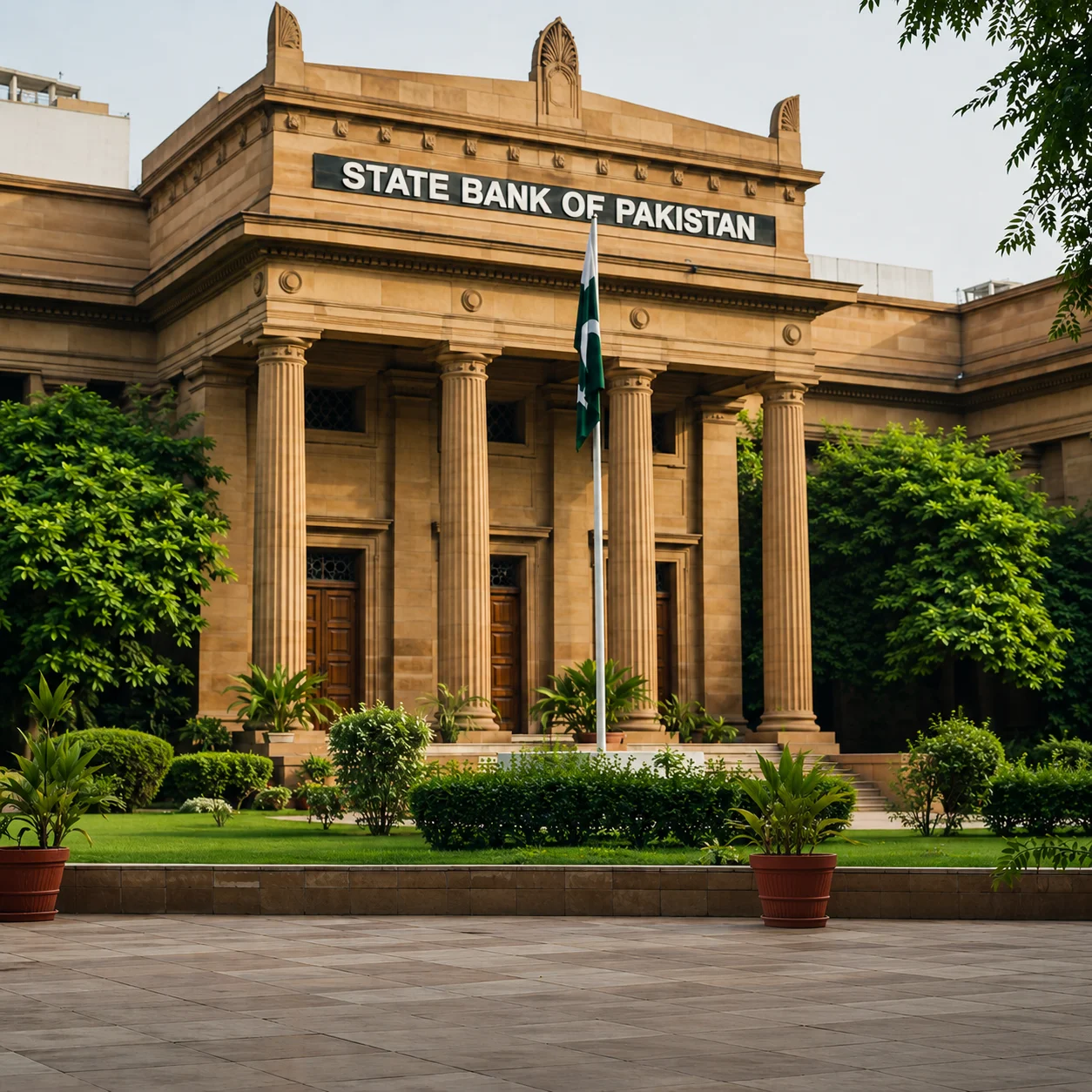
Pakistan’s economic outlook remains under pressure as the State Bank of Pakistan (SBP) has projected GDP growth for the current fiscal year near the lower end of its earlier forecast range of 3.75% to 4.75%. The central bank stressed that major structural reforms are urgently needed to achieve sustainable and higher economic growth in the coming years.
SBP Highlights Key Economic Weaknesses
According to the SBP’s latest half-yearly report, Pakistan continues to struggle with long-standing economic issues including low investment, weak exports, limited foreign direct investment, and a poor tax-to-GDP ratio. The report noted that these factors are slowing down economic momentum and reducing the country’s competitiveness in global markets.
The central bank also pointed out that policy inconsistencies, low productivity, and lack of export diversification have made Pakistan’s exports vulnerable to global demand and price fluctuations.
Fiscal Position Shows Improvement
Despite economic pressures, the report revealed some positive developments. Lower interest payments, strong non-tax revenues, and higher petroleum levy collections helped the government achieve a fiscal surplus during the first half of the fiscal year.
Meanwhile, large-scale manufacturing showed signs of recovery after years of decline. Industries such as automobiles, textiles, apparel, and petroleum products contributed significantly to industrial growth during the July-December period.
Inflation and Global Risks Remain a Concern
The SBP stated that inflation has eased compared to last year, but core inflation remains high due to rising house rents, education fees, gold prices, and wage adjustments. The report also warned that ongoing global supply chain disruptions and slower international economic growth could create additional pressure on Pakistan’s economy.
Exports may remain weak due to falling rice prices, border trade issues, and changing global trade patterns. At the same time, remittances from Gulf countries could slow down during the last quarter of FY26 if economic activity weakens in GCC economies.
Remittances Continue to Support Economy
Although risks remain, the SBP expects overseas remittances to stay strong overall during the fiscal year, helping stabilize the external account and support Pakistan’s foreign exchange reserves.
Experts believe that without deep reforms in taxation, exports, investment, and industrial productivity, Pakistan may continue facing economic uncertainty in the medium term.
Our audience means everything to us.
Have feedback or suggestions to make us better? We’re always listening—feel free to get in touch with us at truthora2026@gmail.com



Leave a Comment