

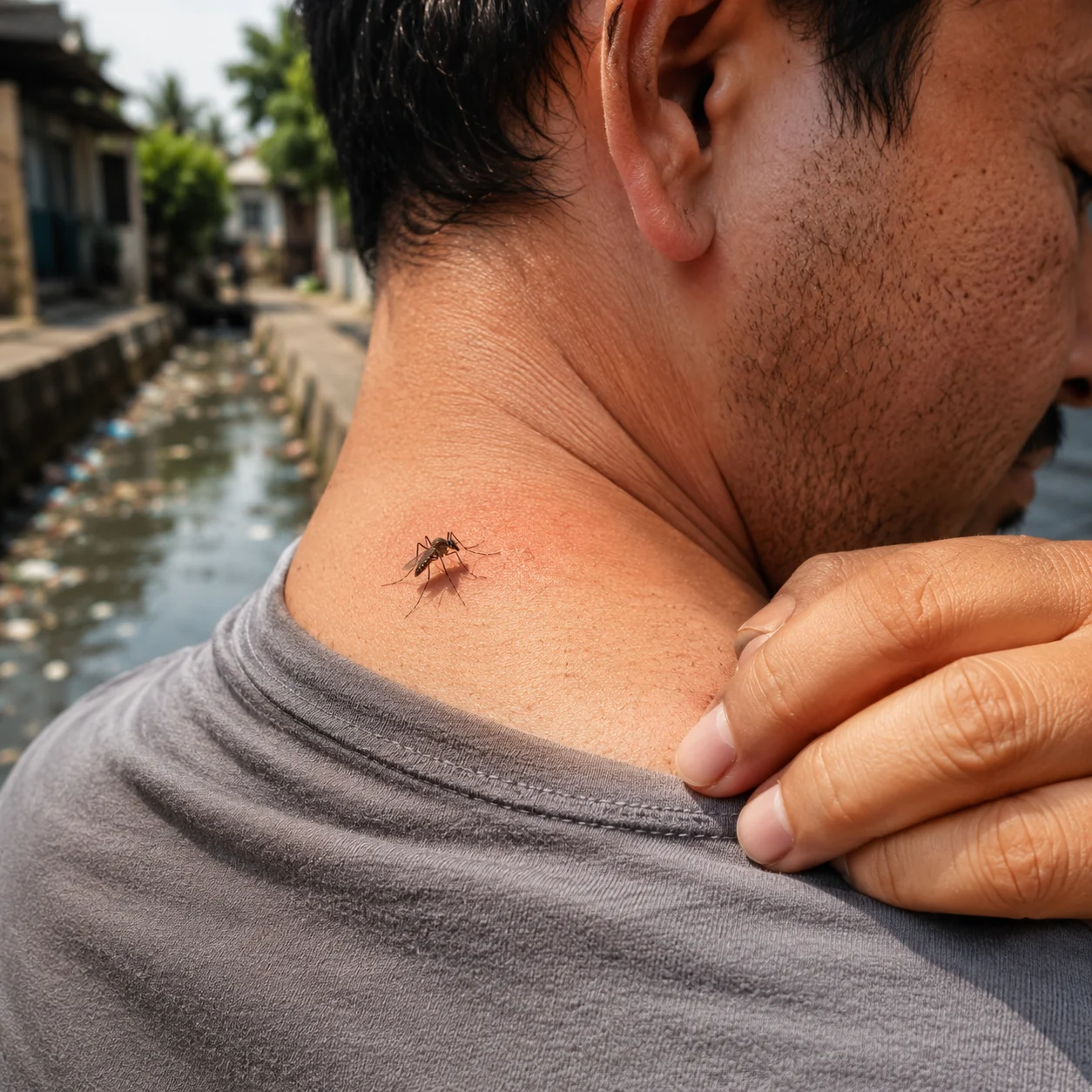
Many people often wonder why mosquitoes seem to target them more than everyone else in the room. According to scientists, this is not just a myth. Research shows that mosquitoes are naturally more attracted to certain people because of body smell, heat, and the carbon dioxide they release while breathing.
Experts say female mosquitoes — the ones responsible for biting humans — use highly sensitive receptors to detect their targets from a distance. Carbon dioxide is usually the first signal that grabs their attention. As mosquitoes move closer, body odor, temperature, and moisture on the skin help them decide who to bite.
Body Smell Plays a Big Role
Scientists have discovered that every human body releases hundreds of chemical compounds through the skin. Some of these odors are more attractive to mosquitoes than others. Researchers identified specific scent molecules that strongly attract dangerous mosquito species such as Aedes aegypti, known for spreading dengue and yellow fever.
One chemical compound called “1-octen-3-ol,” also known as mushroom alcohol, was found to make certain individuals especially appealing to mosquitoes. Even a slight increase in this compound can increase mosquito attraction significantly.
Blood Group Myth Debunked
Contrary to popular belief, researchers say there is no strong scientific evidence proving that mosquitoes prefer a specific blood group. Scientists also dismissed theories linking mosquito attraction to eye color, skin tone, or hair color.
Instead, body chemistry and natural skin bacteria appear to be the main reasons why some people get bitten more often than others.
Beer Can Make You More Attractive to Mosquitoes
Several studies have also linked alcohol consumption, especially beer, with increased mosquito attraction. Drinking beer can slightly raise body temperature, change skin odor, and increase the amount of carbon dioxide a person exhales.
Research conducted in Europe and Africa found that people who consumed beer were noticeably more attractive to malaria-carrying mosquitoes compared to those who drank water.
Climate Change Increasing Mosquito Risks
Scientists warn that climate change is helping mosquitoes spread into new regions around the world. Dangerous mosquito species carrying diseases like dengue, malaria, and chikungunya are now appearing in areas where they were rarely seen before.
Health experts say this growing spread could put millions of more people at risk in the coming years.
How to Protect Yourself from Mosquito Bites
Experts recommend wearing loose-fitting clothes that cover the skin, using mosquito repellents, sleeping under mosquito nets, and avoiding excessive alcohol consumption. Keeping surroundings clean and preventing standing water can also help reduce mosquito breeding.
Our audience means everything to us.
Have feedback or suggestions to make us better? We’re always listening—feel free to get in touch with us at truthora2026@gmail.com









Leave a Comment