

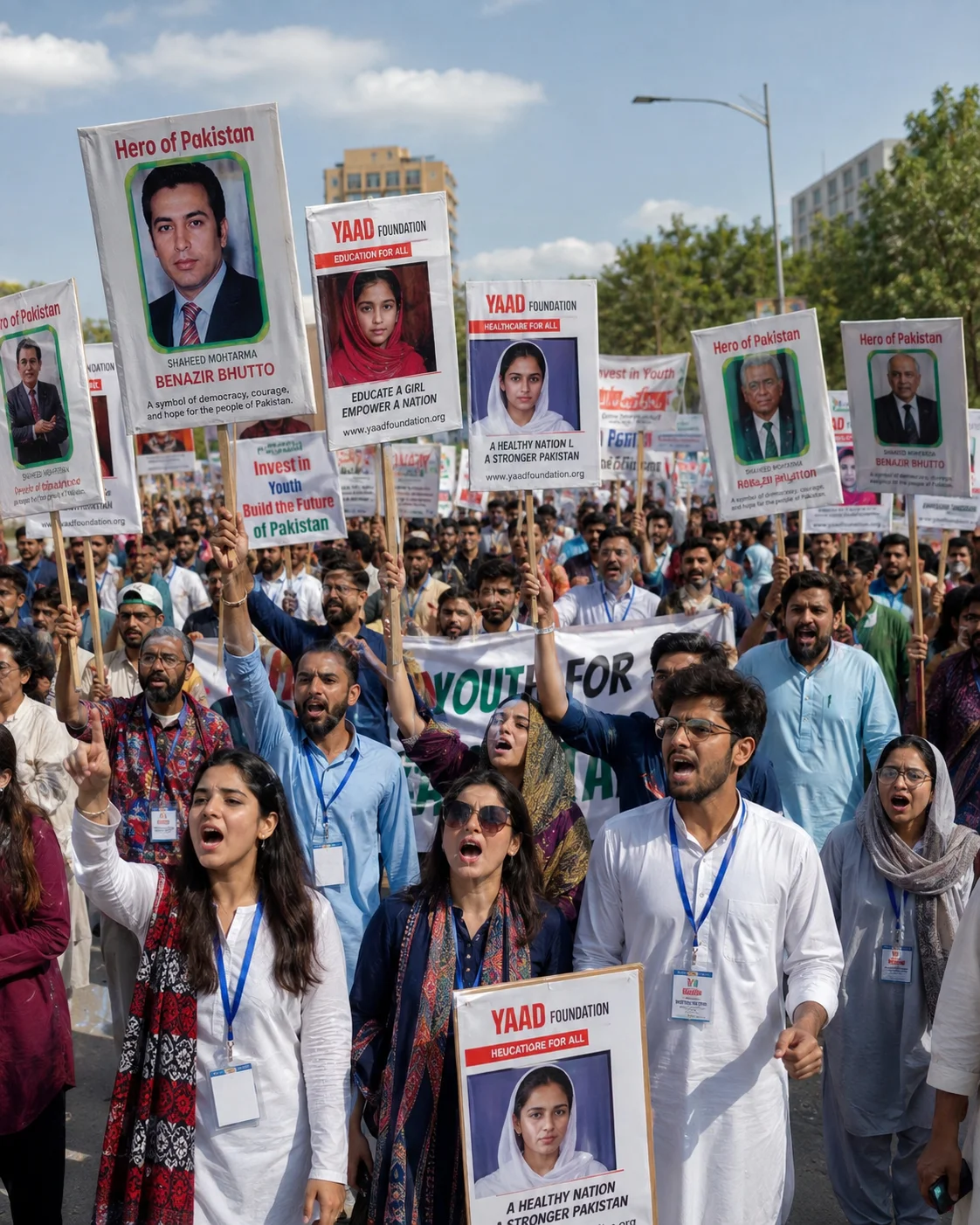
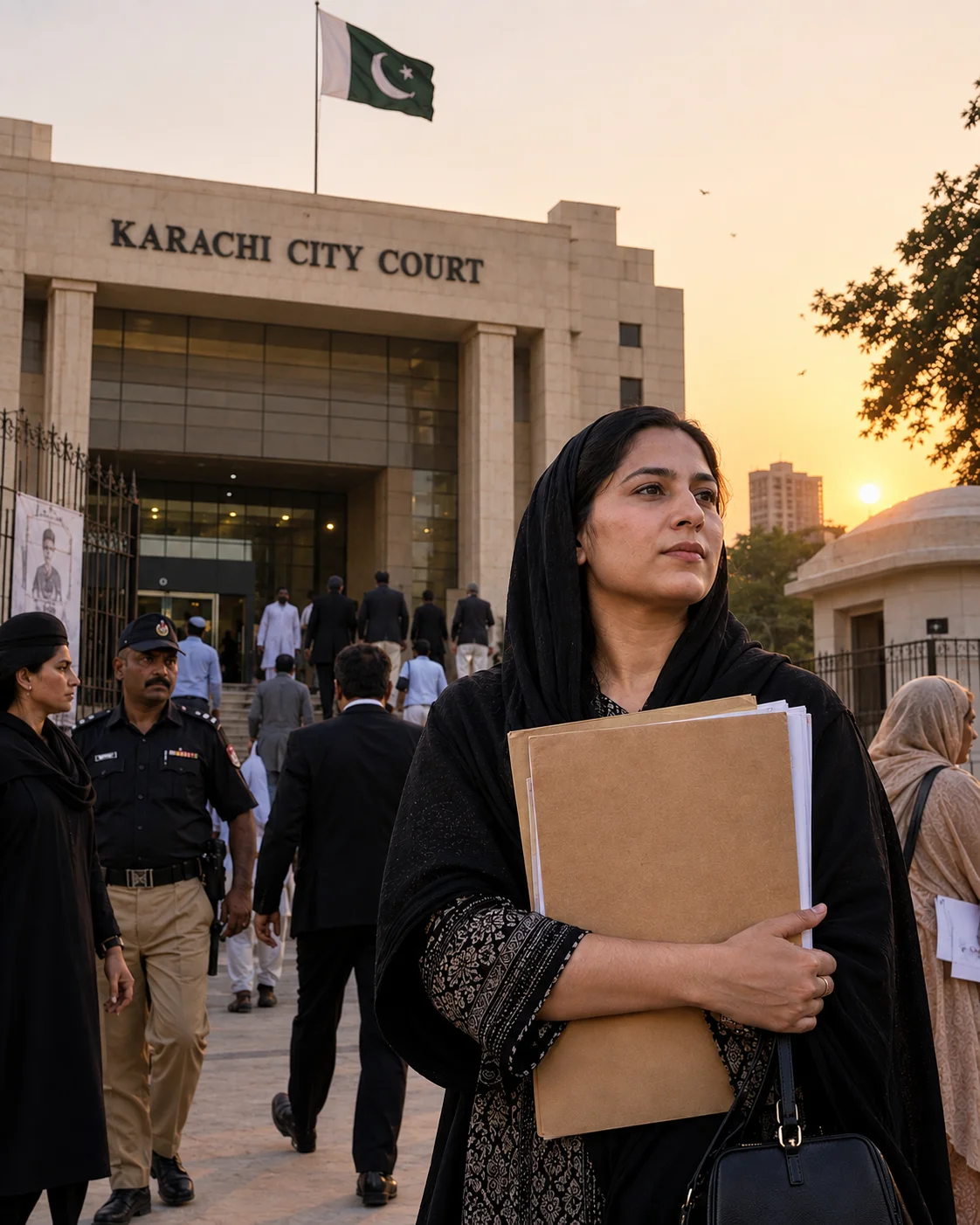
The Minority Rights March 2026 in Karachi brought religious minority representatives, activists, political figures and civil society members together on Tuesday to demand stronger protection of their constitutional rights and greater participation in Pakistan’s political and social affairs.
The gathering was held on August 11, a date observed by minority communities to recall Quaid-i-Azam Muhammad Ali Jinnah’s address to Pakistan’s Constituent Assembly on August 11, 1947. Speakers at the event said the principles of equality, religious freedom and peaceful coexistence outlined in Jinnah’s address should be reflected more effectively in the country’s institutions and laws.
The march took place despite the Bab-i-Tanzeem entrance to the Quaid-i-Azam’s mausoleum remaining closed. Participants used the occasion to raise concerns about alleged discrimination, attacks on places of worship, forced conversions, violence against minority women and girls, and the misuse of blasphemy laws.
The event also produced a series of demands covering education, constitutional language, minority property, forced conversions and implementation of a landmark Supreme Court judgment.
Minority Rights March 2026 focuses on Jinnah’s vision
Humanitarian and classical dancer Sheema Kermani read portions of Jinnah’s August 11, 1947 address during the gathering.
She said the speech’s emphasis on religious freedom and equality remained relevant nearly eight decades later, arguing that minority communities were still seeking the protections associated with those principles.
The August 11 address has long been cited in discussions about the status of religious minorities in Pakistan. Participants at the Karachi event used the anniversary to connect Jinnah’s vision with contemporary concerns about the treatment and representation of minority communities.
Minority rights activist Luke Victor said the purpose of the gathering was to demand rights rather than seek concessions.
He highlighted concerns raised by minority communities over violence, attacks on places of worship, discrimination in education and employment, abductions, forced conversions, forced marriages and the alleged misuse of blasphemy laws.
These issues have been repeatedly raised by rights groups and minority representatives, although individual allegations require investigation and legal determination in specific cases.
Political representation remains a major concern
The question of political participation was another prominent theme at the event.
Nathan Danyal of Religions for Peace questioned whether minority citizens have sufficient influence over political decision-making despite reserved seats in legislatures.
He argued that the method through which minority representatives reach assemblies limits the direct electoral connection between those representatives and the communities they represent.
Sindh Assembly Deputy Speaker Anthony Naveed offered a different emphasis, urging minority citizens to participate more actively in mainstream political processes.
Naveed said Jinnah’s August 11 speech and the Constitution provide a framework for peaceful coexistence and protection of citizens’ rights. He encouraged minority communities to use their voting rights and seek greater participation in political institutions.
The exchange reflected a broader question raised during the march: whether constitutional guarantees can translate into meaningful political representation and participation at the grassroots level.
Speakers highlight Supreme Court’s 2014 minority rights ruling
Safina Gill referred to the Supreme Court’s 2014 judgment concerning the protection of religious minorities.
The case arose from the court’s suo motu proceedings following the September 2013 suicide bombing at All Saints Church in Peshawar, as well as threats to the Kalash community and Ismailis in Chitral. The Supreme Court’s judgment included directions concerning the protection of minority rights and the establishment of institutional mechanisms.
Gill argued that implementation of the judgment remains an important issue.
The Supreme Court record confirms that the proceedings covered the Peshawar church attack and threats against minority communities. The case was heard by a bench headed by then Chief Justice Tassaduq Hussain Jillani.
Participants at the Karachi march called for the implementation of the judgment’s recommendations, particularly those concerning independent and empowered commissions for minority rights.
Concerns over safety of minority communities
Several speakers focused on security concerns affecting religious minorities.
Najma Maheshwari, a feminist activist from Karachi’s Hindu community, said minority families did not feel sufficiently secure and referred to the disappearance of Priya Kumari, a Hindu girl from Sukkur who was reported missing in 2021.
Maheshwari questioned the effectiveness of efforts to locate the child and alleged that politically influential individuals were involved in the case. Those allegations were presented as part of her remarks at the gathering and have not been established as fact in the material provided for this report.
The case of Priya Kumari has remained a subject of public concern in Sindh, with authorities having previously formed investigation teams to trace her whereabouts.
Speakers at the march used the case to illustrate broader concerns about the safety of minority children and families.
Protection of religious properties demanded
Protection of minority-owned properties and places of worship was another major issue raised during the event.
Sardar Ram Singh of Shikarpur spoke about the historical importance of Pakistan to the Sikh community and called for greater protection of Sikh properties.
He pointed to the fact that several important Sikh religious sites are located in present-day Pakistan and argued that minority communities should receive equal protection as citizens.
Pastor Ghazala Shafique also called attention to the protection of minority properties following the 2023 violence in Jaranwala, Punjab, which followed allegations of blasphemy and resulted in attacks on Christian homes and places of worship.
The speakers’ demands included stronger safeguards against illegal occupation, seizure or desecration of minority communal properties.
Demands include education and legal reforms
Participants at the Minority Rights March presented a broad list of demands addressing education, legislation and institutional protection.
Among the demands was a review of curricula and textbooks used in both public and private educational institutions to remove discriminatory material and hate speech.
Participants also called for changes to constitutional and other legal terminology relating to religious identity, including replacing the general designation “non-Muslim” with wording that recognises citizens according to their respective religious identities.
Another demand called for legislation criminalising forced conversions.
The organisers also sought stronger protection for minority-owned communal property and places of worship, along with the restoration of properties that have allegedly been illegally occupied or desecrated.
Call for minority rights commissions
A further demand concerned the creation of independent, autonomous and adequately empowered national and provincial commissions for minority rights.
Participants linked this demand to the Supreme Court’s 2014 judgment and argued that such bodies could provide institutional mechanisms for addressing complaints and monitoring the protection of minority communities.
The proposal reflects a broader concern raised during the march: that constitutional guarantees alone may not be sufficient without institutions capable of monitoring implementation and responding to violations.
The effectiveness of any such commissions would ultimately depend on their legal authority, independence, resources and relationship with existing government institutions.
Historical contribution of minorities to Pakistan
Some speakers also highlighted the contribution of religious minorities to the creation and development of Pakistan.
Pandit Rajesh Kalyan said minority communities had also participated in the political struggle surrounding the establishment of Pakistan.
He referred to the role of minority voters in Punjab during the political developments surrounding Partition.
The comments were intended to reinforce the argument that religious minorities should be regarded as equal stakeholders in Pakistan’s national history rather than as communities outside the country’s mainstream political identity.
Sikh representative Sardar Ram Singh similarly emphasised the deep historical connection between Sikh heritage and territories that now form part of Pakistan.
Debate over constitutional guarantees
The discussion repeatedly returned to the relationship between constitutional rights and their implementation.
Pakistan’s Constitution provides protections relating to religious freedom and equality, while Jinnah’s August 11 address remains an important historical reference point in debates over the country’s treatment of religious minorities.
Deputy Speaker Anthony Naveed argued that the constitutional framework already contains commitments to coexistence and minority protection, while also urging minority citizens to become more involved in political institutions.
Other participants maintained that legal guarantees require stronger enforcement and institutional mechanisms to become meaningful in everyday life.
The differing views demonstrate that the debate is not limited to the wording of laws but also concerns implementation, political representation, public attitudes and institutional accountability.
August 11 remains a key date in minority rights debate
The Minority Rights March 2026 was organised around the significance of August 11, 1947, when Jinnah addressed the Constituent Assembly shortly after the creation of Pakistan.
For the participants, the anniversary provided an opportunity to assess the gap they perceive between the principles expressed at the time of independence and the experiences of religious minorities today.
The march’s demands covered a wide range of issues, from education and political participation to protection from violence and safeguarding religious properties.
There was also a clear call for stronger implementation of existing legal protections rather than relying solely on new declarations.
Minority rights debate continues
The Karachi march highlighted the continuing debate over the position and protection of religious minorities in Pakistan.
Participants raised concerns about discrimination, violence, political representation, forced conversions, protection of places of worship and the treatment of minority-owned property.
At the same time, political representatives at the event stressed the importance of minority participation in democratic institutions.
The demands presented at the march now form part of the wider public discussion about how Pakistan can strengthen legal and institutional safeguards for religious minorities.
For the organisers and participants, the significance of August 11 lies in connecting these contemporary demands with the principles associated with Jinnah’s founding vision for the country.
Source:
- Dawn — reporting on the Minority Rights March 2026 in Karachi and statements by participants.
- Supreme Court of Pakistan — official judgment in Suo Motu Case No. 1 of 2014 concerning the Peshawar church attack and threats against minority communities.
Our audience means everything to us.
Have feedback or suggestions to make us better? We’re always listening—feel free to get in touch with us at editor@truthorahub.com



Leave a Comment