

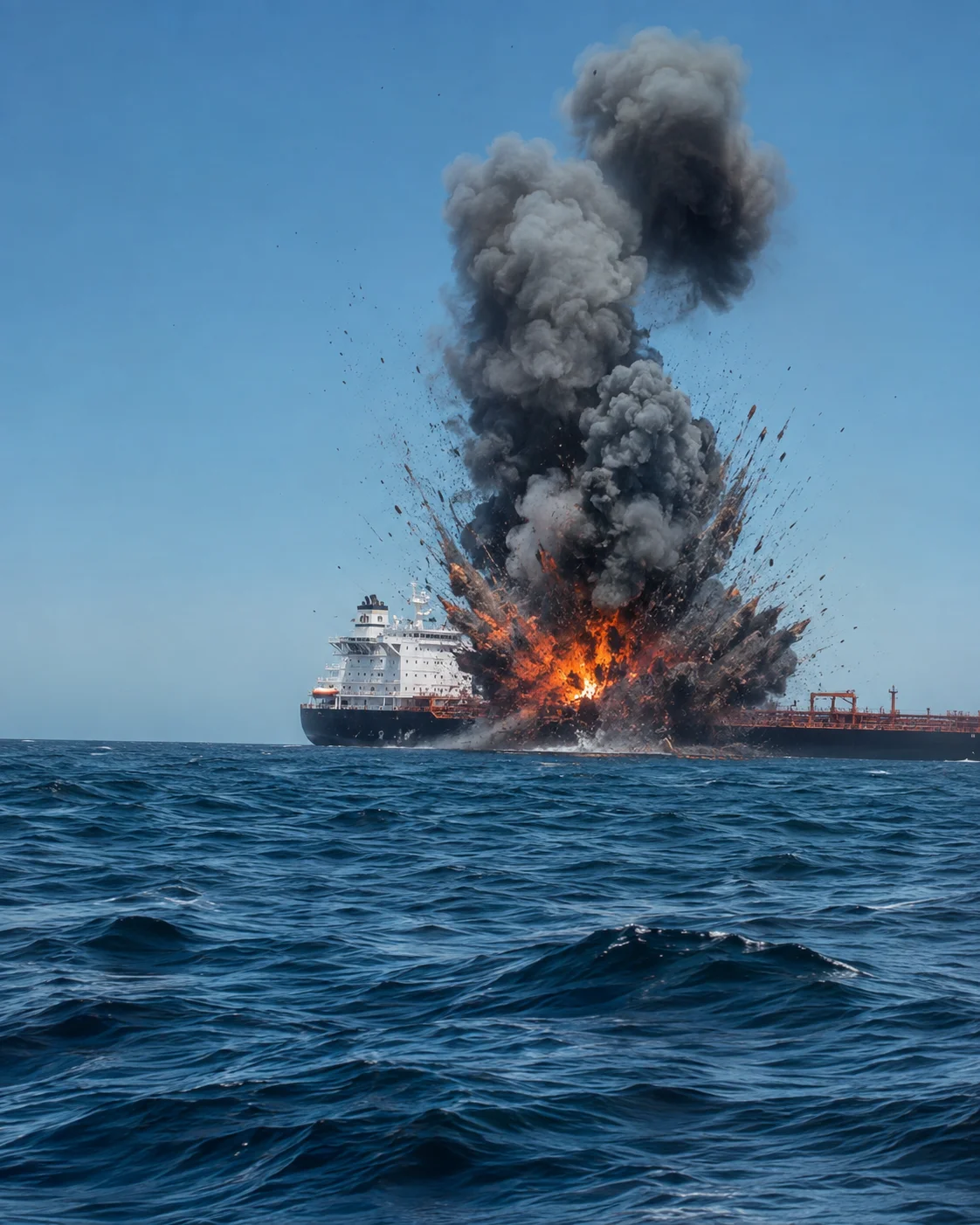
The Houthi attack on Tihamah in Yemen’s Bab al-Mandeb Strait has killed at least six people, including three Pakistani nationals, according to Yemeni authorities and international reports. The incident involved an Egyptian-owned commercial vessel and has added to growing concerns over the safety of shipping in one of the world’s key maritime routes.
The attack took place on Tuesday, August 11, when the vessel came under missile fire in the Bab al-Mandeb area. Yemen’s internationally recognised government blamed the Iran-aligned Houthi group for the attack. Reuters reported that four crew members — three Pakistanis and one Indonesian — were killed, while two Yemeni personnel involved in the rescue operation also died. Ten others were injured.
The Houthis have not officially acknowledged responsibility for striking the Tihamah. However, the group’s media outlet reported that Houthi forces had attacked what it described as a Saudi vessel carrying military supplies.
Houthi attack on Tihamah leaves Pakistani nationals dead
Yemen’s Transport Ministry said the Tihamah was struck by three ballistic missiles, causing a fire and substantial damage to the commercial ship.
According to the Yemeni authorities cited in reports, three Pakistani crew members and one Indonesian national were among those killed in the initial attack.
A second missile was reportedly fired while rescue personnel were attempting to evacuate people from the damaged vessel. Yemen’s coastguard said the subsequent strike hit the area where the rescue operation was taking place.
Two Yemeni personnel involved in the response were also killed, according to Reuters.
The reported death toll makes the incident particularly significant for Pakistan because three of those killed were Pakistani nationals working aboard the vessel.
Pakistan’s Deputy Prime Minister and Foreign Minister Ishaq Dar has condemned the attack and directed authorities to facilitate the return of the three Pakistani nationals’ remains, according to Pakistani media reports.
What happened to the Tihamah?
The Tihamah was sailing through the strategically important Bab al-Mandeb Strait when it came under attack.
The waterway connects the Red Sea with the Gulf of Aden and provides an important maritime link between the Indian Ocean and the Suez Canal route.
Yemeni officials said the initial missile attack damaged the vessel and triggered a fire. Rescue personnel then moved to the ship to assist the crew and evacuate casualties.
The coastguard said another missile was fired during the rescue effort, resulting in additional deaths and injuries.
Reuters reported that the vessel’s identity as the Tihamah was confirmed through visual evidence and ship-tracking information. The United Kingdom Maritime Trade Operations organisation also reported that a ship had been struck by an unidentified projectile in the same general area.
The available reports do not establish an independently verified explanation for the Houthis’ targeting decision. The group claimed it had attacked a vessel carrying Saudi military supplies but did not identify the ship by name.
Houthis and Yemen government give different accounts
The attack has produced competing accounts from the parties involved in Yemen’s conflict.
Yemen’s internationally recognised government has accused the Houthis of carrying out the missile attack on the commercial vessel.
The Houthi-run Saba news agency, meanwhile, reported that the group had targeted a Saudi ship transporting military equipment. It did not identify the vessel, and there was no immediate Saudi confirmation of that claim.
The Houthis have not issued a separate official statement accepting responsibility for the Tihamah deaths in the reports available so far.
The distinction is important because the circumstances and intended target of the attack remain part of the competing narratives surrounding the incident.
Pakistan responds after three nationals are killed
The deaths of three Pakistani crew members have brought the incident into sharp focus in Pakistan.
Foreign Minister Ishaq Dar condemned the attack and ordered steps for the repatriation of the victims’ remains, according to Pakistani media reports.
The incident is also a reminder of the risks faced by Pakistani nationals working in international maritime industries, particularly when commercial vessels operate through conflict-affected waterways.
Pakistani sailors and maritime workers serve on commercial ships operating across international routes. An attack involving a vessel carrying Pakistani crew members can therefore have consequences beyond the immediate conflict zone.
According to reports, one Pakistani national was also among those injured in the incident.
Attack comes amid renewed fighting in Yemen
The maritime incident comes as Yemen’s fragile truce has deteriorated following renewed hostilities between the Houthis and forces aligned with the internationally recognised government.
The conflict has involved both internal fighting and wider regional rivalries, with Saudi Arabia and the Houthis repeatedly becoming involved in military confrontations.
The latest escalation has included attacks involving missiles and drones, as well as strikes affecting coastal areas and shipping routes.
Yemen’s government said on Tuesday that the Houthis had launched multiple missiles and drones against locations along the country’s western coast.
The Houthis, for their part, have said some of their recent attacks targeted Saudi military positions, weapons facilities and command centres.
The United Nations has warned that renewed fighting could widen the conflict and further expose Yemen’s civilian population to the consequences of regional instability.
Why the Bab al-Mandeb Strait matters
The Bab al-Mandeb is one of the world’s strategically important maritime chokepoints.
Ships using the route can travel between the Red Sea and the Gulf of Aden before continuing toward the Indian Ocean. The waterway is also connected to the wider Suez Canal trade route, making security in the area important for international shipping.
Repeated attacks in and around the Red Sea have previously forced some shipping companies to reconsider their routes.
The latest incident could add to concerns among vessel operators, crews and insurers about travelling through the area.
Reuters reported that shipping traffic through the Bab al-Mandeb and the Strait of Hormuz has already declined significantly amid a wider increase in regional attacks and maritime restrictions.
For Pakistan, disruptions in major sea lanes can also have broader economic implications because the country depends heavily on maritime trade for imports and exports.
First reported shipping deaths since February Iran war
The Tihamah incident is also significant in the context of the wider regional conflict.
Reuters described the deaths as the first confirmed fatalities from Houthi attacks on shipping since the war involving Iran began in February.
That development comes amid heightened tensions involving Iran, Israel, the United States, Saudi Arabia and other regional actors.
The maritime situation has become increasingly complicated, with different conflicts and military actions affecting major waterways in the region.
On the same day as the Tihamah incident, US forces also attacked another commercial vessel in the Gulf of Oman. The US military said the Panama-flagged Vela Nova had attempted to breach a US blockade affecting Iranian ports. Reuters reported that a US Navy helicopter fired two Hellfire missiles at the vessel.
The two incidents occurred in separate maritime areas but illustrate the wider security pressures currently affecting commercial shipping in the region.
Regional tensions put shipping routes under pressure
The renewed violence around Yemen is unfolding alongside broader instability affecting the Middle East’s major maritime corridors.
The Bab al-Mandeb, Red Sea, Gulf of Aden, Gulf of Oman and Strait of Hormuz all form part of important international shipping networks. Disruptions in any of these areas can increase voyage times, insurance risks and transportation costs.
For businesses and consumers, prolonged disruption can eventually affect the cost and availability of goods moving through international supply chains.
However, the longer-term economic impact of the latest Tihamah attack remains uncertain.
The immediate focus is on the victims, the safety of the surviving crew and the security of vessels operating through the Bab al-Mandeb.
Investigation and accountability remain important
Yemeni authorities have attributed the Tihamah attack to the Houthis, while the Houthi side has offered a different description of its intended target.
Further information from authorities, maritime security organisations or the vessel’s operators may provide greater clarity about the incident.
For now, the confirmed element is that the Tihamah was attacked in the Bab al-Mandeb area, six people were killed according to Yemeni authorities and international reporting, and three of those victims were Pakistani nationals.
The incident has also prompted a response from Pakistan, with Foreign Minister Ishaq Dar condemning the attack and directing arrangements for the repatriation of the Pakistani victims’ remains.
As fighting intensifies in Yemen and regional maritime tensions remain elevated, the security of commercial shipping through the Bab al-Mandeb is likely to remain an important concern for governments, shipping companies and crews.
Source:
- Reuters — reporting on the Tihamah attack, casualties and wider maritime incidents.
- Al Jazeera — reporting on the Yemeni government’s account of the attack.
- Dawn — reporting on Pakistan’s response and Foreign Minister Ishaq Dar’s condemnation.
- The Express Tribune — reporting on the repatriation of the Pakistani victims’ remains.
Our audience means everything to us.
Have feedback or suggestions to make us better? We’re always listening—feel free to get in touch with us at editor@truthorahub.com





Leave a Comment