

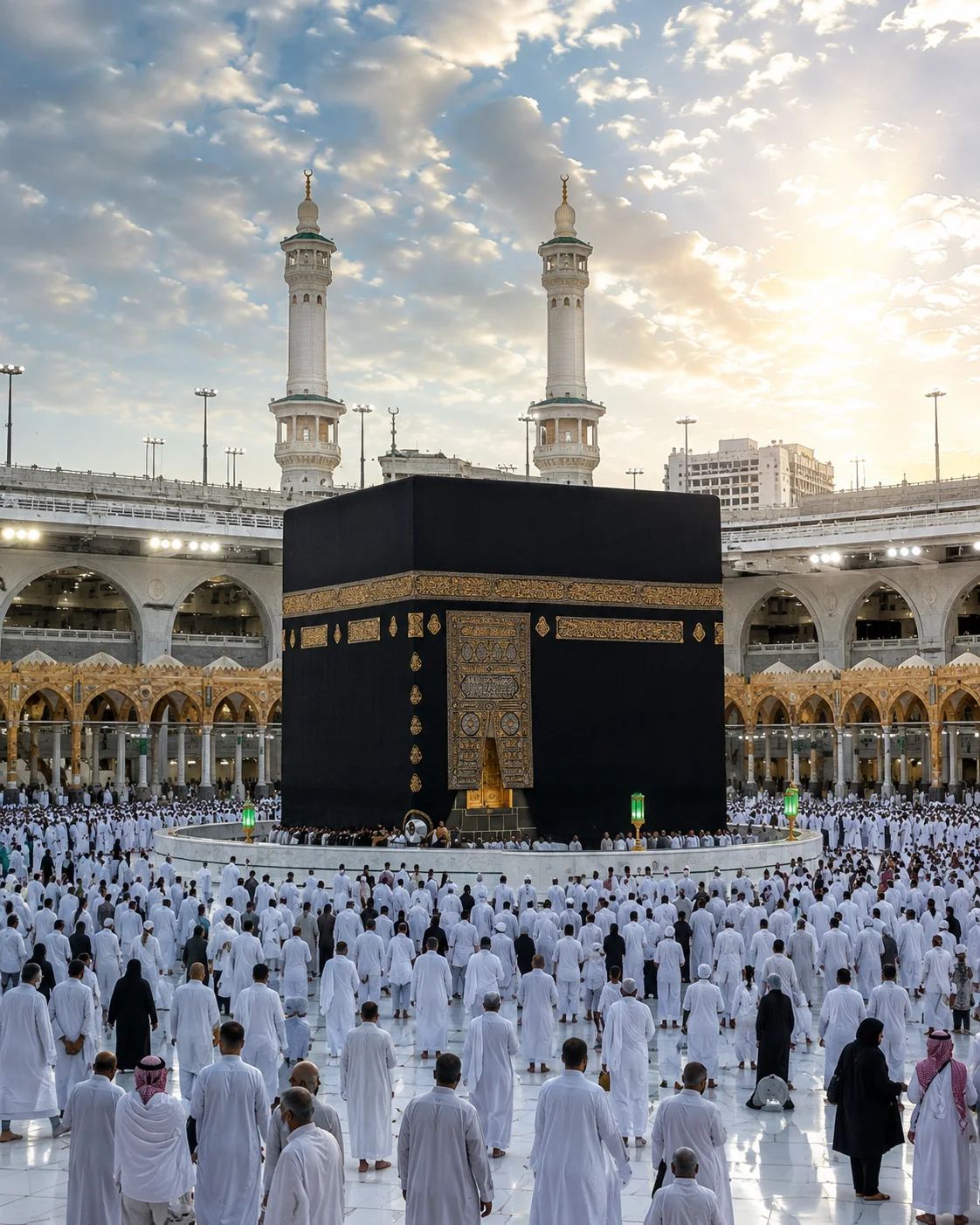
Hajj 2027: Pakistan Sets Government Scheme Cost at Rs1.3m
Pakistan has announced the cost of its Hajj 2027 government scheme, with pilgrims opting for the longer package expected to pay Rs1.2 million, while the shorter package will cost up to Rs1.3 million. Religious Affairs Minister Sardar Muhammad Yousaf announced the rates in Islamabad as the government prepares to begin the next stage of applications and payments through a new digital system.
The first payment under the government scheme will begin on August 17, 2026, according to the minister. Selected applicants will initially be required to deposit 50% of the applicable package cost.
The move follows the federal government’s approval of a four-year Hajj policy covering 2027 to 2030 and the launch of pre-registration for Hajj 2027 in June.
Hajj 2027 government package costs announced
The government has set two package options for Pakistani pilgrims under the 2027 scheme.
The 40-day package has been priced at Rs1.2 million, while the shorter option, covering approximately 20 to 25 days, will cost Rs1.3 million.
The shorter package will have a separate quota of 30,000 pilgrims. Applications and payments for the respective packages will be accepted until the available quota is filled.
The announced prices apply to the government Hajj scheme. Costs under private Hajj operators can vary depending on the package and services offered.
The Ministry of Religious Affairs has published the Hajj Policy and Plan for 2027-2030 as part of the government’s longer-term framework for managing Hajj operations.
When will Hajj 2027 payments begin?
According to Religious Affairs Minister Sardar Muhammad Yousaf, the first payment window will open on August 17.
Applicants selected to proceed will initially be required to deposit half of their package cost.
This means pilgrims choosing the Rs1.2 million package would initially pay Rs600,000, while those selecting the Rs1.3 million short package would initially pay Rs650,000.
The remaining payment arrangements will be handled according to the government’s Hajj schedule and instructions.
The payment process is being shifted to a digital platform as part of the ministry’s broader effort to streamline Hajj administration.
Hajj 2027 moves to a digital application system
One of the major changes for Hajj 2027 is the increased use of digital services.
The Ministry of Religious Affairs has launched the Pak Hajj 2027 mobile application for Android and iOS users.
The digital system is intended to allow prospective pilgrims to complete important stages of the Hajj process without repeatedly visiting government offices or banks.
Applicants will be able to use the online system to submit applications and make payments. Those who prefer to pay at a bank branch can generate the relevant digital payment form and complete the transaction through the designated banking channel.
The government has appointed Habib Bank Limited (HBL) as its banking partner for the process.
The digital transition is designed to reduce physical queues, travel requirements and waiting times for applicants.
Pakistan has allocated 107,526 government Hajj slots
Pakistan has allocated 107,526 places under the government Hajj scheme for 2027.
Around 400,000 people who had already pre-registered are eligible to move forward with the application process, according to the announcement.
Selection will take place on a first-come, first-served basis, making the timing of applications and payments important for those seeking a place under the government quota.
The government had opened Hajj 2027 registration on June 22, 2026, according to the Ministry of Religious Affairs.
The pre-registration system is part of the government’s new multi-year approach, which is intended to reduce the need for prospective pilgrims to repeat the registration process every year.
Four-year Hajj policy changes registration process
The federal cabinet has approved a comprehensive Hajj policy covering 2027 through 2030.
The Ministry of Religious Affairs says the policy is aimed at improving facilities for pilgrims and increasing operational efficiency. The ministry’s official website lists the 2027-2030 Hajj Policy and Plan among its latest policy documents.
Under the new approach, people who pre-register for Hajj do not have to repeat the initial registration process every year.
This is intended to provide greater continuity for prospective pilgrims and allow authorities to maintain a more organized database ahead of future Hajj seasons.
However, pre-registration does not itself guarantee a place in a particular year’s Hajj quota. Applicants must still complete the required process and secure a slot when applications for the relevant season are opened.
Short Hajj package gets 30,000 slots
The government has specifically reserved 30,000 places for the shorter Hajj package.
This option is designed for pilgrims who prefer to spend approximately 20 to 25 days in Saudi Arabia rather than following the full 40-day government package.
At Rs1.3 million, the short package costs Rs100,000 more than the longer Rs1.2 million option.
The government will stop accepting payments for each package once its allocated quota has been filled.
This makes early completion of the payment process particularly important for applicants who want the shorter package.
Private Hajj scheme gets 71,684 slots
The private Hajj sector will receive 71,684 slots for the 2027 season, according to the announcement.
Unlike the government scheme, private pilgrims will be able to compare packages offered by authorized Hajj organizers.
The government has said applicants will be able to view and select packages through its online platform from 25 authorized Hajj organizers.
The Ministry of Religious Affairs has also established a new regulatory framework for private Hajj operators covering the 2027-2030 period. The official policy requires private Hajj operations to be digitally managed and places financial transactions under government-controlled arrangements.
Government warns pilgrims against unauthorized payments
The digital Hajj system also aims to improve payment transparency and reduce the risk of unauthorized transactions.
The government has advised prospective pilgrims to use official platforms and approved channels when making payments.
This is particularly relevant to private Hajj applicants, who may have to choose between multiple packages and service providers.
Under the new private Hajj policy, private Hajj operations are to be managed through a centralized digital portal. The policy states that pilgrim payments will be processed through a government account maintained with the State Bank of Pakistan rather than being independently collected and held by operators.
The framework also includes provisions covering operator licensing, performance monitoring, complaints and financial safeguards.
Why Hajj 2027 is significant for Pakistani pilgrims
The Hajj 2027 arrangements represent a significant change in how Pakistani pilgrims will interact with the government during the pilgrimage application process.
Instead of relying heavily on physical paperwork and repeated visits to offices and banks, applicants will increasingly use online services and the Pak Hajj mobile application.
The four-year policy also gives the government a longer planning horizon for Hajj administration.
For pilgrims, the most immediate issue will be securing a place within the available quota and completing payments through approved channels.
The Rs1.2 million and Rs1.3 million government packages provide two options based primarily on the duration of the stay, while the private scheme offers a separate set of packages through authorized organizers.
What prospective pilgrims should know
Anyone planning to perform Hajj under the government scheme should pay close attention to official announcements from the Ministry of Religious Affairs.
The first payment phase is scheduled to begin on August 17, while the available government quota is limited.
Applicants should also verify payment instructions before transferring money and should rely on the official Pak Hajj 2027 application and government portal for information.
The Ministry of Religious Affairs currently provides official links for the Pak Hajj 2027 mobile applications and Hajj-related updates through its website.
As the application and payment process moves forward, the ministry is expected to issue further instructions regarding subsequent stages of the Hajj arrangements.
For Pakistani pilgrims, the key figures are now clear: the government scheme has set the 40-day package at Rs1.2 million, the shorter package at Rs1.3 million, and the first payment phase will begin on August 17.
Source:
- Ministry of Religious Affairs and Interfaith Harmony, Government of Pakistan — Hajj 2027 registration, policy and official updates.
- Ministry of Religious Affairs — Hajj Policy and Plan 2027-2030 — official policy framework.
- Ministry of Religious Affairs — Private Hajj Policy 2027-2030 — private scheme regulatory and digital management framework.
- Ministry of Religious Affairs — Pak Hajj 2027 Mobile Applications — official Android and iOS application information.
Our audience means everything to us.
Have feedback or suggestions to make us better? We’re always listening—feel free to get in touch with us at editor@truthorahub.com



Leave a Comment