

Pakistan Plastic Recycling: Hidden Cost of Multi-Layer Plastic Waste
Pakistan plastic recycling is often highlighted as one of the country’s environmental success stories, with international assessments pointing to comparatively low levels of marine plastic pollution. However, a closer look at the country’s informal recycling industry reveals that not all plastic waste follows the same recycling journey. In Karachi’s well-known Shershah recycling market, one category of plastic—multi-layer plastic (MLP)—continues to pose serious environmental and public health challenges despite the country’s thriving recycling economy.
Pakistan’s Recycling Success Has a Major Exception
Pakistan has developed one of South Asia’s largest informal recycling networks, where discarded plastic bottles, containers and other recyclable materials are collected, sorted and converted into reusable raw materials.
According to the World Bank, Pakistan records relatively low levels of marine plastic pollution compared with other countries in South Asia. The country’s recycling sector has also grown to the point where businesses reportedly import certain types of plastic waste from overseas for processing.
Despite these achievements, industry experts say one category of plastic remains particularly difficult to recycle: multi-layer plastic packaging.
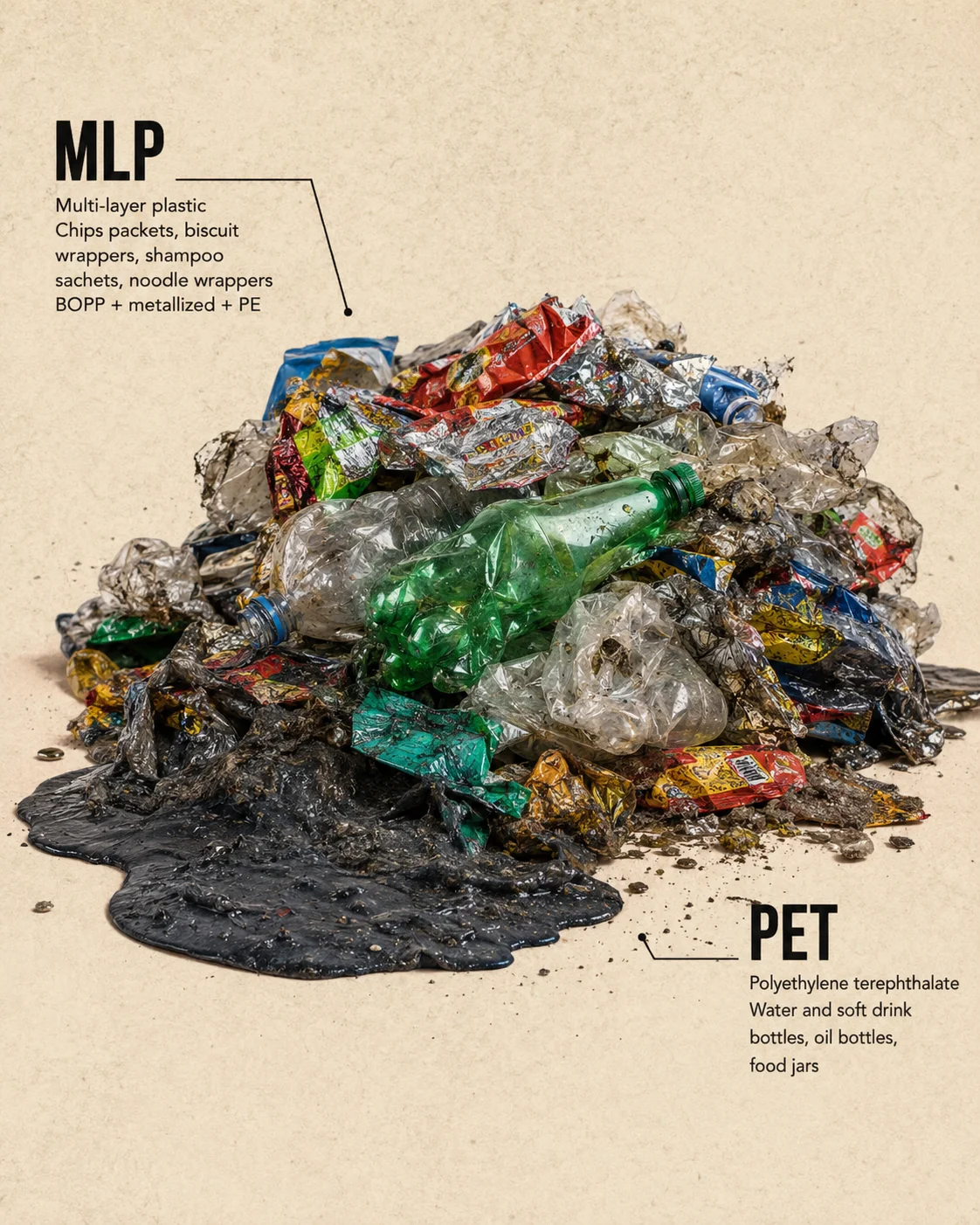
This includes common consumer items such as biscuit wrappers, chips packets, snack packaging, paan sachets and medicine blister packs that households throw away every day.
Inside Karachi’s Shershah Recycling Market
Karachi’s Shershah market has long served as one of Pakistan’s largest recycling hubs. Within an industrial section locally known as Paracha, numerous small recycling units process household plastic waste into reusable industrial materials.
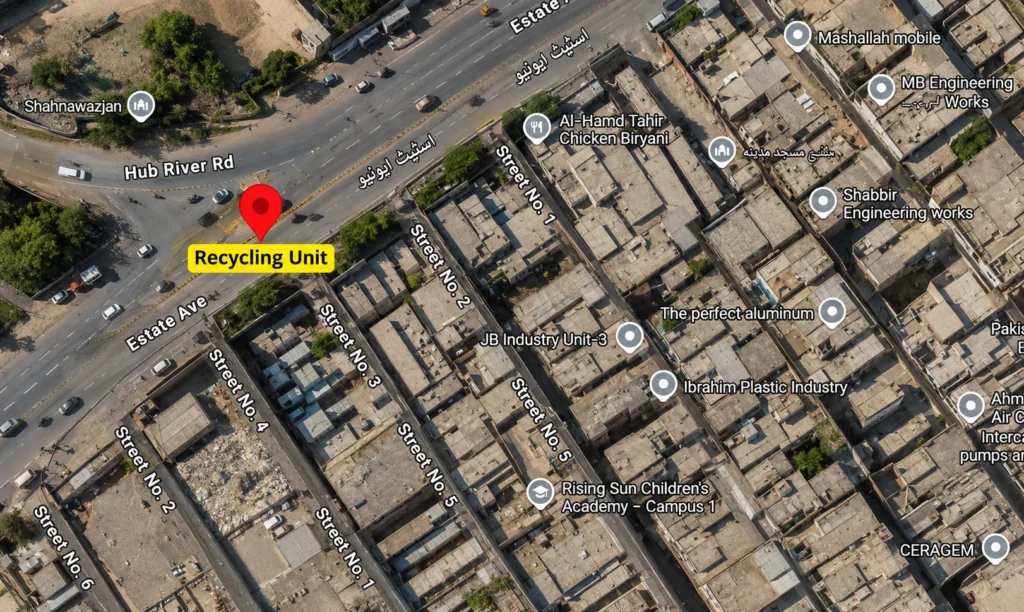
Workers manually separate collected waste according to plastic type and colour before feeding recyclable material into crushing and extrusion machines.
The processed plastic is melted and transformed into long strands, cooled in water tanks and finally cut into tiny plastic pellets known locally as dana. These pellets become raw material for manufacturing new plastic products.
Different facilities specialise in different grades of plastic. Some produce coloured pellets while others recycle cleaner industrial or medical plastic waste.
However, another product found inside these recycling units highlights a far more complex side of the industry.
What Is Gatha?
Alongside plastic pellets, many recycling operations produce dark, rock-like blocks known as gatha.
According to recyclers interviewed for the original report, these blocks are manufactured primarily from multi-layer plastic waste that has little commercial recycling value.
Gatha is sold as a low-cost industrial fuel and is reportedly used by brick kilns, textile dyeing facilities and steel re-rolling units.
Its closest international equivalent is Solid Recovered Fuel (SRF), which is used in several countries as an alternative industrial fuel under tightly regulated environmental standards.
Why Multi-Layer Plastic Is Difficult to Recycle
Multiple Materials in One Wrapper
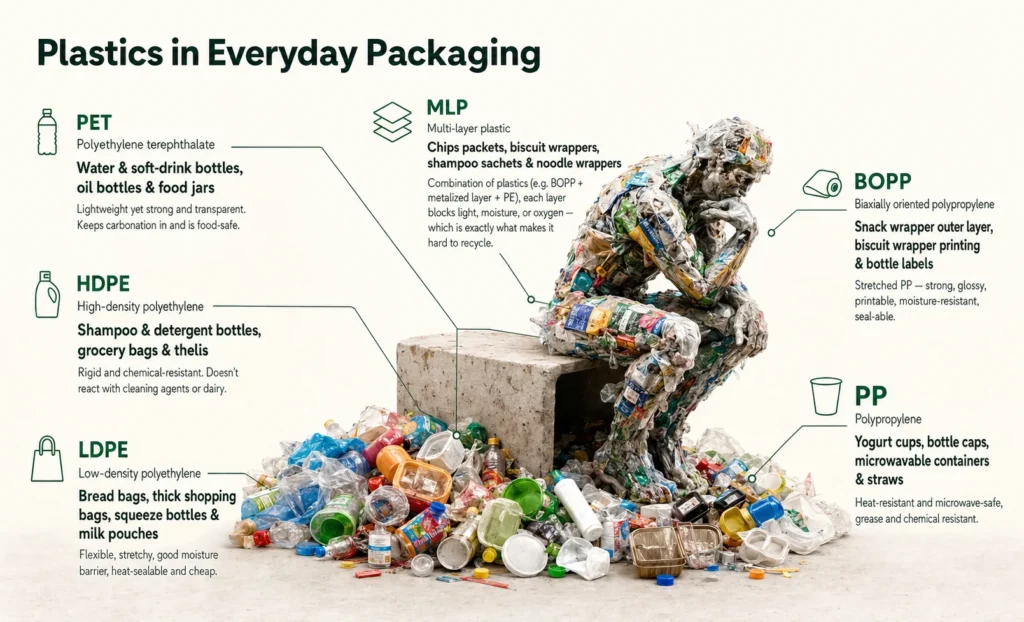
Unlike plastic bottles made largely from a single polymer, multi-layer plastic packaging combines several different materials.
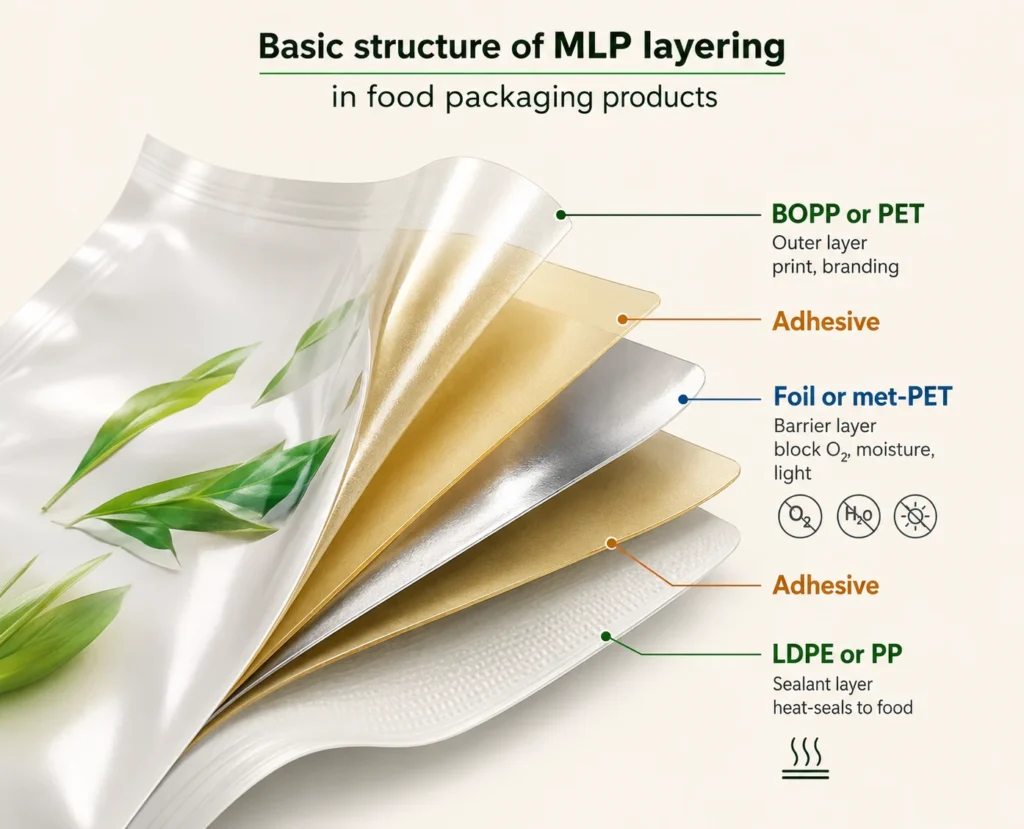
These packages may contain layers of:
- Biaxially Oriented Polypropylene (BOPP)
- Polyethylene Terephthalate (PET)
- Adhesive materials
- Cast Polypropylene (CPP)
- Low-Density Polyethylene (LDPE)
- Aluminium or metallised films
Each layer performs a different function, such as preserving food, blocking moisture or providing printed branding.
Because every material melts at a different temperature, separating and recycling them becomes technically challenging and significantly more expensive.
Industry sources cited in the report said some packaging products may contain as many as seven separate layers.
Economic Challenges Limit Recycling
Recycling companies say multi-layer plastic has very little resale value compared with plastic bottles.
According to the report, recyclable PET bottles can sell for approximately Rs150 per kilogram, while mixed multi-layer plastic may fetch only around Rs6 per kilogram.
Another challenge is weight.
Multi-layer plastic packaging is extremely light, meaning large quantities are required before transportation becomes economically viable.
Waste collectors therefore often prioritise collecting plastic bottles rather than food wrappers because bottles generate much higher returns.
Informal Recycling Practices Raise Concerns
The report states that some informal recycling operations convert multi-layer plastic into gatha by heating or burning the waste in open containers before allowing the material to cool into solid blocks.
Environmental specialists interviewed for the report expressed concerns that this differs significantly from internationally recognised recycling techniques.
Researchers have previously warned that uncontrolled burning of mixed plastic waste may release hazardous pollutants into surrounding communities if emissions are not properly managed.
The report also notes that many such operations reportedly function within Pakistan’s informal economy, making regulatory oversight more difficult.
How Formal Recycling Methods Differ
Experts describe two recognised approaches for processing multi-layer plastic more safely.
Mechanical Compaction
This method compresses plastic waste under high pressure while keeping temperatures below ignition levels.
The resulting material hardens into dense fuel blocks without burning the plastic.
Pyrolysis
Pyrolysis involves heating plastic to temperatures between approximately 450°C and 650°C inside oxygen-free chambers.
Because oxygen is excluded, the plastic does not burn. Instead, heat breaks down long polymer chains into petroleum-based compounds.
Experts emphasise that pyrolysis is a controlled thermal process rather than open-air burning, and environmental controls are designed to capture potentially harmful emissions.
Public Health Questions Remain
Environmental researchers continue to study the long-term effects of burning mixed plastic waste.
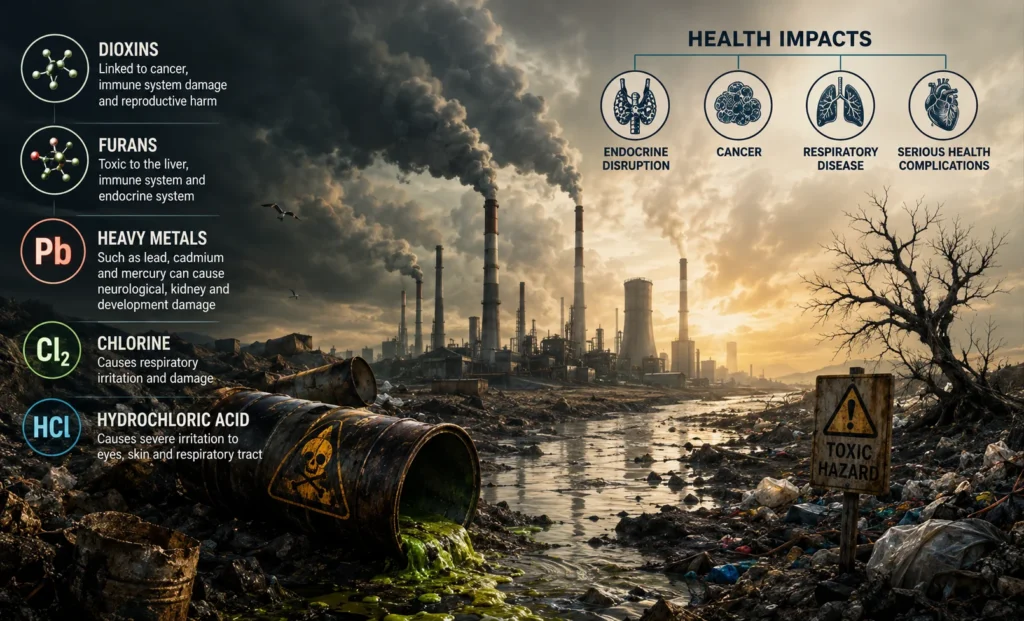
The report notes that poorly controlled combustion can potentially release toxic substances, including acid gases, chlorine compounds and heavy metals, depending on the material being processed.
Experts interviewed for the original investigation argue that while recycling remains essential for reducing landfill waste, informal methods involving uncontrolled burning may simply transfer pollution from landfills into the surrounding air.
They also point out that communities located near small-scale recycling operations may face greater exposure than areas affected by larger industrial facilities operating under environmental regulations.
Why the Issue Matters
Pakistan’s recycling industry plays an important role in reducing waste, supporting livelihoods and supplying raw materials for manufacturing.
However, the experience of multi-layer plastic illustrates the limitations of current recycling systems.
As consumer goods increasingly rely on complex packaging, managing this waste stream safely presents both technical and regulatory challenges.
Industry experts say improvements in collection systems, specialised recycling technologies and stronger environmental oversight will be necessary if difficult-to-recycle plastics are to be managed without creating new environmental risks.
The issue also highlights a broader global challenge. While recycling can reduce waste entering landfills and waterways, not every type of plastic can be recycled efficiently. Multi-layer packaging remains one of the most difficult forms of plastic waste to process worldwide, making it a growing concern for waste management systems in many countries.
Source:
- World Bank
- Original field reporting from Karachi’s Shershah recycling market
- Industry interviews cited in the original report, including Metatex and Irverde representatives
Our audience means everything to us.
Have feedback or suggestions to make us better? We’re always listening—feel free to get in touch with us at editor@truthorahub.com




Leave a Comment