

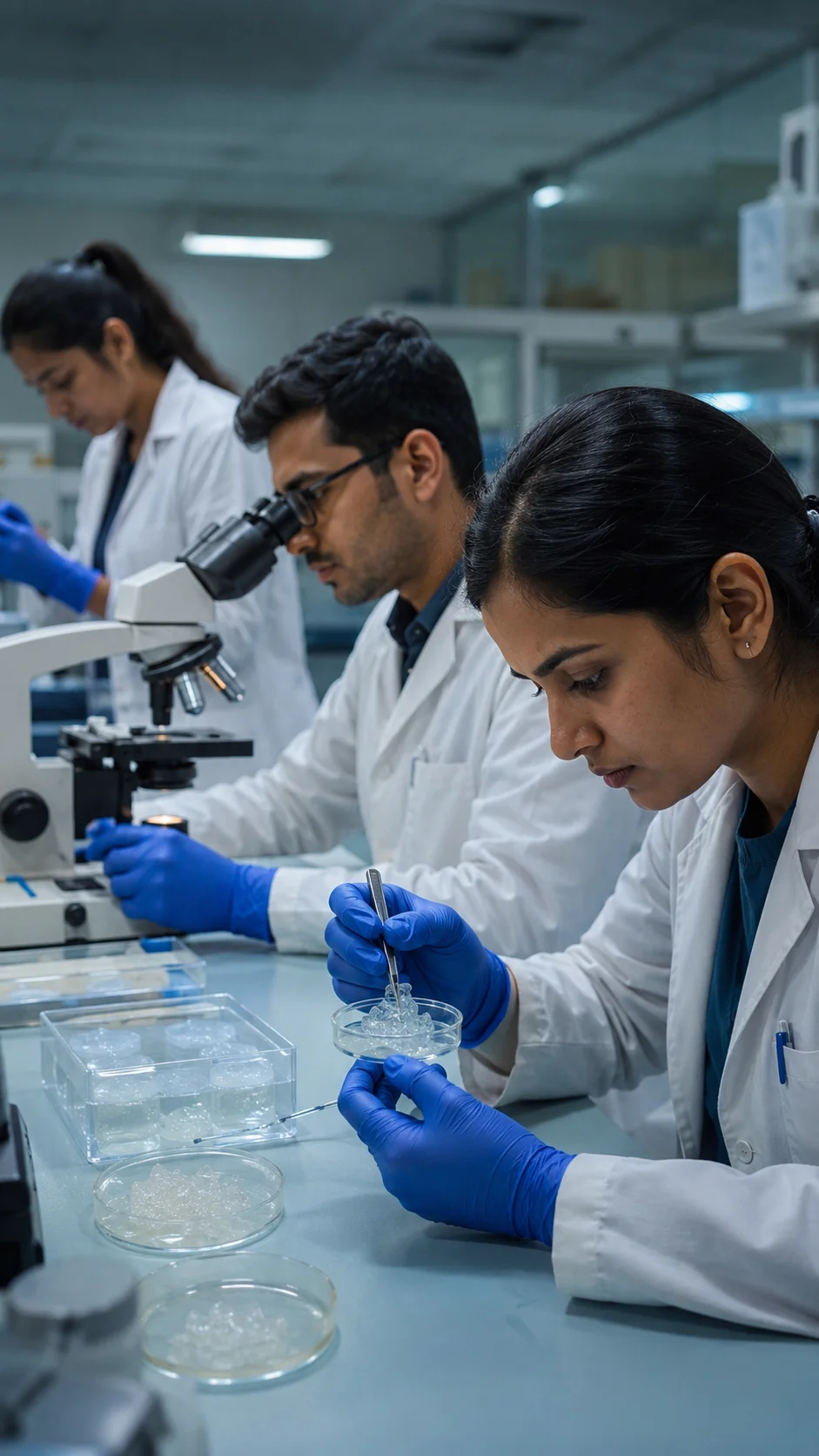
Injectable Hydrogel Shows Promise for Faster Deep Wound Healing
Researchers at the Indian Institute of Technology Gandhinagar (IITGN) have developed an injectable hydrogel that could help accelerate the healing of deep wounds without relying on antibiotics. The innovation, described in a recently published preclinical study, combines antioxidant and antibacterial properties with controlled drug delivery to support faster tissue repair.
The research represents a step forward in wound care by addressing several biological challenges that can slow recovery after severe injuries. While the hydrogel has shown encouraging results in laboratory testing and animal studies, further research and clinical trials will be required before it can be used in human patients.
Why Deep Wounds Are Difficult to Heal
Minor cuts and scrapes usually heal naturally through the body’s built-in repair mechanisms. Deep wounds, however, are much more vulnerable to complications.
One major challenge is bacterial infection, which can delay healing and increase the risk of further tissue damage. Another problem is the accumulation of reactive oxygen species (ROS)—unstable molecules that can damage healthy cells when present in excessive amounts.
Together, these factors can interfere with normal tissue regeneration, making recovery slower and more difficult.
Scientists have been exploring advanced biomaterials that not only protect wounds but also actively support the body’s healing process.
IIT Gandhinagar Develops an Antibiotic-Free Injectable Hydrogel
To tackle these challenges, researchers from IIT Gandhinagar designed a multifunctional injectable hydrogel that works without antibiotics.
According to the published research, the hydrogel is built around a metal-phenolic network (MPN), an emerging class of biomaterials created through interactions between metal ions and naturally occurring plant compounds known as polyphenols.
The team developed what they describe as the first wound-healing nanocomplex combining cerium and rutin.
Cerium acts similarly to antioxidant enzymes already found in the human body, helping remove excess reactive oxygen species that can damage cells. Rutin, a naturally occurring antioxidant, also offers antibacterial and anti-inflammatory properties.
By combining these two components, the researchers aimed to create a coordinated healing response rather than relying on a single therapeutic mechanism.
Study Published in ACS Applied Bio Materials
The findings were published in the peer-reviewed journal ACS Applied Bio Materials in a study titled:
“Nanocomplex-Integrated Multifunctional Hydrogel for Fast-Tracked Wound Repair Application: A Preclinical Evaluation.”
According to the research team, modern wound care requires materials that perform multiple functions beyond simply covering an injury.
Professor Mukesh Dhanka, Assistant Professor in IITGN’s Department of Biological Sciences and Engineering and the study’s corresponding author, said the goal was to design biomaterials capable of overcoming the biological barriers that often delay healing while encouraging future innovations in regenerative medicine.
How the Hydrogel Works
The injectable hydrogel is designed to remain at the wound site after administration and gradually release therapeutic agents over time.
This sustained delivery system enables continuous antioxidant and antibacterial activity instead of providing only a short-term effect.
According to the study, the hydrogel demonstrated several important functions:
Neutralising Harmful Molecules
The cerium component removes excess reactive oxygen species, helping reduce oxidative stress that damages healthy tissue.
Fighting Bacteria
Rutin contributes antibacterial activity while also helping reduce inflammation around the wound.
Supporting Tissue Repair
Together, the ingredients create conditions that promote faster regeneration of damaged tissue.
The researchers say this combined approach allows the material to address several healing obstacles simultaneously.
Strong Fluid Absorption May Improve Recovery
Another notable feature of the injectable hydrogel is its ability to absorb wound fluid.
According to the study, the material can absorb up to ten times its own weight in fluid.
While some moisture supports healing, excessive wound fluid can increase infection risk, delay recovery, and weaken surrounding healthy tissue.
By maintaining balanced moisture levels while continuously releasing therapeutic compounds, the hydrogel may create a more favourable environment for tissue regeneration.
Preclinical Testing Produced Encouraging Results
Before evaluating its healing performance, researchers assessed whether the hydrogel was compatible with blood and surrounding tissues.
The study reported that the material demonstrated good biocompatibility during laboratory experiments and preclinical animal studies.
Researchers also observed that treated wounds closed more quickly than untreated wounds under the conditions tested.
However, these findings are based on preclinical research and do not yet confirm effectiveness in human patients.
Further clinical studies will be necessary to establish safety and efficacy before any medical use.
A Multi-Target Approach to Wound Care
First author Shreyash Apotikar, who completed his MTech at IIT Gandhinagar, explained that wound healing rarely fails because of a single biological factor.
Instead, deep wounds usually involve multiple overlapping problems, including inflammation, bacterial infection, oxidative stress and tissue damage.
This understanding guided the team to develop a material where each component supports the others, creating a coordinated therapeutic response.
Such multifunctional biomaterials are becoming an increasingly important area of regenerative medicine research worldwide.
Potential Applications Beyond Human Healthcare
Although the hydrogel is still in the research stage, the team believes it could eventually have applications beyond human medicine.
According to the researchers, the patented technology may also be adapted for veterinary wound care, providing treatment options for injured animals.
The team is now seeking industry partners to support:
- Large-animal studies
- Clinical translation
- Commercialisation
- Technology licensing
These steps are considered essential before the technology can move toward routine medical use.
Why This Research Matters
The study highlights how advances in biomaterials and nanotechnology are changing approaches to wound treatment.
Traditional dressings mainly protect injured tissue, whereas newer materials are being designed to actively support healing by reducing infection, controlling inflammation and encouraging tissue regeneration.
Although additional testing remains necessary, the research suggests that multifunctional injectable hydrogels could become an important part of future wound care if clinical trials confirm their benefits.
For patients with deep or difficult-to-heal wounds, such technologies may eventually reduce recovery times and improve treatment outcomes.
Source:
- Indian Institute of Technology Gandhinagar (IITGN)
- ACS Applied Bio Materials – Nanocomplex-Integrated Multifunctional Hydrogel for Fast-Tracked Wound Repair Application: A Preclinical Evaluation
Our audience means everything to us.
Have feedback or suggestions to make us better? We’re always listening—feel free to get in touch with us at editor@truthorahub.com









Leave a Comment