

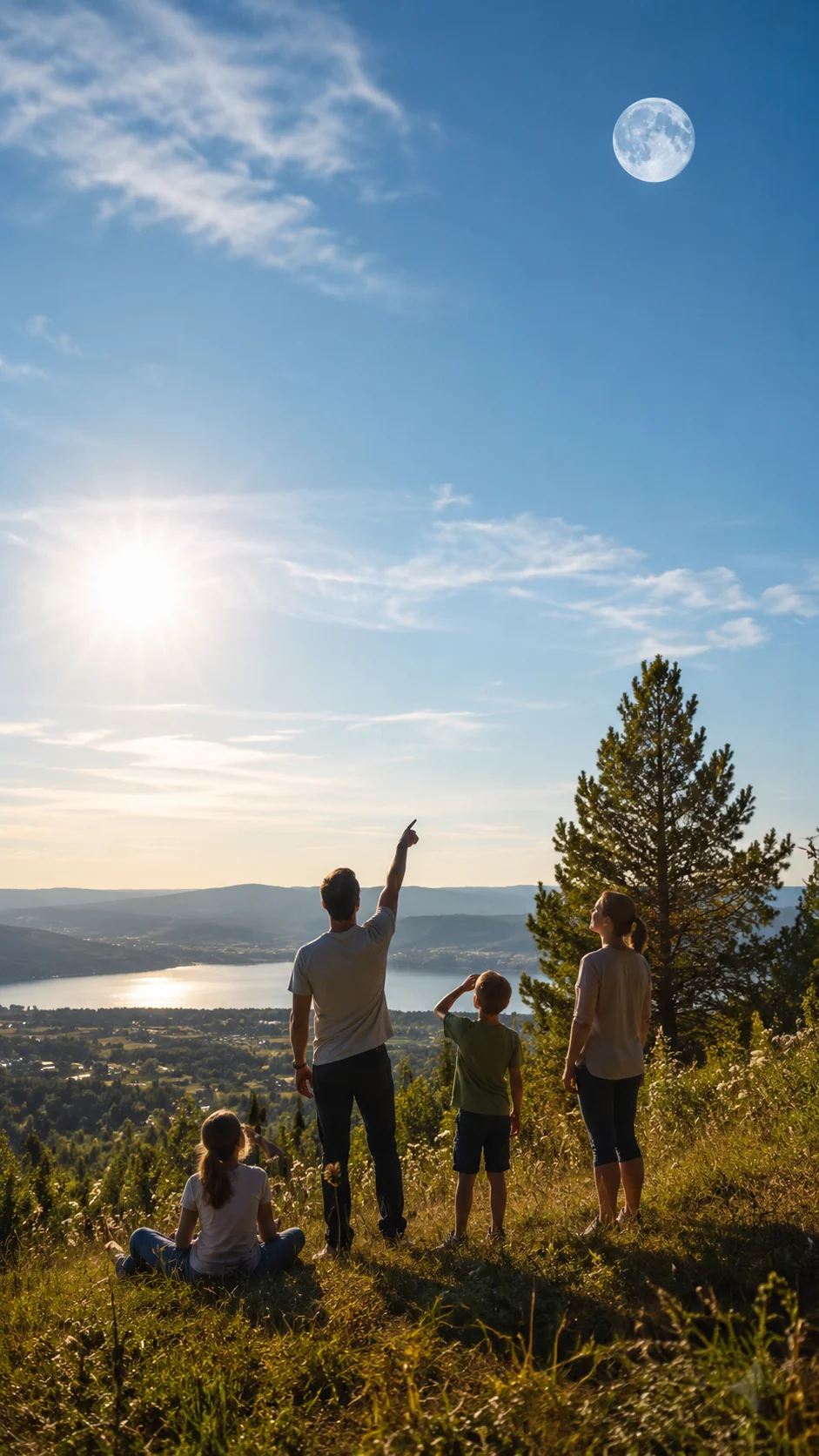
Daytime Moon: Why the Moon Is Visible During the Day Explained
Many people are surprised when they notice the daytime Moon hanging in a bright blue sky. Since the Moon is commonly associated with nighttime, its appearance during daylight often raises questions. However, astronomers explain that seeing the Moon during the day is a completely normal part of its monthly journey around Earth.
The Moon does not belong exclusively to the night sky. Instead, its visibility depends on its position in orbit, the current lunar phase, and the way sunlight interacts with Earth’s atmosphere. Understanding these factors helps explain why the Moon can often be seen long before sunset.
Why the Daytime Moon Is Visible
The Moon continuously travels around Earth, completing one orbit in about 27.3 days. During this journey, there are many occasions when it remains above the horizon while the Sun is also in the sky.
Unlike the Sun, the Moon does not generate its own light. It appears bright because it reflects sunlight toward Earth. Even during the day, enough sunlight is reflected from the Moon’s surface for it to remain visible.
The main reason the Moon sometimes appears faint is not because it is dim, but because sunlight scattered through Earth’s atmosphere brightens the sky and reduces the contrast between the Moon and the blue background.
The Moon Is Not Just a Nighttime Object
One of the most widespread misconceptions is that the Moon only rises after sunset. In reality, the Moon is above the horizon during daylight for approximately half of every month.
Whether people notice it depends on several factors, including:
- Its current phase
- Its position relative to the Sun
- Local weather conditions
- The brightness of the daytime sky
As a result, there are days when the Moon is visible throughout the afternoon, while on other days it appears only after dark.
How Earth’s Rotation Changes the Moon’s Appearance
Earth rotates once every 24 hours, constantly changing which part of the sky is visible from any location.
Meanwhile, the Moon is also moving around Earth. Because both bodies are in motion, the Moon does not rise and set at the same time every day.
Instead, moonrise occurs approximately 50 minutes later each day.
This changing schedule means:
- Some days the Moon appears only at night.
- Some days it remains visible during both daylight and darkness.
- On certain days it can be seen mainly during daylight hours.
This shifting pattern is a natural result of the Moon’s orbit around Earth.
How Moon Phases Affect Daytime Visibility
The Moon goes through a complete cycle of phases over roughly 29.5 days. These phases determine how much of the Moon’s illuminated side is visible from Earth and when it appears in the sky.
New Moon
During the New Moon phase, the illuminated side faces away from Earth. This makes the Moon extremely difficult to see, even during daylight.
Waxing Crescent
A Waxing Crescent Moon often becomes visible during the afternoon before sunset as more of its illuminated surface faces Earth.
First Quarter
The First Quarter Moon is one of the easiest phases to observe during the day. It commonly appears in the afternoon and remains visible into the evening.
Waxing Gibbous
This phase is frequently seen before sunset as the illuminated portion continues to grow.
Full Moon
A Full Moon generally rises around sunset and sets near sunrise. Because of this timing, it is rarely visible during daylight except for brief periods around sunrise or sunset.
Waning Gibbous
Following the Full Moon, the Waning Gibbous phase often remains visible after sunrise during the morning.
Last Quarter
The Last Quarter Moon is another phase that is commonly seen during daylight, especially in the morning hours.
Waning Crescent
Before returning to the New Moon phase, the Waning Crescent can often be spotted shortly after sunrise before fading into the bright sky.
When Is the Best Time to See the Daytime Moon?
Although the Moon can appear during daylight on many days each month, certain conditions make it easier to observe.
The best opportunities include:
- Morning hours during the waning phases.
- Afternoon hours during the waxing phases.
- Clear skies with minimal cloud cover.
- Times when the Moon is positioned high above the horizon.
A bright blue sky does not hide the Moon entirely. Instead, it simply reduces the contrast, making careful observation more important.
Why the Sun Does Not Hide the Moon
The Sun is dramatically brighter than the Moon, but that does not make the Moon disappear.
The Moon reflects roughly 12 percent of the sunlight that reaches its surface. Although this reflected light is far less intense than direct sunlight, it remains bright enough for the human eye to detect under many daylight conditions.
What makes the Moon harder to notice is the scattered sunlight within Earth’s atmosphere, which brightens the entire sky rather than blocking the Moon itself.
Why the Moon Looks White During the Day
People often notice that the Moon appears different depending on the time of day.
During nighttime, it may appear silver, cream, or even yellow when close to the horizon.
In contrast, the daytime Moon usually looks pale white because:
- Daylight causes our eyes to adjust to much brighter conditions.
- The blue sky creates a visual contrast that reduces the Moon’s apparent brightness.
- The Moon’s surface does not actually change colour.
The difference is caused by human vision rather than changes to the Moon itself.
Can the Sun and Moon Be Seen Together?
Yes. Seeing both the Sun and the Moon in the sky at the same time is a common occurrence.
This happens whenever the Moon is positioned far enough away from the Sun in the sky to remain visible against the daylight background.
Since the Moon orbits Earth, its position changes continuously from our perspective, allowing both celestial bodies to share the sky on many afternoons.
Interesting Facts About the Daytime Moon
- The Moon is visible during daylight for roughly half of every month.
- It takes approximately 27.3 days for the Moon to complete one orbit around Earth.
- Moonrise occurs about 50 minutes later each day.
- The Moon shines by reflecting sunlight rather than producing its own light.
- Full Moons are usually associated with nighttime viewing.
- Quarter Moon phases are among the easiest to observe during daylight hours.
Common Misconceptions About the Daytime Moon
Several myths continue to surround the Moon’s daytime appearance.
Myth: The Moon only appears at night.
Fact: The Moon is visible during daylight on many days every month.
Myth: The Moon creates its own light.
Fact: The Moon reflects sunlight from the Sun.
Myth: Seeing the Moon during the day is unusual.
Fact: Daytime visibility is a normal result of the Moon’s orbit and changing phases.
Why Understanding the Daytime Moon Matters
The daytime Moon offers a simple but powerful reminder of the constant movement within our solar system. Observing it helps people better understand Earth’s rotation, the Moon’s orbit, and the relationship between sunlight and the changing lunar phases.
It also highlights how everyday observations can reveal important scientific principles without requiring specialised equipment. For students, astronomy enthusiasts, and casual skywatchers alike, the daytime Moon serves as an accessible introduction to the mechanics of our solar system.
Conclusion
The daytime Moon is a regular and predictable part of the Moon’s monthly orbit around Earth. Its appearance depends on the Moon’s phase, its position relative to the Sun, Earth’s rotation, and atmospheric conditions.
Rather than being a rare event, seeing the Moon during daylight is a common astronomical phenomenon. The next time you notice it against a clear blue sky, you’ll know that it is simply reflecting sunlight while continuing its steady journey around our planet.
Source:
- NASA – Moon Overview
- NASA Solar System Exploration
- Royal Museums Greenwich – Moon Phases
- European Space Agency (ES
Our audience means everything to us.
Have feedback or suggestions to make us better? We’re always listening—feel free to get in touch with us at editor@truthorahub.com









Leave a Comment