

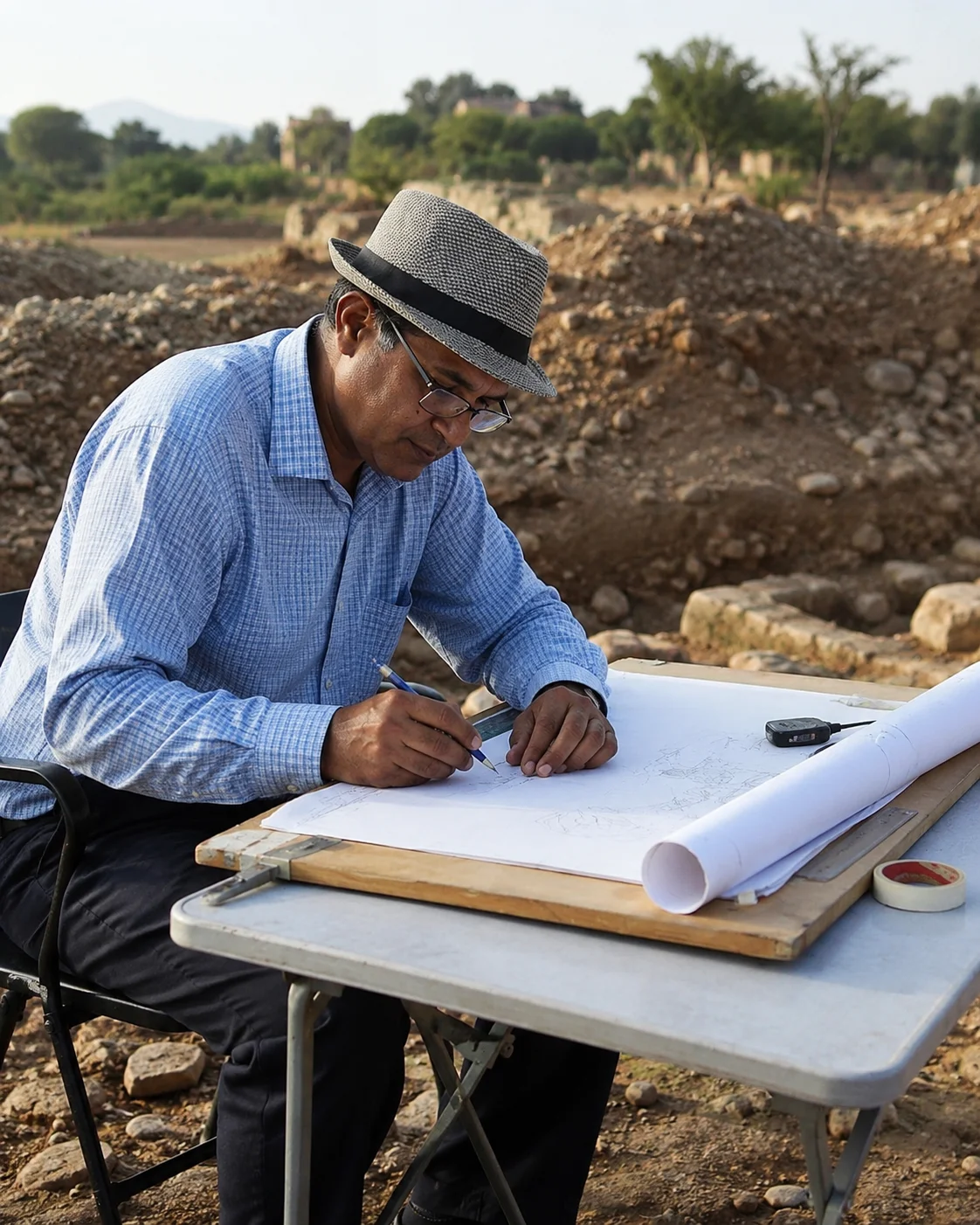
Prof. Gul Rahim Khan Wins Prestigious ONS Ashoka Prize 2025 in London
Prof. Gul Rahim Khan has received the prestigious Oriental Numismatic Society (ONS) Ashoka Prize 2025 in London, earning international recognition for his research on medieval Kashmir coinage. The award honors the best scholarly paper published in the Journal of the Oriental Numismatic Society (JONS) during 2025 and highlights the growing global impact of Pakistani academic research in archaeology and numismatics.
The recognition was awarded for his research paper, “Attribution of Coins to the Queens of the Utpala Dynasty of Medieval Kashmir,” published in JONS Issue 260. According to Dawn, the study sheds new light on the role of female rulers in medieval Kashmir by examining historical coins that had previously received limited scholarly attention.
Prof. Gul Rahim Khan Honored for Award-Winning Research
The Oriental Numismatic Society selected Prof. Gul Rahim Khan’s paper as the best publication of the year in its internationally respected journal.
His research focuses on coins believed to have been issued during the Utpala Dynasty, a medieval ruling dynasty in Kashmir. Through detailed numismatic analysis, the study attributes specific coins to the queens of the dynasty, offering fresh evidence about their political influence and administrative authority.
The award recognizes both the originality of the research and its contribution to understanding South Asian history through material evidence rather than relying solely on written historical records.
Why the Research Matters
Speaking to Dawn, Prof. Gul Rahim Khan said that coins are more than historical artifacts.
He explained that ancient coins function as reliable historical records, providing evidence in periods where written sources are incomplete or unavailable. According to him, identifying coins connected to the queens of the Utpala Dynasty allows historians to reassess the political role and influence of women in medieval Kashmir.
The findings contribute to ongoing academic discussions about governance, royal authority and the representation of women in South Asian history.
A Distinguished Career in Archaeology
Prof. Gul Rahim Khan is widely recognized as one of Pakistan’s leading scholars in archaeology and numismatics.
During a career spanning more than three decades, he served as a senior professor in the Department of Archaeology at the University of Peshawar, where he taught, conducted research and supervised archaeological projects.
His doctoral research specialized in ancient coinage, an area in which he has continued to make significant academic contributions throughout his career.
In addition to his work in Pakistan, he expanded his research through international collaborations, including academic work associated with the British Museum in London and research initiatives supported by the Smithsonian Institution.
These engagements helped strengthen scholarly cooperation between Pakistani researchers and international institutions working in archaeology and cultural heritage.
Contributions to Numismatics and South Asian History
Prof. Gul Rahim Khan’s research has focused extensively on ancient monetary systems, trade networks and the circulation of coins across Gandhara and neighboring regions.
His published studies have become valuable reference material for researchers studying South Asian archaeology, economic history and numismatics.
By analyzing coins, inscriptions and archaeological evidence, his work has contributed to a better understanding of regional trade routes and political developments that shaped ancient civilizations in present-day Pakistan and surrounding areas.
Numismatics—the study of coins and currency—remains an important discipline because coins often preserve dates, names, titles and symbols that help historians reconstruct historical events with greater accuracy.
Archaeological Work in Peshawar
Beyond academic publications, Prof. Gul Rahim Khan also played a significant role in archaeological fieldwork.
Among his notable achievements are the multi-year excavations at the historic Hayatabad archaeological site in Peshawar.
These excavations uncovered evidence of early urban industrial activity, providing researchers with important insights into the economic and social development of ancient settlements in the region.
The discoveries also reinforced Peshawar’s historical importance as part of the wider cultural landscape of ancient Gandhara.
Call to Invest in Pakistan’s Archaeological Research
While reflecting on the international recognition, Prof. Gul Rahim Khan stressed the importance of supporting future archaeological research in Pakistan.
According to Dawn, he said Pakistan possesses an extraordinary archaeological heritage with the potential to contribute significantly to global historical knowledge.
He added that receiving international recognition demonstrates that Pakistani scholarship meets high international standards. However, he emphasized the need to train young researchers and encourage the use of modern scientific techniques to preserve and study the country’s historical heritage.
His remarks underline the importance of continued investment in archaeological education, research institutions and heritage conservation.
International Recognition for Pakistani Scholarship
The ONS Ashoka Prize is regarded as a respected distinction within the international numismatic community.
Receiving the award places Prof. Gul Rahim Khan among scholars whose research has made notable contributions to the study of ancient coinage and monetary history.
The recognition also reflects the growing international visibility of Pakistani academics working in specialized fields such as archaeology, cultural heritage and historical research.
For Pakistan’s academic community, the achievement demonstrates that research produced by local scholars continues to gain appreciation at leading international forums.
Conclusion
Prof. Gul Rahim Khan’s ONS Ashoka Prize 2025 recognizes decades of dedication to archaeology, numismatics and historical research. His award-winning study on the coins of the queens of the Utpala Dynasty provides new perspectives on medieval Kashmir while highlighting the value of ancient coinage as historical evidence.
The honor not only celebrates an individual academic achievement but also showcases Pakistan’s contribution to global archaeological and historical scholarship.
Source:
- Dawn
Our audience means everything to us.
Have feedback or suggestions to make us better? We’re always listening—feel free to get in touch with us at editor@truthorahub.com






Leave a Comment