

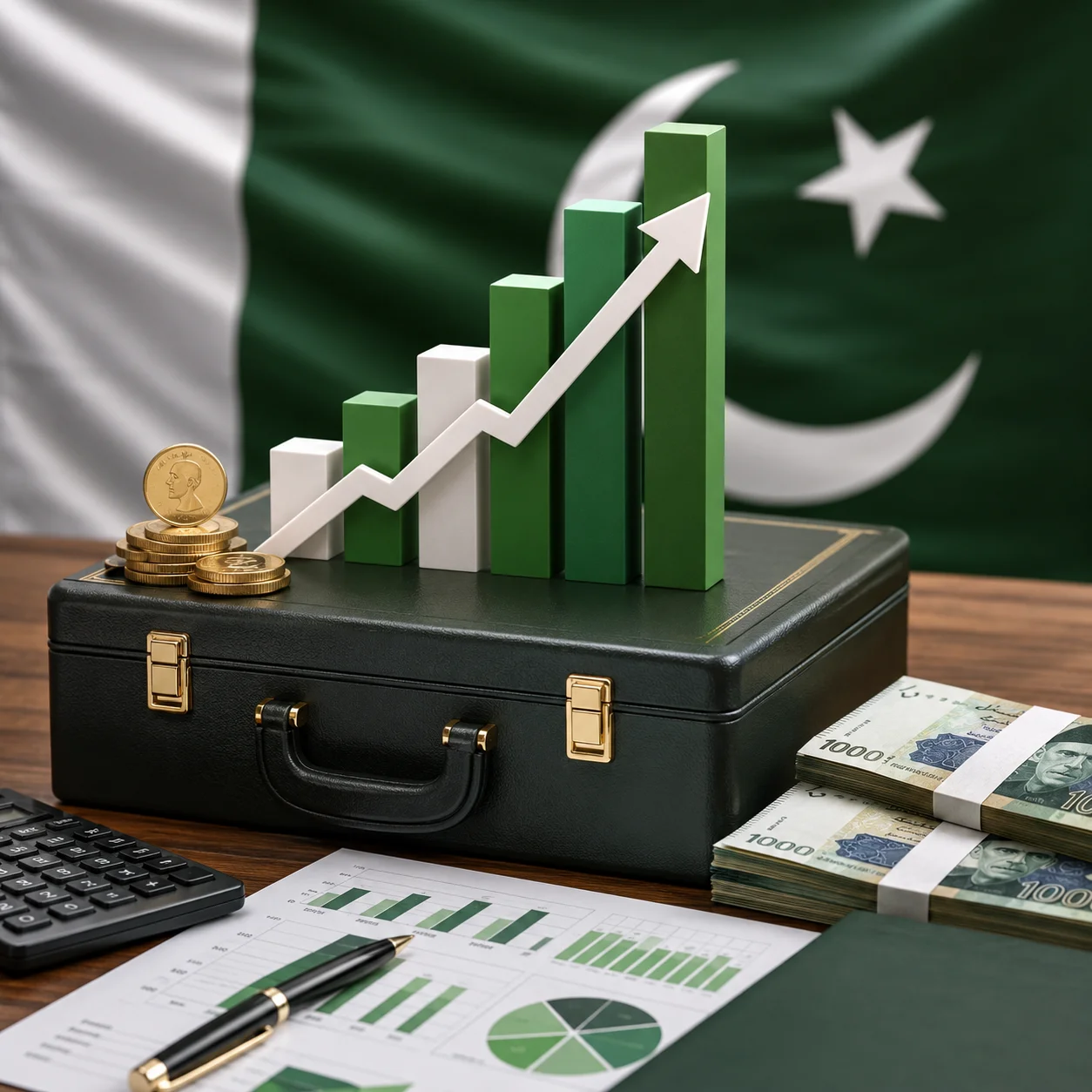
Pakistan Unveils a Budget Focused on Relief, Growth and the Future
Pakistan’s federal government has presented the Budget 2026-27 at a time when the country is navigating economic recovery, regional uncertainty, inflation concerns and growing expectations from businesses and households.
Finance Minister Muhammad Aurangzeb unveiled the new fiscal plan in the National Assembly, outlining a strategy aimed at encouraging economic growth, supporting exports, expanding social welfare programs and strengthening national security. The budget comes with several headline measures, including tax relief for salaried individuals, salary and pension increases for government employees, expanded support for low-income families, incentives for the IT sector and a major investment in artificial intelligence.
But the biggest question remains: Will these measures make a meaningful difference in the daily lives of Pakistanis?
Let’s take a closer look.
A Budget Built Around Economic Recovery
The government has set a GDP growth target of 4 percent for the upcoming fiscal year while projecting average inflation at 8.2 percent. Officials believe the economy is gradually stabilizing after a period marked by high inflation, currency pressures and fiscal challenges. Pakistan’s economy grew by approximately 3.7 percent during the outgoing fiscal year, according to government estimates.
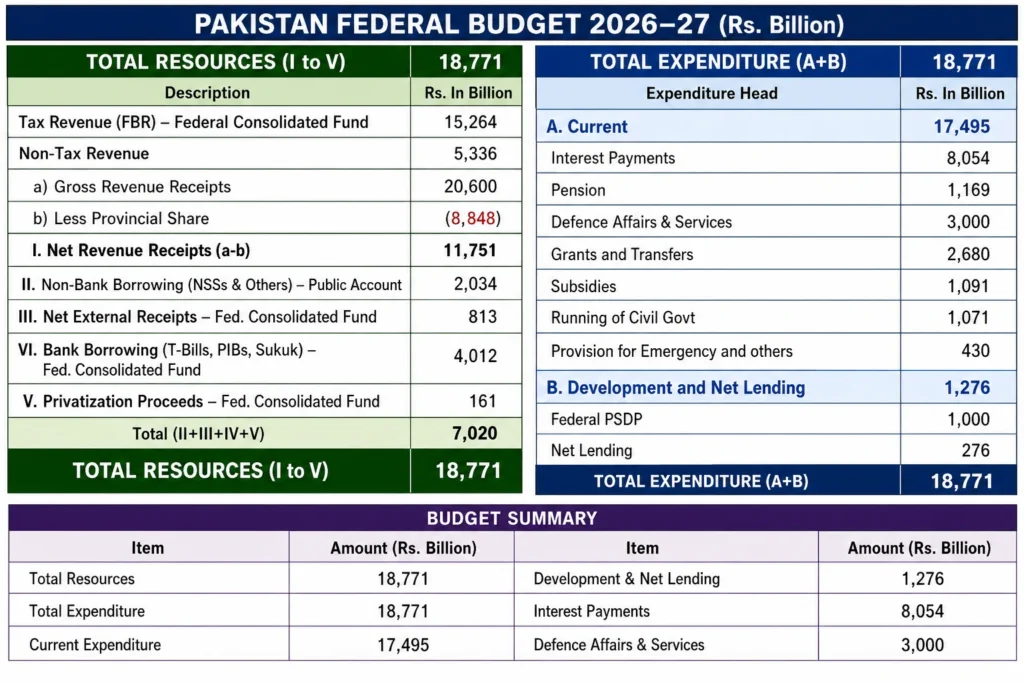
The budget size stands at approximately Rs18.8 trillion, making it one of the largest fiscal plans in the country’s history. A significant portion of expenditures will continue to be dedicated to debt servicing, development projects, social protection and defense.
Government officials argue that the new budget is designed to maintain economic stability while creating conditions for long-term growth.
Tax Relief for Salaried Individuals
One of the most discussed aspects of the budget is the proposed reduction in income tax rates for several salaried income brackets.
The government has proposed lower tax rates for individuals earning between Rs2.2 million and Rs7 million annually. Additionally, authorities have proposed ending the 9 percent surcharge previously affecting portions of the salaried class.
For many middle-income professionals, this could translate into higher take-home pay each month. While the exact impact will vary depending on income levels, the announcement has been welcomed by many employees who have faced rising living costs in recent years.
The government says the objective is to provide relief without compromising revenue collection targets.
Government Employees to Receive Salary and Pension Increase
Another major announcement is a 7 percent increase in salaries and pensions for government employees and retirees.
The proposal aims to provide some relief against inflation and rising household expenses. Millions of families directly or indirectly depend on government salaries and pensions, making this measure one of the most widely discussed elements of the budget.
At the same time, the government has proposed a 10 percent increase in the minimum wage, a move that could positively impact lower-income workers across various industries.
The success of this measure, however, will largely depend on implementation and compliance across the private sector.
Relief for Women and Families
Among the notable social welfare measures announced in the budget is the complete withdrawal of taxes on sanitary pads and contraceptives.
Supporters of the move describe it as a step toward improving affordability and access to essential healthcare products. Many social activists have long argued that such products should not be treated as luxury items and should remain affordable for all households.
The decision has generated positive reactions from healthcare advocates and women’s rights organizations.
Expansion of BISP Coverage
The government has also announced a significant increase in funding for the Benazir Income Support Programme (BISP).
The allocation has been raised by approximately 17 percent, reaching Rs838 billion. Authorities plan to expand coverage to around 12 million families.
For many vulnerable households struggling with inflation and economic uncertainty, the program remains one of the country’s most important social safety nets.
The expansion reflects the government’s attempt to balance fiscal discipline with social protection measures.
A New Push for Home Ownership
Housing affordability continues to be a major challenge for many Pakistanis, particularly young families.
To address this issue, the government has allocated Rs71 billion for the Prime Minister’s Apna Ghar housing initiative. The scheme is expected to offer financing options including mortgage facilities at relatively affordable rates.
For many middle-class families, home ownership remains a lifelong goal. Whether this initiative succeeds will depend on execution, accessibility and the availability of housing units in major cities and growing urban areas.
Still, the announcement has generated considerable interest among aspiring homeowners.
Good News for Freelancers and the IT Industry
Pakistan’s digital economy has emerged as one of the country’s fastest-growing sectors.
Recognizing this trend, the government has extended the Final Tax Regime for IT exporters and freelancers until FY2030. This provides greater certainty for thousands of technology professionals, software companies and digital entrepreneurs.
Pakistan’s freelance workforce continues to rank among the largest in the world, and policymakers hope these incentives will encourage more exports and foreign exchange earnings.
Industry stakeholders have generally welcomed the continuation of tax incentives, viewing it as a positive signal for investment and growth.
Pakistan’s $1 Billion AI Ambition
Perhaps the most future-focused announcement in the budget is the National Artificial Intelligence Ecosystem Development Programme.
Valued at approximately $1 billion, the initiative has been listed as one of the government’s flagship projects.
Artificial intelligence is rapidly transforming industries worldwide, from healthcare and finance to manufacturing and education. By investing in AI infrastructure, research and talent development, Pakistan hopes to position itself as a participant in the next wave of technological innovation.
For students, entrepreneurs and technology professionals, this announcement could represent one of the most important long-term opportunities emerging from the budget.
Focus on Exports and Agriculture
Government officials repeatedly emphasized that increasing exports remains a central priority.
The budget includes support measures for exporters and financing facilities intended to strengthen industrial production. Authorities also highlighted plans to provide additional support and financing opportunities for farmers.
Agriculture remains a critical pillar of Pakistan’s economy, employing millions of people and contributing significantly to national output.
Improving productivity in both agriculture and industry will be essential if the government hopes to achieve its growth targets.
Defense Spending Sees Major Increase
One of the most debated aspects of the budget is the increase in defense spending.
The government has allocated approximately Rs3 trillion for defense-related expenditures, reflecting regional security concerns and strategic priorities. Reports indicate that defense spending has increased significantly compared to the previous fiscal year.
Officials argue that national security remains a top priority given evolving regional dynamics.
Critics, however, have questioned whether more resources should have been directed toward development and social sectors. The debate is likely to continue throughout the parliamentary budget approval process.
Political Tensions Overshadow the Budget Session
The budget presentation itself was far from routine.
The National Assembly session witnessed loud protests from opposition lawmakers, with political tensions dominating much of the proceedings. Several opposition members staged demonstrations, raised slogans and challenged aspects of the government’s economic strategy.
Meanwhile, coalition partners also voiced concerns on specific issues, including provincial rights and resource distribution.
The political reactions highlight the challenges the government faces in building consensus around its economic agenda.
What Will Determine Success?
Budgets are ultimately judged not by announcements but by outcomes.
Will inflation remain under control?
Will tax relief genuinely increase disposable incomes?
Can housing projects reach the families that need them most?
Will AI investments create jobs and opportunities?
Can export growth accelerate enough to strengthen Pakistan’s external position?
These are the questions that will shape public opinion over the coming months.
Final Thoughts
The Pakistan Budget 2026-27 combines immediate relief measures with longer-term economic ambitions. Tax cuts, salary increases, housing support, social welfare expansion and technology investment have all been placed at the center of the government’s strategy.
For millions of Pakistanis, the budget offers hope for greater financial stability and future opportunities. At the same time, economic challenges, inflation pressures and implementation hurdles remain significant.
As the new fiscal year approaches, citizens, businesses and investors will be watching closely to see whether the promises outlined in Parliament translate into measurable improvements in everyday life.
Only time will reveal whether Budget 2026-27 becomes a turning point in Pakistan’s economic journey or simply another step in a longer process of reform and recovery.
Source:
Finance Minister’s Budget Speech, National Assembly proceedings, Associated Press, Reuters, Dawn, Business Recorder and official government budget documents.
Our audience means everything to us.
Have feedback or suggestions to make us better? We’re always listening—feel free to get in touch with us at truthora2026@gmail.com



Leave a Comment