

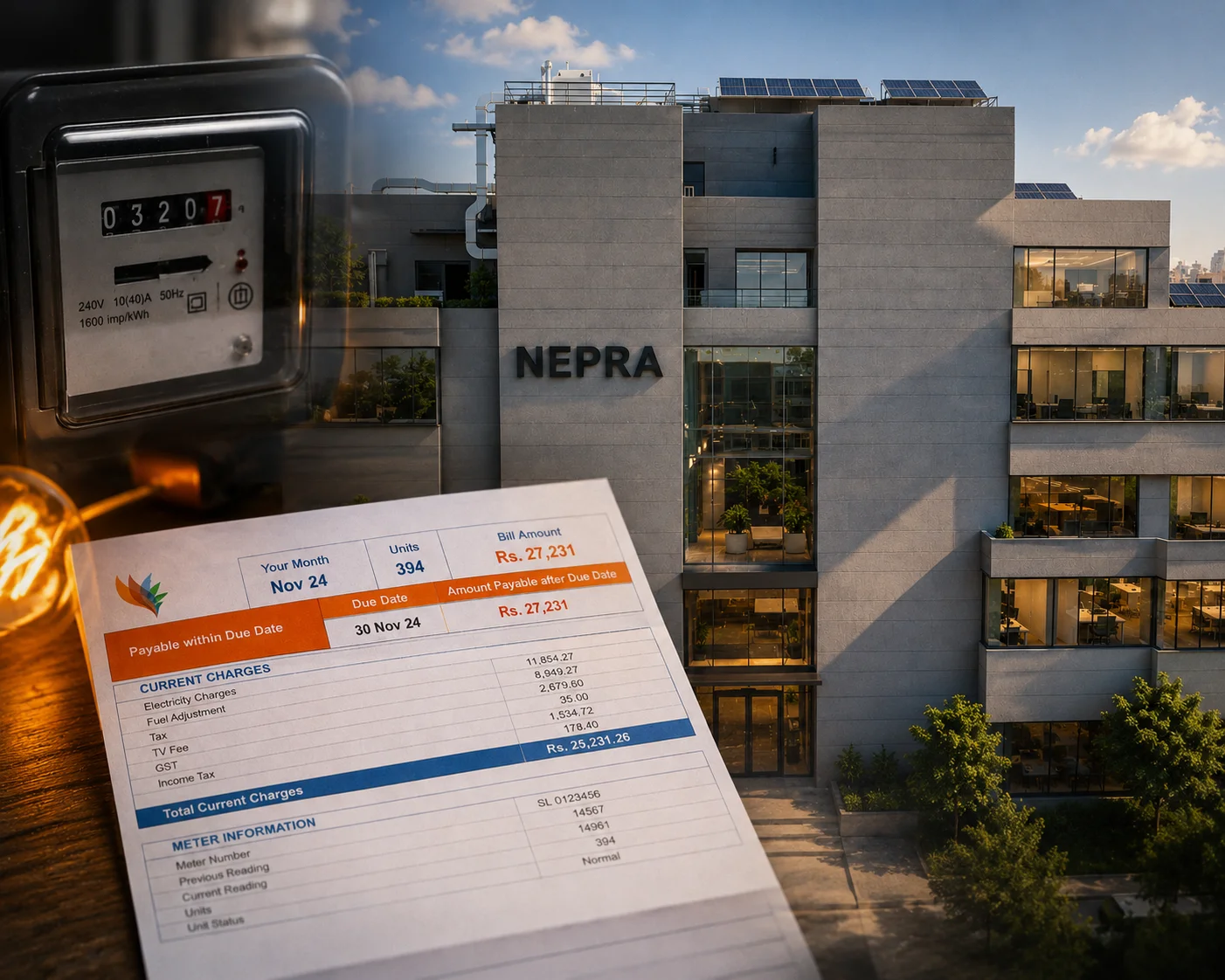
Millions of Consumers to Receive Lower Electricity Bills During Summer
In a development that could provide much-needed financial relief to households and businesses across Pakistan, the National Electric Power Regulatory Authority (NEPRA) has approved a reduction of Rs 1.9857 per unit in electricity tariffs under the Quarterly Tariff Adjustment (QTA) mechanism. The relief will be reflected in electricity bills issued from June to August 2026, benefiting a large number of consumers served by distribution companies (DISCOs) as well as K-Electric.
At a time when rising living costs continue to put pressure on household budgets, the announcement has attracted significant public attention. But what exactly led to this reduction, who will benefit from it, and how much difference will it make to monthly electricity bills?
Let’s take a closer look.
Why Has NEPRA Reduced Electricity Tariffs?
Electricity prices in Pakistan are not fixed permanently. Instead, they are reviewed periodically through mechanisms such as Fuel Cost Adjustments (FCA) and Quarterly Tariff Adjustments (QTA). These reviews account for changes in power generation costs, transmission expenses, capacity payments, and other operational factors.
For the first quarter of calendar year 2026, covering January to March, electricity distribution companies submitted their adjustment requests to NEPRA. These requests reflected changes in power purchase costs and other financial variables that influence electricity pricing.
After examining the data and conducting a public hearing, NEPRA determined that consumers were entitled to a negative adjustment, meaning electricity users would receive a reduction rather than an increase in tariffs.
The regulator ultimately approved a nationwide relief package worth approximately Rs 67.17 billion, translating into a reduction of Rs 1.9857 per kilowatt-hour (kWh).
What Is a Quarterly Tariff Adjustment?
Many consumers often hear about tariff adjustments but remain uncertain about how they work.
A Quarterly Tariff Adjustment is a mechanism used to reconcile differences between projected and actual electricity costs incurred by power distribution companies. When actual costs are lower than estimated, consumers receive relief. Conversely, when costs exceed projections, additional charges may be applied.
This process is designed to ensure transparency and maintain the financial stability of Pakistan’s power sector while protecting consumers from abrupt pricing changes.
In this case, lower-than-anticipated costs and various accounting adjustments contributed to the relief package approved by NEPRA.
Who Will Benefit From the Reduction?
The approved reduction will apply to most consumers connected to electricity distribution companies across Pakistan as well as customers of K-Electric.
Consumers will receive the benefit through their monthly bills issued during June, July, and August 2026.
However, not every category of consumer will qualify for the adjustment.
The following categories have been excluded:
- Lifeline consumers
- Prepaid electricity consumers
- Units consumed under incremental consumption packages
For all other eligible consumers, the reduction will be applied automatically without the need for any separate application or request.
How Much Can Consumers Save?
The actual savings will depend on monthly electricity consumption.
For example:
- A consumer using 300 units could save nearly Rs 596 in a month.
- A household consuming 500 units could receive relief of around Rs 993.
- Consumers using 1,000 units may save almost Rs 1,986 on a monthly basis.
While the exact amount may vary due to taxes and other charges included in electricity bills, the adjustment is expected to provide noticeable relief during the peak summer season when electricity consumption typically increases.
Why Is Summer Relief Significant?
Pakistan’s summer months often bring intense heat, forcing households and businesses to rely heavily on fans, air conditioners, refrigerators, and other electrical appliances.
As electricity usage rises, so do monthly bills.
For many families, summer electricity expenses become one of the largest household costs. Any reduction in tariffs during this period is therefore welcomed by consumers who are already dealing with inflation and broader economic challenges.
The timing of this adjustment means that eligible consumers will benefit precisely when electricity demand is at its highest.
The Role of CPPA-G in the Decision
The Central Power Purchasing Agency Guarantee Limited (CPPA-G) played a key role in providing financial and operational data used during the adjustment process.
According to NEPRA’s detailed decision, CPPA-G supplied certified figures regarding power purchase costs, capacity payments, and other relevant factors affecting electricity pricing.
The regulator stated that future corrections or discrepancies identified in the submitted data would remain the responsibility of CPPA-G and could be adjusted in subsequent quarters.
This approach helps ensure accountability while maintaining confidence in the tariff determination process.
Why Did NEPRA Hold a Public Hearing?
Although Quarterly Tariff Adjustments are generally based on established formulas, NEPRA decided to conduct a public hearing before finalizing the decision.
The hearing was held to promote transparency and provide stakeholders with an opportunity to review and comment on the proposed adjustments.
Representatives from distribution companies presented their calculations and explained the factors contributing to the adjustment requests.
Public participation remains an important component of Pakistan’s regulatory framework, particularly in matters that directly affect millions of electricity consumers.
Concerns Over Transmission and Distribution Losses
One issue highlighted during the review process involved transmission and distribution (T&D) losses.
Electricity losses occur when power is lost during transmission from generating stations to end consumers. Reducing these losses remains one of the major challenges facing Pakistan’s power sector.
NEPRA observed that different distribution companies had used varying methodologies when calculating loss impacts, creating inconsistencies in adjustment requests.
To address this issue, the regulator adopted a standardized approach based on approved financial-year targets. This move is expected to improve consistency and accuracy in future tariff calculations.
What About Net Metering?
The regulator also examined the impact of net-metered electricity on overall costs.
Net metering allows consumers with solar energy systems to export excess electricity to the national grid and receive credits in return.
As solar adoption continues to grow across Pakistan, net metering has become an increasingly important part of the energy landscape.
For the quarterly adjustment, NEPRA accounted for exported solar electricity using the notified national average power purchase price. This ensured that the costs and benefits associated with net-metered electricity were properly reflected in the calculations.
K-Electric Consumers Also Included
One of the most significant aspects of the decision is that K-Electric consumers will receive the same relief.
Historically, there have been instances where tariff adjustments differed between K-Electric and other distribution companies due to regulatory and operational differences.
This time, however, NEPRA extended the approved reduction to K-Electric customers under the applicable legal framework.
As a result, eligible consumers in Karachi will enjoy the same Rs 1.9857 per unit reduction during the three-month relief period.
What Does This Mean for Pakistan’s Power Sector?
Beyond immediate consumer relief, the decision highlights broader efforts to improve transparency and efficiency within the country’s electricity sector.
The regulator has also directed authorities to provide more detailed plant-wise capacity charge data in future submissions. Such measures are aimed at strengthening oversight and improving decision-making.
Industry experts believe that enhanced transparency, better operational efficiency, and reduced transmission losses could contribute to a more sustainable electricity system in the long term.
However, many challenges remain, including circular debt, infrastructure modernization, and balancing affordability with financial sustainability.
Will More Relief Follow?
This remains one of the biggest questions among consumers.
Future tariff adjustments will depend on several factors, including fuel prices, electricity demand, generation costs, exchange rates, and operational performance across the power sector.
While no guarantees can be made regarding future reductions, the current adjustment demonstrates that tariff reviews can work in favor of consumers when underlying costs decline.
For now, eligible households and businesses can expect lower electricity bills throughout the summer months.
Final Thoughts
The approval of a Rs 1.9857 per unit reduction by NEPRA comes as welcome news for millions of electricity consumers across Pakistan. With relief extending from June through August 2026, households and businesses alike are expected to experience lower electricity expenses during one of the most energy-intensive periods of the year.
Although the reduction may not completely offset the broader impact of inflation and rising living costs, it represents a meaningful step toward easing the financial burden on consumers. The decision also reflects the importance of transparent regulation, accurate data reporting, and regular reviews within Pakistan’s evolving power sector.
As electricity remains a critical issue for citizens nationwide, consumers will be closely watching future tariff decisions to see whether additional relief measures emerge in the months ahead.
Source:
National Electric Power Regulatory Authority (NEPRA) detailed Quarterly Tariff Adjustment decision for January–March 2026, official regulatory proceedings and public hearing records.
Our audience means everything to us.
Have feedback or suggestions to make us better? We’re always listening—feel free to get in touch with us at truthora2026@gmail.com



Leave a Comment