

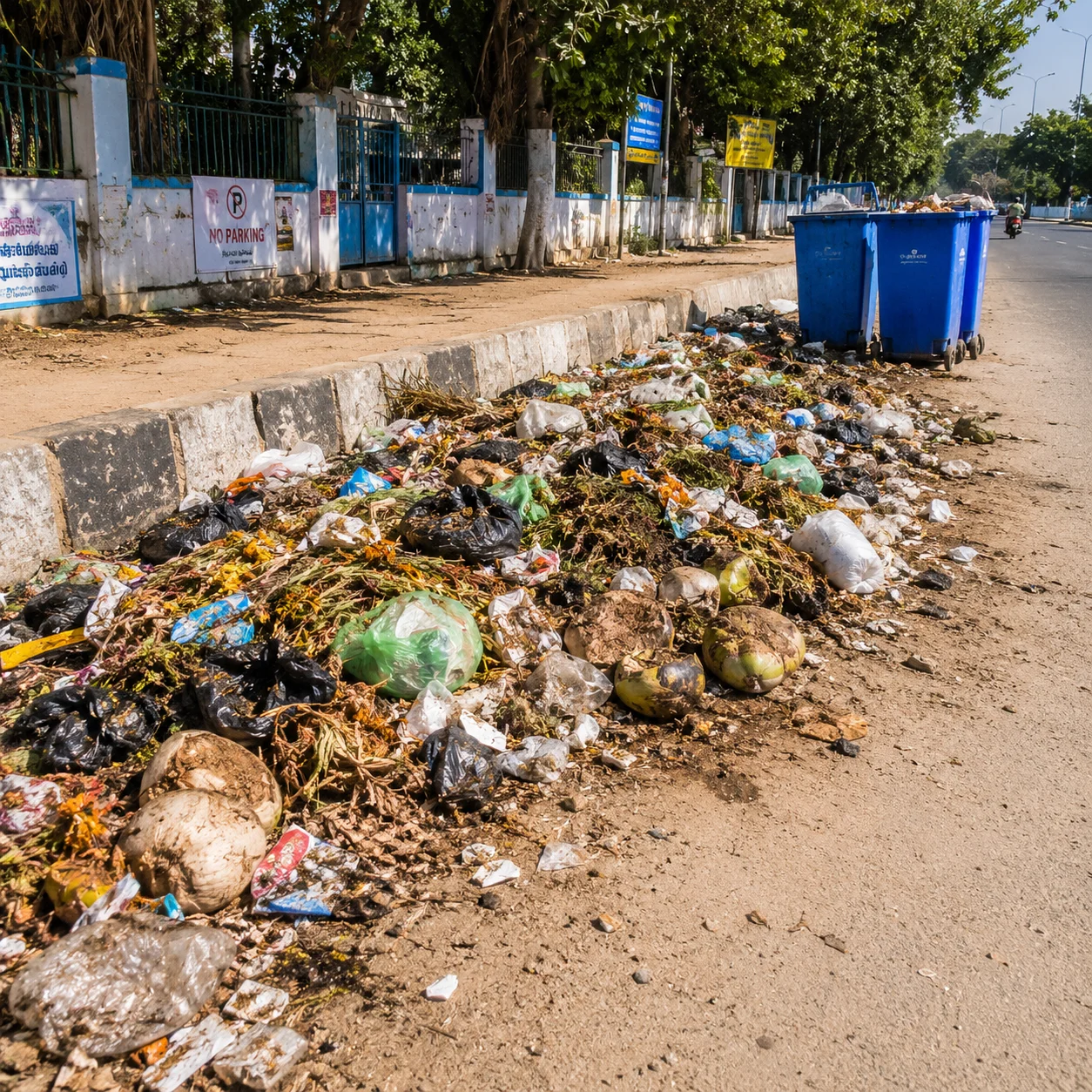
More than a week after Eidul Azha celebrations concluded, many residents across Karachi say the city is still battling an issue that refuses to disappear: the persistent smell of sacrificial waste.
From major roads and residential neighborhoods to garbage collection points and open spaces, complaints about foul odors continue to emerge from nearly every district of Pakistan’s largest city. While authorities maintain that post-Eid cleanup operations were largely successful, many citizens argue that the reality on the ground tells a different story.
Residents from District Central, East, West, South, Korangi, and several other localities say the unpleasant smell has become part of daily life, affecting everything from family gatherings to routine outdoor activities.
The situation has reignited an important discussion about urban waste management, public health, and the challenges of maintaining cleanliness in one of the world’s most densely populated megacities.
So why is the smell still lingering days after Eid? What are experts saying? And what does this reveal about Karachi’s broader sanitation challenges?
Let’s take a closer look.
Eidul Azha Ends, But the Cleanup Debate Continues
Every year, Eidul Azha presents a unique challenge for municipal authorities across Pakistan.
Millions of animals are sacrificed over a short period, generating enormous quantities of waste that must be collected, transported, and disposed of quickly.
Karachi, with a population estimated at over 20 million people, faces one of the largest cleanup operations in the country.
This year was no exception.
Authorities launched extensive sanitation campaigns, deployed workers across districts, and established collection points to manage sacrificial waste.
Yet despite these efforts, complaints continue to pour in from residents who say the city has not fully recovered from the aftermath of Eid.
For many citizens, the issue is no longer simply about cleanliness.
It has become a quality-of-life concern.
Why Does the Smell Persist After Waste Removal?
One question repeatedly raised by residents is simple:
If the waste has already been removed, why does the smell remain?
Experts say the answer lies beneath the surface.
According to sanitation specialists, removing visible animal remains is only part of the solution.
During the sacrifice process, blood, fats, and organic fluids often seep into:
- Roads
- Sidewalks
- Soil
- Garbage collection sites
- Open plots
If these areas are not thoroughly disinfected afterward, decomposition continues at a microscopic level.
As temperatures rise, particularly during Karachi’s hot and humid weather, foul odors can linger for days or even weeks.
Experts explain that proper sanitation requires:
- High-pressure washing
- Disinfectant treatment
- Bleaching procedures
- Application of lime powder
- Immediate waste transportation
Without these measures, odor problems can persist despite waste removal.
Residents Across Karachi Voice Similar Concerns
One of the most striking aspects of the current situation is how widespread the complaints have become.
Reports are emerging from multiple districts simultaneously.
Residents say the issue is not confined to one neighborhood or town.
Instead, complaints have surfaced from:
District Central
Areas including Nazimabad, Karimabad, and surrounding localities have witnessed ongoing concerns regarding garbage collection points and residual odors.
Many residents say breathing comfortably outdoors remains difficult.
District West
Neighborhoods in Orangi Town have also reported lingering waste and sanitation concerns.
Some residents claim that animal remains could still be found near public spaces several days after Eid.
District South
Residents traveling through major commercial zones have also described unpleasant smells around certain collection areas and roadsides.
Korangi and District East
Similar complaints have emerged regarding delayed cleanup efforts and insufficient post-removal sanitation measures.
The consistency of these reports suggests the issue extends beyond isolated incidents.
How Is Daily Life Being Affected?
For many Karachi residents, the impact goes beyond inconvenience.
People describe significant disruptions to everyday routines.
Some families have reduced outdoor activities because of the smell.
Others say keeping doors and windows open has become difficult.
Residents living near garbage collection points appear to be facing the greatest challenges.
Many report:
- Headaches
- Nausea
- Discomfort
- Difficulty eating meals
- Disturbed sleep
One resident from Orangi Town described how the smell had become so overwhelming that family members initially thought their dinner had spoiled.
Another citizen questioned why roads and collection points continued to emit strong odors even after waste had supposedly been removed.
These experiences highlight the broader social effects of sanitation challenges.
Public Health Concerns Cannot Be Ignored
While unpleasant smells are frustrating, health experts warn that sanitation issues can potentially create more serious problems.
Organic waste attracts various disease-carrying organisms, including:
Flies
Flies can spread bacteria by moving between waste sites and food sources.
Mosquitoes
Poor sanitation can contribute to environments where mosquitoes thrive.
Rodents
Accumulated waste may attract rats and other pests capable of spreading disease.
Harmful Bacteria
Decomposing organic matter creates conditions that encourage bacterial growth.
According to public health experts, prompt cleanup and proper disinfection are essential not only for comfort but also for disease prevention.
This becomes particularly important during warmer months when bacterial activity increases rapidly.
The Reality of Waste Management in a Mega City
Karachi’s recurring post-Eid challenges highlight a broader issue.
Managing waste in a city of this size is extraordinarily complex.
Consider the scale involved.
Millions of residents participate in Eidul Azha.
Hundreds of thousands of animals are sacrificed.
Thousands of tons of waste are generated within a few days.
Transporting, processing, and disposing of that volume requires enormous logistical coordination.
Authorities must manage:
- Collection vehicles
- Temporary dumping sites
- Disposal facilities
- Sanitation workers
- Public awareness campaigns
Even small delays can create visible problems.
This reality helps explain why post-Eid cleanup remains one of the most demanding municipal operations of the year.
Did Residents Follow Official Guidelines?
While criticism has largely focused on civic authorities, some residents believe citizens also share responsibility.
Municipal agencies typically establish designated collection points during Eid.
However, reports suggest some people disposed of animal remains in unauthorized locations, including:
- Road medians
- Empty plots
- Side streets
- Open drains
When waste is discarded improperly, cleanup becomes significantly more difficult.
Several residents interviewed across the city argued that public cooperation is essential for successful sanitation efforts.
Without community participation, even well-planned cleanup operations can face challenges.
What Authorities Are Saying
The Sindh Solid Waste Management Board (SSWMB) has defended its performance during the Eid operation.
Officials describe this year’s campaign as successful and point to positive feedback from local government representatives.
According to SSWMB officials:
- Thousands of tons of waste were collected.
- Fumigation campaigns were conducted.
- Lime powder was applied in multiple areas.
- Complaints are being addressed through helplines and mobile applications.
- Most reported issues are resolved within 24 hours.
Authorities also encourage residents to report any locations where waste remains uncollected.
Officials maintain that teams continue to monitor neighborhoods and respond to sanitation concerns.
Why Lime Powder Matters
Many residents may not realize the importance of lime treatment after waste removal.
Experts say lime plays a critical role in controlling:
- Odors
- Bacterial growth
- Insect activity
- Decomposition effects
When applied properly, lime helps neutralize unpleasant smells and improves sanitation conditions.
Residents often cite insufficient lime application as one reason certain areas continue to smell long after cleanup crews leave.
For this reason, sanitation experts recommend extensive lime treatment at all collection and disposal points.
Could Technology Improve Future Cleanup Operations?
As Karachi continues to grow, experts believe technology could help improve waste management efficiency.
Potential solutions include:
GPS Tracking
Monitoring waste collection vehicles in real time.
Mobile Complaint Systems
Allowing residents to instantly report sanitation issues.
Data Analytics
Identifying high-risk areas that require additional resources.
Smart Waste Management
Using digital systems to optimize collection routes and reduce delays.
Many global cities have adopted such approaches with positive results.
Urban planners argue that Karachi could benefit from similar innovations.
What Can Residents Do?
While authorities handle large-scale cleanup operations, residents can also contribute to cleaner neighborhoods.
Experts recommend:
- Using designated waste collection points.
- Reporting uncollected waste immediately.
- Avoiding illegal dumping.
- Supporting community cleanup initiatives.
- Following municipal guidelines during Eid.
Small actions at the neighborhood level can significantly improve overall sanitation outcomes.
Looking Ahead
The lingering odor issue serves as a reminder that waste management remains one of Karachi’s most pressing urban challenges.
Although authorities report substantial progress, continued complaints suggest there is still room for improvement.
As the city expands and its population grows, sanitation systems will face increasing pressure.
The lessons learned from this year’s Eid cleanup operation may help authorities refine future strategies and improve response times.
For residents, the hope is simple: cleaner streets, healthier neighborhoods, and a city that returns to normal more quickly after major events.
Final Thoughts
More than a week after Eidul Azha, Karachi continues to grapple with the aftermath of one of its largest annual sanitation challenges.
While authorities highlight successful waste collection efforts, many residents say lingering odors, incomplete cleaning, and public health concerns remain unresolved in several areas.
The situation underscores the importance of effective waste management, public cooperation, and ongoing sanitation measures in a city as large and complex as Karachi.
Whether through better planning, stronger enforcement, improved technology, or increased community participation, one thing is clear: keeping Karachi clean requires a shared effort from both authorities and citizens.
As residents continue to report concerns and officials maintain cleanup operations, the coming days will determine how quickly the city can fully move beyond the post-Eid sanitation challenge.
Source:
Dawn, Sindh Solid Waste Management Board (SSWMB), Public Health Experts, Local Government Officials.
Our audience means everything to us.
Have feedback or suggestions to make us better? We’re always listening—feel free to get in touch with us at truthora2026@gmail.com




Leave a Comment