

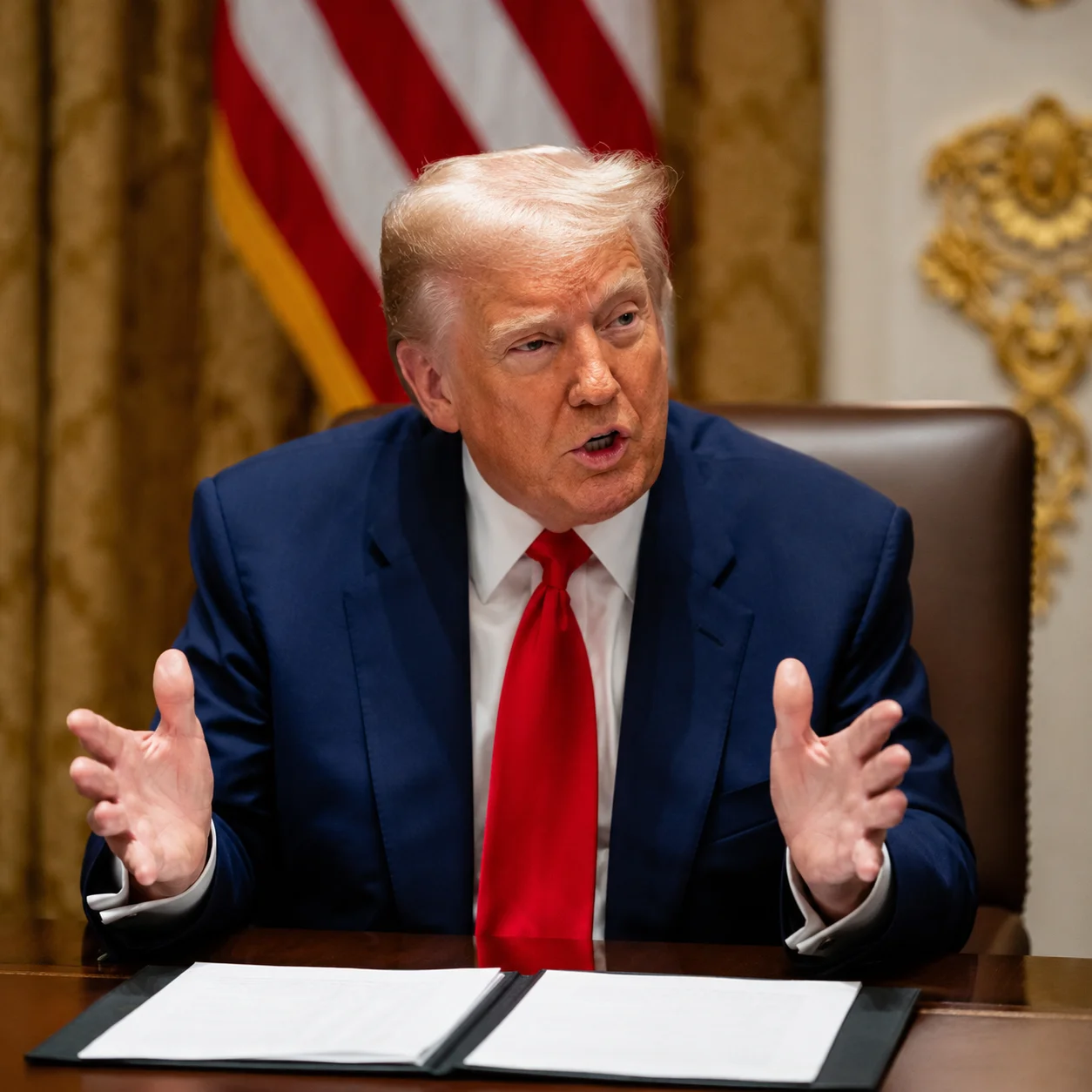
The Middle East remains at the center of global attention as diplomacy, military tensions, and political uncertainty continue to shape the region’s future. In a development that has sparked international discussion, US President Donald Trump has indicated that he would be willing to meet Iran’s Supreme Leader, Mojtaba Khamenei, while also expressing confidence that a new agreement with Tehran could be reached in the near future.
The comments come during a period of heightened regional instability, ongoing concerns about Iran’s leadership, and growing debate over the future of US involvement in Middle Eastern affairs. At the same time, Trump revealed details of a tense conversation with Israeli Prime Minister Benjamin Netanyahu regarding Israel’s military operations in Lebanon, highlighting the complex relationships that continue to influence the geopolitical landscape.
As diplomatic efforts continue alongside military developments, many observers are asking an important question: Is the region moving toward renewed negotiations, or are tensions simply entering a different phase?
A Region at a Critical Turning Point
For years, relations between the United States, Iran, Israel, and various regional actors have shaped political and security developments across the Middle East.
Recent events have added new layers of uncertainty.
Reports surrounding the health and public visibility of Iran’s Supreme Leader, Mojtaba Khamenei, have attracted international attention. Meanwhile, military activity involving Iran, Israel, Lebanon, and US interests has continued to fuel concerns about regional stability.
Against this backdrop, Trump’s remarks have generated interest among diplomats, analysts, and political observers worldwide.
Speaking during a podcast interview, Trump suggested that a future meeting with Khamenei was possible.
While he did not provide a timeline, his comments signaled a willingness to pursue dialogue despite ongoing tensions.
For many observers, the statement raises important questions about the direction of future US-Iran relations.
Why Is a Potential Meeting Significant?
Meetings between senior leaders often carry symbolic as well as practical importance.
Throughout modern history, high-level diplomatic engagements have frequently helped reduce tensions, open communication channels, and create opportunities for negotiation.
A meeting between a US president and Iran’s highest-ranking political and religious authority would undoubtedly attract global attention.
Such an encounter could potentially address several major issues, including:
- Regional security concerns
- Economic sanctions
- Nuclear-related discussions
- Maritime security
- Future diplomatic relations
However, analysts note that a meeting alone would not guarantee a breakthrough.
Diplomatic progress typically requires extensive negotiations behind the scenes before leaders ever sit down together.
Still, the willingness to consider dialogue is often viewed as an important first step.
Questions Surrounding Iran’s Leadership
Recent discussions about Mojtaba Khamenei’s condition have added another layer of uncertainty to regional politics.
Reports circulating in international media have suggested that the Iranian leader was injured during recent military developments involving Iran and its adversaries.
While official information remains limited, several senior officials have indicated that Khamenei remains involved in decision-making processes.
US Secretary of State Marco Rubio recently stated that Iran’s supreme leader is alive and continues to participate in leadership matters.
The lack of consistent public appearances has fueled speculation, but analysts caution against drawing conclusions based solely on unconfirmed reports.
Leadership stability in Iran remains a critical factor for regional diplomacy because major policy decisions often depend on the country’s top leadership structure.
The Iran Deal Debate Returns
One of the most notable aspects of Trump’s comments was his suggestion that an agreement with Iran could be reached relatively quickly.
This statement has reignited discussions surrounding the possibility of renewed negotiations between Washington and Tehran.
For years, relations between the two countries have been shaped by disputes involving:
Nuclear Programs
Concerns about Iran’s nuclear activities have remained a central issue in international diplomacy.
Western governments have repeatedly sought assurances that Iran’s nuclear program remains peaceful, while Iranian officials have emphasized their right to pursue civilian nuclear technology.
Economic Sanctions
Sanctions continue to affect Iran’s economy and remain one of the most significant points of disagreement between Tehran and Washington.
Many analysts believe future negotiations would likely involve discussions about economic restrictions and potential pathways toward easing certain measures.
Regional Security
Security concerns across the Middle East remain closely connected to US-Iran relations.
Issues involving Iraq, Syria, Lebanon, Yemen, and maritime security often become part of broader diplomatic discussions.
Although reaching a comprehensive agreement would be challenging, Trump’s remarks suggest that negotiations remain a possibility rather than an impossibility.
Lebanon Conflict Adds Complexity
The diplomatic landscape has become even more complicated due to ongoing tensions involving Lebanon.
Recent military operations and cross-border incidents have tested already fragile ceasefire arrangements.
Several regional actors have accused one another of violating agreements designed to reduce hostilities.
These developments have raised concerns among international observers who fear that localized conflicts could expand into wider regional confrontations.
For policymakers, maintaining stability in Lebanon has become an increasingly important priority.
The country’s strategic location and political significance make it a key factor in broader Middle Eastern dynamics.
Trump’s Frustration With Netanyahu
Perhaps the most widely discussed aspect of Trump’s interview involved his comments about Israeli Prime Minister Benjamin Netanyahu.
The US president acknowledged that he had expressed frustration regarding Israel’s continued military actions in Lebanon.
According to Trump, he urged Netanyahu to reduce tensions and seek an end to ongoing fighting.
The remarks drew attention because they highlighted differences in approach between two leaders who have often been viewed as close political allies.
Observers noted that disagreements between allies are not uncommon, particularly during periods of conflict.
While Trump made it clear that he continues to maintain a positive relationship with Netanyahu, his comments suggest that concerns over regional escalation are being taken seriously.
Can Diplomacy and Military Strategy Coexist?
One of the enduring realities of international relations is that diplomacy and military strategy often operate simultaneously.
Governments frequently engage in negotiations while also maintaining military preparedness.
This dual-track approach can appear contradictory to the public, but policymakers often view it as necessary.
In the Middle East, this dynamic is particularly visible.
While diplomatic discussions continue, security concerns remain active.
This creates a delicate balancing act for leaders attempting to protect national interests while avoiding broader conflicts.
The challenge lies in ensuring that military developments do not undermine diplomatic opportunities.
The Role of Regional Alliances
Another important factor shaping current events is the network of alliances across the region.
The United States maintains relationships with several Middle Eastern countries.
Iran also maintains partnerships and strategic connections throughout the region.
These overlapping alliances influence nearly every major decision.
A development involving one country often has implications for multiple others.
As a result, diplomatic initiatives require careful coordination and extensive consultation.
This complexity helps explain why regional negotiations often take months—or even years—to produce tangible outcomes.
What Are Analysts Watching Now?
Political analysts and foreign policy experts are closely monitoring several key developments.
Potential Diplomatic Contacts
Any signs of direct or indirect communication between US and Iranian officials could provide insight into future negotiations.
Regional Security Incidents
Military developments in Lebanon, the Gulf region, and surrounding areas remain important indicators of broader stability.
Leadership Signals
Statements from senior leaders in Washington, Tehran, and Jerusalem continue to shape expectations about future policy directions.
International Mediation Efforts
Third-party countries often play a crucial role in facilitating communication during periods of tension.
Observers are watching whether international mediators become more active in upcoming discussions.
Could a New Chapter Be Emerging?
History has shown that international relations can change quickly.
Former adversaries have become negotiating partners.
Long-standing disputes have occasionally given way to diplomatic breakthroughs.
At the same time, periods of optimism can also be interrupted by unexpected events.
The current situation reflects this uncertainty.
On one hand, the willingness to discuss dialogue offers hope for diplomatic progress.
On the other hand, ongoing security challenges continue to create risks.
The outcome will depend on decisions made by multiple governments, regional actors, and international stakeholders.
What Does This Mean for the Wider World?
The significance of developments in the Middle East extends far beyond the region itself.
Energy markets, international trade routes, global security concerns, and diplomatic relationships are all affected by regional stability.
Investors, policymakers, and international organizations closely monitor events because decisions made in the Middle East often have worldwide consequences.
Whether discussions lead to a new agreement or simply reduce tensions temporarily, the impact could be felt across multiple sectors of the global economy.
Final Thoughts
Donald Trump’s comments about a possible meeting with Iran’s Supreme Leader and his confidence regarding future negotiations have introduced a new element into an already complex geopolitical environment.
At the same time, ongoing tensions involving Israel, Lebanon, and Iran demonstrate that significant challenges remain.
While no immediate breakthroughs appear guaranteed, the renewed discussion of diplomacy suggests that communication channels may still be open.
For now, the world is watching closely.
Will the coming months bring meaningful negotiations, or will regional tensions continue to dominate headlines?
The answer could shape not only the future of the Middle East but also broader international relations for years to come.
Source:
New York Post Podcast Interview, Reuters, Axios, US Senate Foreign Relations Committee Statements, International Media Reports.
Our audience means everything to us.
Have feedback or suggestions to make us better? We’re always listening—feel free to get in touch with us at truthora2026@gmail.com


Leave a Comment