

A Red Carpet Moment That Became a Cultural Conversation
When Pakistani actress Sanam Saeed stepped onto the red carpet at the prestigious Cannes Film Festival, it was supposed to be a fashion moment.
And it absolutely was.
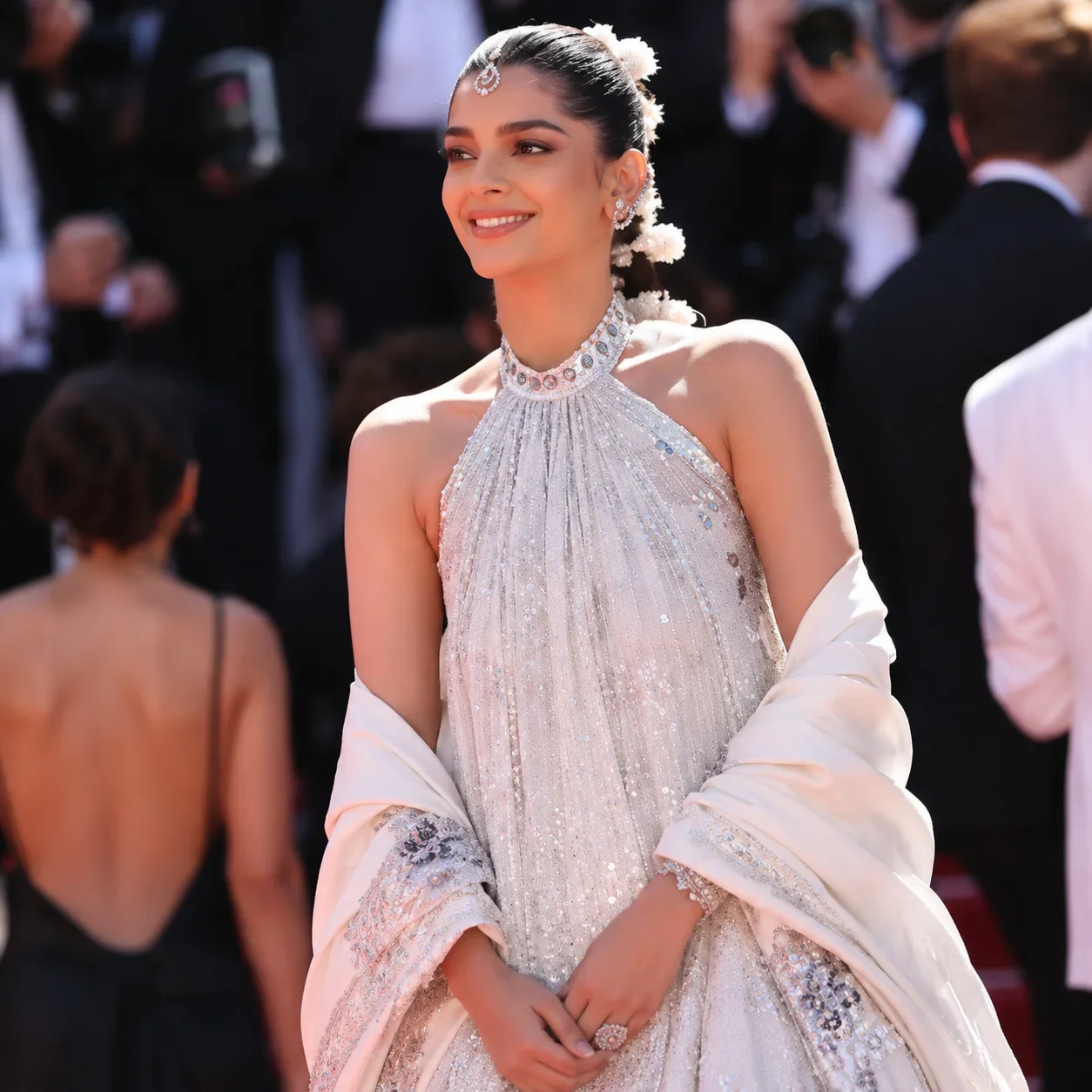
Dressed in a breathtaking custom-made creation by celebrated Pakistani designer Hussain Rehar, Saeed instantly became one of the most talked-about South Asian celebrities at the international event. Cameras flashed nonstop as the actress shimmered under the lights in an outfit inspired by white peacocks — a look many fashion critics described as elegant, regal, and deeply rooted in Pakistani craftsmanship.
But within hours, the internet transformed that glamorous red carpet appearance into something much bigger.
What started as admiration for a stunning outfit soon turned into a heated online debate about identity, representation, culture, and who gets to claim success on the global stage.
And honestly? That conversation may have revealed more about South Asian social media than the event itself.
The Look That Stopped the Internet
Fashion lovers across the world were instantly captivated by Sanam Saeed’s Cannes appearance.
The actress wore a heavily detailed ivory ensemble crafted with mukesh, zardozi embroidery, and intricate mirror-work. Every movement reflected light, making the outfit glow dramatically in photographs and videos from the event.
According to posts shared by Hussain Rehar’s fashion brand, over 50 artisans worked on the masterpiece for more than 2,300 hours.
That single detail alone sparked admiration online.
Because beyond the glamour, many people saw the outfit as a tribute to Pakistani craftsmanship — an art form often overlooked internationally despite the country’s incredibly rich textile heritage.
The styling remained faithful to the peacock-inspired concept throughout.
Saeed paired the dress with silver and diamond jewellery featuring feather-inspired ear cuffs. Fresh flowers braided into her hair completed the dreamy aesthetic, creating what many fans called one of the most graceful South Asian fashion appearances at Cannes in recent years.
Social media users flooded platforms with praise:
- “This is world-class fashion.”
- “Pakistan’s craftsmanship deserves global attention.”
- “She carried this look with elegance.”
- “This is how representation should look.”
For a moment, the internet seemed united.
Then came the cultural debate.
Why Did Social Media Suddenly Turn This Into a Cross-Border Debate?
Almost immediately after photos of Sanam Saeed went viral, discussions online shifted away from fashion and moved toward identity politics.
Several users from outside Pakistan began referring to Saeed’s appearance as a “South Asian representation” moment rather than specifically Pakistani representation.
At first, this seemed harmless to many observers.
But for countless Pakistani users online, the issue wasn’t the term “South Asian” itself.
It was the selective use of labels.
Many Pakistanis argued that cultural achievements from Pakistan are often absorbed into broader regional identity conversations, while Pakistani identity itself is sometimes ignored or downplayed internationally.
As the discussion intensified, users across X (formerly Twitter) began exchanging sharp reactions and sarcastic clapbacks.
One viral user joked:
“Are these the same people who get angry when Pakistanis call biryani shared cultural heritage?”
Another questioned why some people seemed more interested in claiming Pakistani stars rather than celebrating their own country’s celebrities already present at Cannes.
And there were plenty of Indian stars attending the festival too.
Among the notable Indian names making appearances were:
- Alia Bhatt
- Huma Qureshi
- Urvashi Rautela
- Isha Ambani
Yet somehow, much of social media remained fixated on Sanam Saeed.
Why?
Perhaps because her appearance represented more than celebrity glamour.
It represented visibility.
Pakistani Representation on Global Platforms Still Feels Rare
For many Pakistanis, seeing local talent shine on a stage as massive as Cannes still carries emotional significance.
Unlike Bollywood, Pakistan’s entertainment industry has limited global exposure due to political tensions, distribution challenges, and smaller international marketing networks.
So whenever a Pakistani artist gains recognition internationally, social media reactions become deeply personal.
People feel protective.
People feel proud.
People want ownership over that success.
And in the age of viral internet culture, those emotions often explode publicly.
Many users online defended the idea that Sanam Saeed could absolutely be described as South Asian — but only if that inclusivity worked both ways.
Others argued that Pakistani identity should not disappear whenever Pakistanis achieve global recognition.
The debate highlighted a larger issue that repeatedly surfaces online:
Who controls cultural narratives in South Asia?
What Did Sanam Saeed Herself Say?
Interestingly, while the internet argued endlessly, the person at the center of the conversation remained calm and clear.
On Sunday, Sanam Saeed addressed the discussion through an Instagram post that quickly gained attention.
The actress described herself as:
“A South Asian woman representing Pakistan and our heritage and craft.”
That single sentence changed the tone of the conversation for many people.
Rather than rejecting either identity, she embraced both.
But she also made one thing unmistakably clear:
She was proudly representing Pakistan.
Saeed further explained that her Cannes appearance was dedicated:
“For the women of Pakistan, for the ones who came before us, for the ones who are yet to come and for the ones who are never seen behind the scenes.”
That final line especially resonated with audiences.
Because behind every glamorous red carpet moment are countless unseen workers:
- Embroiderers
- Tailors
- Designers
- Craftspeople
- Hair artists
- Stylists
And in Pakistan, much of this labour remains underappreciated despite being globally competitive.
Hussain Rehar’s Global Fashion Moment
While Sanam Saeed received massive praise, designer Hussain Rehar also emerged as one of the biggest winners of the moment.
Fashion enthusiasts across social media began searching for the Pakistani designer after the Cannes appearance went viral.
Known for combining traditional craftsmanship with contemporary styling, Rehar has steadily built a strong reputation within Pakistan’s fashion industry.
But Cannes provided something different:
Global visibility.
International users unfamiliar with Pakistani couture were suddenly introduced to:
- Mukesh work
- Zardozi embroidery
- Traditional mirror-work
- South Asian hand craftsmanship
And perhaps that is why the moment mattered beyond celebrity headlines.
It became a cultural showcase.
Why This Cannes Appearance Felt Bigger Than Fashion
In many ways, Sanam Saeed’s Cannes appearance reflected how global representation works today.
Celebrities are no longer just actors.
They become symbols.
Narratives.
Conversations.
One red carpet appearance can suddenly trigger debates around:
- National identity
- Cultural ownership
- Representation
- Fashion diplomacy
- South Asian visibility
And social media only amplifies those discussions further.
What’s fascinating is that most people originally came to admire a dress.
But they stayed for the larger conversation around culture and identity.
The Reality of South Asian Online Rivalries
Let’s be honest:
Cross-border internet debates between Pakistanis and Indians are nothing new.
Whether the topic is food, music, actors, fashion, cricket, or cultural traditions, social media often turns shared heritage into competitive territory.
Biryani debates.
Music industry comparisons.
Actors crossing borders.
Fashion influences.
The arguments repeat themselves constantly.
But moments like this also reveal something deeper:
The world is paying attention to South Asian creativity more than ever before.
And perhaps instead of competing over ownership, the region could benefit from recognizing how much global influence its artists, designers, and creators now have collectively.
Still, on the internet, things are rarely that peaceful.
A Proud Moment for Pakistan’s Fashion Industry
Regardless of online arguments, one fact remains undeniable:
Sanam Saeed’s Cannes appearance became a major victory for Pakistani fashion representation.
At a festival known for luxury fashion and global celebrity culture, Pakistani craftsmanship stood confidently beside some of the world’s biggest fashion houses.
That matters.
Because for years, Pakistan’s fashion industry has quietly produced world-class artistry without receiving the international spotlight it deserves.
This moment changed that — even if only for a few days.
And perhaps that is exactly why so many Pakistanis celebrated it emotionally.
It wasn’t just about a dress.
It wasn’t just about Cannes.
It was about finally being seen.
The Internet May Debate Labels — But the Spotlight Was Earned
In the end, the biggest takeaway from this viral moment is simple:
Sanam Saeed didn’t become the center of attention because of controversy.
She became the center of attention because she looked unforgettable.
The craftsmanship impressed people.
The styling impressed people.
The confidence impressed people.
And whether audiences called it Pakistani representation, South Asian representation, or global fashion representation, one reality remained impossible to ignore:
Pakistan had a major moment on one of the world’s biggest stages.
And people noticed.
Source:
Social media reactions, Cannes coverage, fashion industry reports, public Instagram statements by Sanam Saeed and Hussain Rehar
Our audience means everything to us.
Have feedback or suggestions to make us better? We’re always listening—feel free to get in touch with us at truthora2026@gmail.com





Leave a Comment