

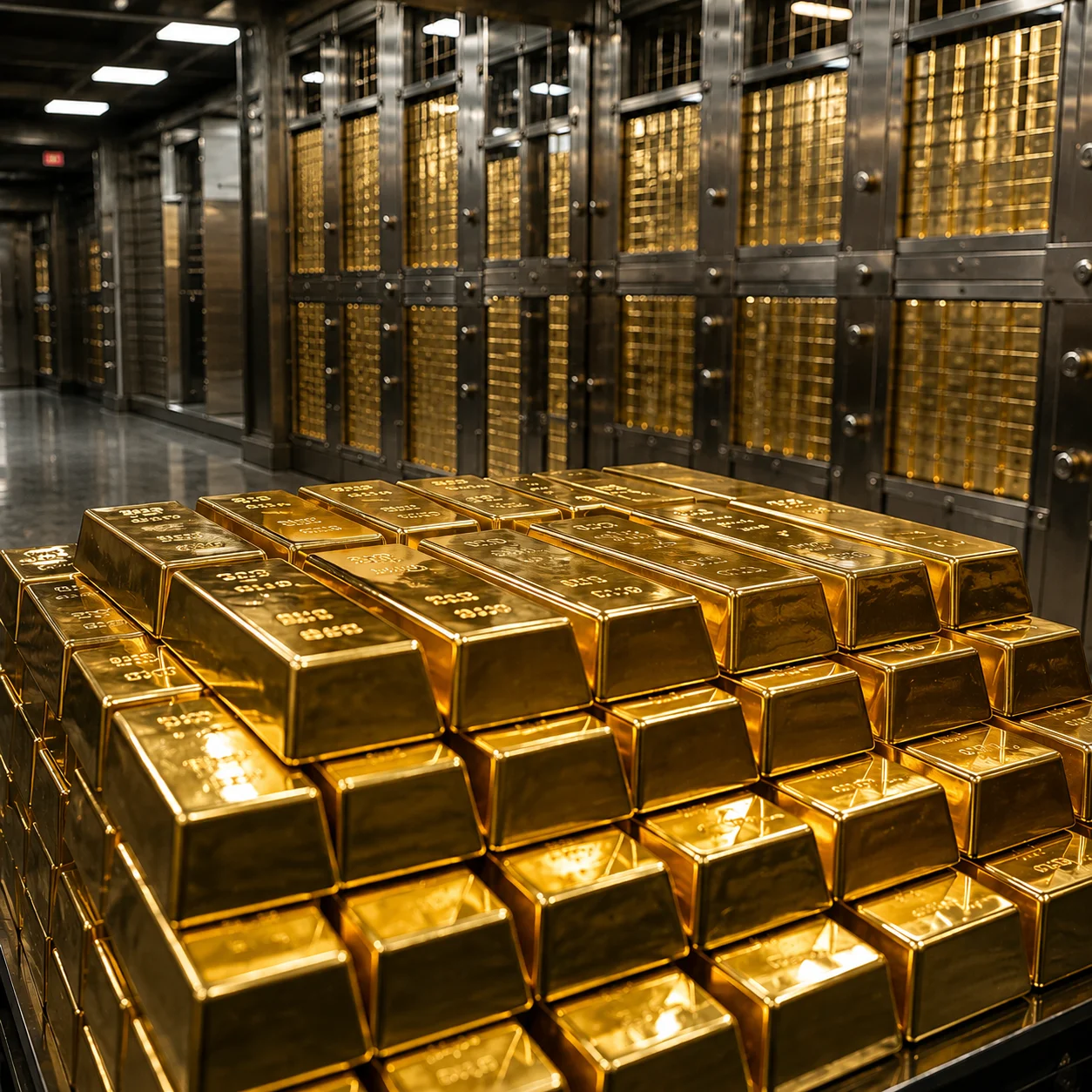
Why Is Gold Falling Despite Rising Global Conflict?
Gold has long been considered the world’s safest financial shelter during times of war, economic uncertainty and political instability. But in a surprising turn, the precious metal is now moving in the opposite direction.
Global gold prices dropped to their lowest level in nearly one and a half months during Asian trading on Monday, leaving investors confused and markets on edge.
At first glance, the situation seems contradictory. The Middle East is facing growing tensions involving Iran, Israel and the United States. Oil prices are climbing, inflation fears are returning and financial uncertainty is spreading across international markets.
So why is gold — traditionally known as a “safe haven” asset — falling instead of rising?
The answer lies in a complex mix of inflation fears, surging bond yields, interest rate expectations and shifting investor behaviour that is reshaping global financial markets.
Gold Hits Lowest Level in Weeks
According to financial market data reported by Investing.com and other international financial outlets, spot gold prices slipped sharply during Asian trading hours.
Gold briefly touched an intraday low near $4,480 per ounce before recovering part of its losses later in the session. Gold futures also remained under pressure as traders reassessed the broader economic outlook.
While gold managed to recover slightly from the session’s weakest point, market analysts say the metal is still facing strong downward pressure.
The decline has surprised many retail investors who expected geopolitical tensions to push prices higher.
Rising Bond Yields Are Hurting Gold
One of the biggest reasons behind gold’s decline is the sharp rise in global government bond yields.
The yield on the US 10-year Treasury note climbed to its highest level in nearly a month, while Japanese government bond yields surged to levels not seen in almost three decades.
This matters because higher bond yields make interest-bearing investments more attractive compared to gold, which does not generate income or interest.
In simple terms, investors often move money away from gold when safer government bonds begin offering stronger returns.
As yields rise, the “opportunity cost” of holding gold increases — and that typically weakens demand for the precious metal.
Inflation Fears Return to Global Markets
The current market environment is also being shaped by growing fears about inflation.
Analysts believe the ongoing tensions in the Middle East — especially involving Iran and energy supply routes — could push oil and fuel prices significantly higher in the coming months.
Rising energy prices usually increase transportation and manufacturing costs worldwide, creating broader inflationary pressure throughout the global economy.
This has led investors to worry that central banks, including the Federal Reserve, may keep interest rates elevated for longer than previously expected.
And that is bad news for gold.
Historically, gold tends to struggle when interest rates remain high because investors shift toward assets offering stronger returns.
Iran Tensions Continue to Rattle Markets
At the centre of the latest market uncertainty is the growing confrontation involving Iran.
Recent reports of drone strikes near the Barakah Nuclear Power Plant in the United Arab Emirates have raised fears of further escalation across the Gulf region.
Meanwhile, former US President Donald Trump recently warned that “the clock is ticking” for Tehran to accept a peace agreement.
At the same time, both Israel and the United States are reportedly considering additional military options if negotiations fail to produce results.
Financial markets dislike uncertainty — and right now, uncertainty is dominating the Middle East.
Why Isn’t Gold Benefiting From Safe-Haven Demand?
Normally, geopolitical tensions increase demand for gold because investors seek protection during unstable times.
But this crisis is different.
This time, inflation fears and expectations of prolonged high interest rates are outweighing gold’s traditional safe-haven appeal.
Many investors now believe central banks could become even more aggressive in controlling inflation if energy prices continue climbing.
That expectation has strengthened the US dollar and increased bond yields — both factors that typically pressure gold prices downward.
It is a reminder that global markets do not always react emotionally. Sometimes economic fundamentals overpower traditional patterns.
Oil Prices Surge as Markets Fear Wider Conflict
While gold struggled, oil prices moved sharply higher.
Brent crude prices climbed above $111 per barrel, while US crude also surged amid concerns that conflict near the Strait of Hormuz could disrupt global energy supplies.
The Strait of Hormuz remains one of the world’s most important oil transit routes. A major portion of global oil exports passes through the narrow waterway every day.
Any military escalation involving Iran immediately raises fears about shipping disruptions and higher global energy costs.
And higher energy prices often lead directly to higher inflation worldwide.
Investors Also Watching China and the US
Global investors are not only focused on the Middle East.
Markets are also carefully monitoring economic and diplomatic developments involving China and the United States.
Recent talks between Trump and Chinese President Xi Jinping reportedly produced some trade understandings, but markets were left disappointed by the lack of detailed agreements.
Investors had hoped for stronger economic coordination that could help calm global uncertainty.
Instead, many believe the talks delivered limited reassurance.
Other Precious Metals Also Decline
Gold was not the only metal under pressure.
Spot silver prices fell more than 1%, while platinum prices also declined as investors broadly moved away from commodities sensitive to interest rates and economic conditions.
The stronger US dollar further weakened demand for metals because commodities priced in dollars become more expensive for international buyers.
This combination of higher yields, a stronger dollar and inflation concerns created a difficult environment for the entire precious metals market.
What Are Analysts Saying?
Several market analysts now warn that prolonged Middle East tensions could create long-term economic consequences beyond oil prices alone.
Economist Jason Schenker of Prestige Economics said that extended instability involving Iran could leave lasting “scars” on global oil markets and economic growth.
According to analysts, prolonged energy-driven inflation may keep borrowing costs high across the world, slowing economic expansion while increasing financial pressure on households and businesses.
In other words, the effects of Middle East tensions may soon reach far beyond regional politics.
Could Gold Recover Again?
Despite the current decline, many experts believe gold’s long-term outlook remains uncertain rather than entirely negative.
If geopolitical tensions worsen dramatically or financial markets experience deeper instability, safe-haven demand for gold could quickly return.
At the same time, if inflation continues accelerating faster than expected, some investors may once again turn to gold as protection against declining currency value.
Much will depend on:
- Future US interest rate decisions
- The direction of oil prices
- Developments involving Iran and Israel
- Global economic growth
- Investor confidence in financial markets
For now, markets remain highly volatile and sensitive to every new headline.
A World Caught Between Inflation and Conflict
The latest movements in gold prices reveal a deeper global reality.
Today’s financial markets are being pulled in two directions at the same time:
- Fear of war and instability
- Fear of inflation and higher interest rates
Both forces are shaping investor decisions in real time.
The Middle East conflict is no longer just a geopolitical story — it is becoming an economic story affecting energy markets, currencies, global trade and ordinary consumers worldwide.
From fuel prices to investment portfolios, the ripple effects are already spreading.
And as tensions involving Iran, the US and Israel continue to evolve, one thing is becoming increasingly clear: global markets are entering another period of uncertainty where every political decision may carry major financial consequences.
What Happens Next?
For investors, the coming weeks may prove critical.
If diplomacy succeeds and tensions cool, markets could stabilise. But if conflict escalates further, volatility across oil, gold and global equities may intensify dramatically.
Gold’s recent decline shows that modern financial markets are no longer reacting to headlines alone. Instead, investors are increasingly focused on how conflict affects inflation, interest rates and central bank policy.
The world is now watching closely — not just for military developments, but for economic consequences that could impact millions of people far beyond the Middle East.
Source:
Our audience means everything to us.
Have feedback or suggestions to make us better? We’re always listening—feel free to get in touch with us at ayesha@linen-rat-910062.hostingersite.com








Leave a Comment