

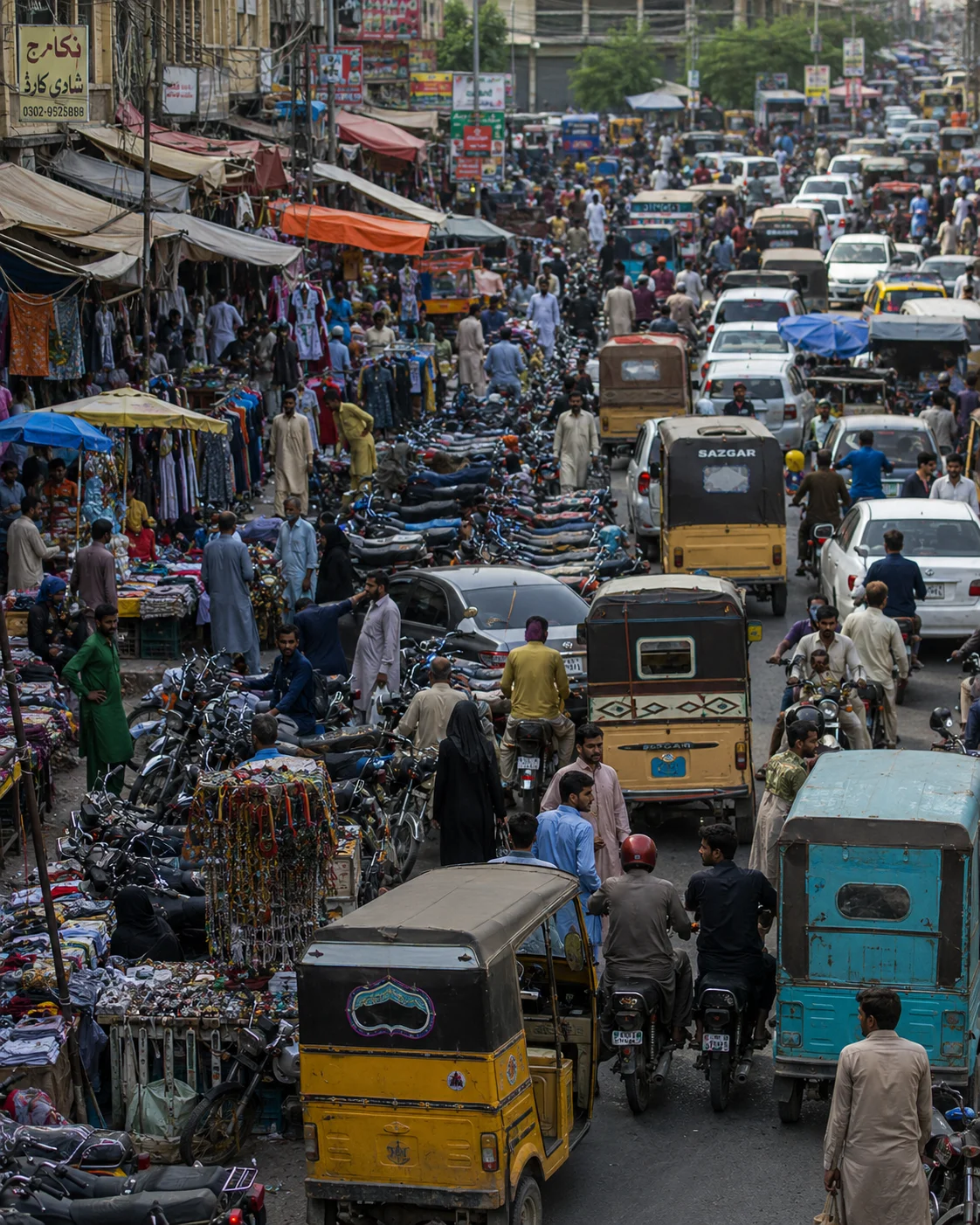
Karachi may finally be a step closer to getting its first underground metro rail system after Pakistan’s leading engineering experts proposed a modern subway network to address the city’s worsening traffic congestion and public transport challenges.
The proposal was presented during the 40th Symposium of the Pakistan Academy of Engineering (PAE), where transport specialists and engineers from Pakistan, China, and the United States discussed how underground rail systems could reshape mobility in Pakistan’s largest city.
A Vision for Karachi’s Future
Speaking at the symposium, Pakistan Academy of Engineering President Professor Dr. Brig. (Retd.) Nasim Akhtar Khan emphasized that Karachi’s rapidly growing population demands a long-term transportation solution that extends beyond roads and buses.
According to the proposal, underground rail is no longer a luxury but an essential investment for a megacity that continues to struggle with daily traffic jams, overcrowded buses, and increasing travel times.
Experts believe the project could become one of Pakistan’s most ambitious locally planned engineering initiatives while introducing modern urban transport infrastructure comparable to major cities around the world.
Two Underground Metro Corridors Proposed
The academy has suggested building two primary underground railway corridors that would serve as the backbone of Karachi’s future metro network.
The proposed routes include:
- Corridor 1: Numaish Chowrangi to Merewether Tower
- Corridor 2: FTC on Sharea Faisal to I.I. Chundrigar Road and Tower
These routes are designed to connect some of Karachi’s busiest commercial districts while improving access between residential neighborhoods and business centers.
Metro and BRT Could Work Together
Rather than replacing the existing Bus Rapid Transit (BRT) system, engineers recommend integrating the underground metro with current public transport services.
A combined metro and BRT network would significantly improve passenger capacity, reduce travel times, and create a smoother commuting experience for millions of residents.
Urban planners say such integration has already proven successful in cities including Singapore, New York, Washington D.C., Delhi, Dhaka, and several European metropolitan areas.
Why Karachi Needs a Modern Rail Network
Karachi, home to an estimated 21.8 million people, continues to face one of Pakistan’s most serious urban transport crises.
Although buses account for a large share of daily passenger travel, the city still suffers from an acute shortage of public transport vehicles. Experts estimate Karachi requires nearly 10,000 additional buses to meet current demand.
Existing transport services, including the Green Line, Orange Line BRT, and Peoples Bus Service, have improved connectivity in some areas but remain insufficient for a city of Karachi’s size.
As a result, commuters frequently face overcrowding, long waiting times, traffic congestion, and limited transport options.
Environmental and Economic Benefits
Transport experts at the symposium highlighted several long-term advantages of an underground metro system.
These include:
- Reduced traffic congestion
- Shorter travel times
- Lower air pollution
- Improved road safety
- Higher productivity through faster commuting
- Better connectivity across commercial and residential areas
Experts believe a reliable metro network would also support Karachi’s economic growth by making daily travel more efficient for workers, students, and businesses.
Universities Join the Initiative
The proposal has also attracted support from Pakistan’s academic community.
Engineering students from Sir Syed University of Engineering and Technology and DHA Suffa University are expected to participate in research projects related to tunnel engineering, underground station design, rail infrastructure, and transport planning.
Academics believe involving local universities could help develop homegrown engineering expertise for future infrastructure projects.
Looking Ahead
Transport planners have long argued that Karachi’s mobility challenges cannot be solved through road expansion alone. While previous master plans focused primarily on expanding bus services, experts now believe underground rail could provide the additional capacity needed for the city’s continued growth.
Although the proposal remains at the planning stage, it has reignited discussion about the future of public transport in Karachi.
If implemented, the underground metro could become one of the city’s most significant infrastructure projects, offering a faster, cleaner, and more sustainable transportation system for millions of commuters in the years ahead.
Source:
Pakistan Academy of Engineering (PAE), The Express Tribune
Our audience means everything to us.
Have feedback or suggestions to make us better? We’re always listening—feel free to get in touch with us at truthora2026@gmail.com







Leave a Comment