


For decades, calcium and vitamin D supplements have been among the most recommended products for maintaining healthy bones, especially for older adults. Many people have viewed these supplements as an easy way to lower the risk of fractures and improve bone strength.
However, a large new scientific review is prompting experts to rethink that assumption.
A comprehensive systematic review published in The BMJ analyzed data from 69 randomized clinical trials involving more than 153,000 adults. Researchers found that, for most healthy adults living independently, taking calcium, vitamin D, or a combination of both provided little to no meaningful reduction in the risk of fractures or falls.
Why Bone Health Matters
Bone health naturally changes with age. Our bodies continuously replace old bone with new bone, but this process becomes less efficient over time. As bone density gradually decreases, the chances of fractures increase, particularly after the age of 65.
Falls are already a major concern among older adults. Even a relatively minor fall can lead to injuries involving the hip, wrist, shoulder, or pelvis, often resulting in lengthy recovery periods and reduced mobility.
Because calcium provides the structural foundation of bones and vitamin D helps the body absorb calcium efficiently, supplements have long been considered a practical solution for preventing these problems.
What the Research Found
Researchers reviewed decades of clinical evidence comparing people who took calcium supplements, vitamin D supplements, both together, or no supplements at all.
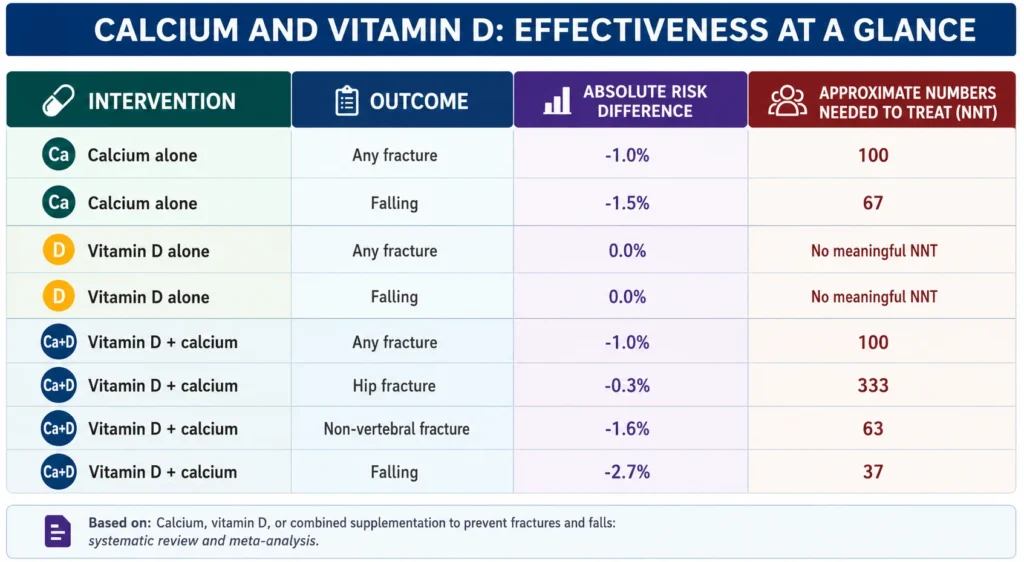
The overall findings were consistent:
- Calcium supplements alone showed little meaningful benefit in preventing fractures.
- Vitamin D supplements alone also did not significantly reduce fracture or fall risk.
- Taking both supplements together produced only very small improvements that researchers considered clinically insignificant for most healthy adults.
Most participants included in the review were community-dwelling adults rather than individuals living in nursing homes or receiving treatment for osteoporosis.
Does This Mean Supplements Don’t Work?
Not necessarily.
Health experts emphasize that the findings should not be interpreted as evidence that calcium and vitamin D are unimportant. Both nutrients remain essential for maintaining healthy bones, muscles, and many other body functions.
Instead, the study suggests that routine supplementation may not provide additional protection for healthy adults who already receive enough calcium and vitamin D through their diet and lifestyle.
People with vitamin D deficiency, osteoporosis, poor nutrition, digestive disorders affecting nutrient absorption, or other medical conditions may still benefit from supplementation under medical supervision.
Why Earlier Studies Showed Different Results
Researchers explain that earlier clinical trials often focused on much older adults living in residential care facilities who had poor nutritional intake and a much higher risk of fractures.
Those results were gradually applied to the wider population, even though healthy adults living independently may not receive the same level of benefit.
The latest review included a broader range of participants, offering a more accurate picture of how supplements perform in everyday community settings.
Lifestyle May Be More Important Than Supplements
Doctors say strong bones depend on much more than tablets.
Regular weight-bearing exercise, strength training, balanced nutrition, adequate protein intake, sensible sunlight exposure, maintaining a healthy body weight, and reducing fall hazards at home all play important roles in preserving bone health.
Experts also recommend discussing bone health with a healthcare professional rather than starting supplements solely based on age.
The Bottom Line
The latest evidence does not suggest that everyone should stop taking calcium or vitamin D supplements. Instead, it highlights the importance of personalized healthcare.
For individuals with diagnosed deficiencies or specific medical conditions, supplements remain valuable. But for many healthy adults, the greatest protection against fractures may come from an active lifestyle, nutritious eating habits, and regular medical checkups rather than relying on daily supplements alone.
As medical research continues to evolve, the message is becoming increasingly clear: bone health is influenced by overall lifestyle, and supplements should be used when they are truly needed—not simply out of habit.
Source:
The BMJ systematic review and meta-analysis (2026), BMJ Group, Prevention, Times of India.
Our audience means everything to us.
Have feedback or suggestions to make us better? We’re always listening—feel free to get in touch with us at truthora2026@gmail.com









Leave a Comment