

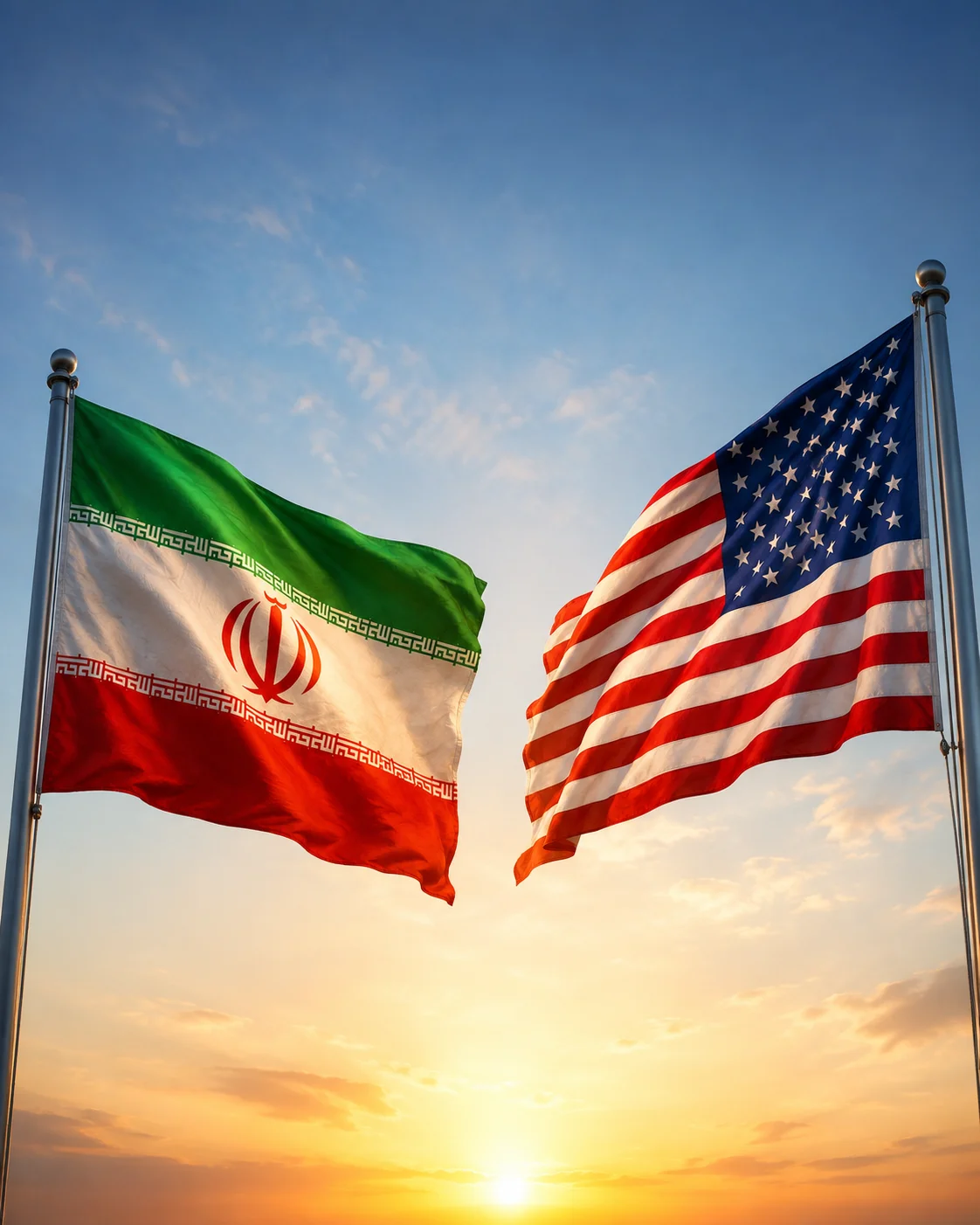
The Iran US talks remain stalled as Tehran signals that it is still willing to return to diplomacy but wants Washington to abandon its economic pressure campaign first. At the same time, Iran has linked any reopening of the Strait of Hormuz to an end to what it describes as a US naval blockade and the removal of sanctions.
The latest developments come six months into the conflict involving Iran, the United States and Israel, with diplomatic efforts continuing through regional mediators including Pakistan and Qatar. Washington has meanwhile announced additional Iran-related sanctions, while the US military says international shipping lanes through the strategic waterway have been cleared of Iranian sea mines.
The competing claims underline the difficulty of restoring maritime traffic and restarting negotiations. Iran says pressure will not force it back to the table, while Washington continues to use economic measures to increase pressure on Tehran. China has also renewed its call for negotiations and opposed unilateral US sanctions.
Iran US Talks Remain Possible, Tehran Says
Iranian Foreign Minister Abbas Araghchi said Friday that diplomacy with Washington could still resume, but only if the United States changes its approach.
In a statement posted on X, Araghchi argued that economic pressure had failed to achieve its intended purpose. He called on Washington to rebuild trust, communicate respectfully, recognise Iran’s rights and honour previous commitments.
The comments represent Tehran’s latest indication that it has not completely closed the door on negotiations.
However, Iran is attaching conditions to a return to diplomacy, particularly concerning US economic measures and commitments made during earlier negotiations.
The position comes after months of conflict and diplomatic uncertainty between the two countries.
Pakistan and Qatar Continue Mediation Efforts
Pakistan and Qatar are among the countries involved in efforts to revive negotiations between Washington and Tehran.
The conflict began in late February, according to the source material, after military action by the United States and Israel against Iran. An April ceasefire reduced the most intense fighting, but the broader dispute remained unresolved.
In June, Washington and Tehran signed a memorandum of understanding that was intended to provide a route toward a final peace agreement.
The arrangement subsequently broke down after both sides accused the other of violating the ceasefire terms and failing to fulfil its commitments.
The collapse of the memorandum has left mediators trying to find another pathway toward negotiations.
Qatar has remained involved in those diplomatic efforts. Qatari Prime Minister Sheikh Mohammed bin Abdulrahman Al Thani met Araghchi in Tehran on Thursday and stressed the importance of restoring maritime movement through the region.
Pakistan has also played a mediation role, making the stalled peace process an important regional diplomatic issue.
Strait of Hormuz Remains Central to the Dispute
The Strait of Hormuz has become one of the most important flashpoints in the conflict.
The narrow waterway connects the Persian Gulf with the Gulf of Oman and is a major route for global energy shipments. Before the conflict, around one-fifth of the world’s oil supply passed through the strait.
Its continued disruption has therefore raised concerns well beyond Iran and the United States.
Iranian lawmaker Esmail Kowsari said the waterway would remain closed unless Washington ended its naval counterblockade and sanctions in accordance with the June memorandum.
Kowsari also warned that Iran could take offensive action if the conditions it outlined were not met.
His comments represent the position of an Iranian lawmaker and do not by themselves establish an official government policy.
Iranian officials have nevertheless repeatedly linked the future of the waterway to the broader conflict and the US pressure campaign.
Tehran Sets Conditions for Reopening
Mohsen Rezaei, secretary of Iran’s Supreme National Security Council, said Tehran was working on circumstances under which the waterway could eventually reopen.
According to the supplied report, those conditions include an end to the regional war and the lifting of the US blockade.
This means that reopening Hormuz has become closely connected to the wider diplomatic negotiations.
Rather than treating the maritime issue as a separate security question, Tehran appears to view it as part of any eventual political settlement.
The issue is particularly significant because uncertainty over shipping through Hormuz affects energy markets, regional economies and international trade.
US Says Sea Mines Have Been Cleared
The United States has offered a different assessment of the situation in the waterway.
The US military said American forces had cleared sea mines that had allegedly been placed months earlier by Iran’s Islamic Revolutionary Guard Corps.
Admiral Brad Cooper, commander of US Central Command, said international shipping lanes were open and that movement was gaining momentum.
However, commercial shipping activity remains subdued, according to the supplied report.
Iran continues to issue warnings regarding the waterway, while uncertainty over the future of the conflict has discouraged a full return to normal maritime traffic.
The competing assessments mean that the practical status of the Strait of Hormuz remains a key issue for international shipping companies and energy markets.
Dawn also reported separately on Saturday that Iran’s Revolutionary Guards Corps Navy rejected US claims that the waterway was fully open and said restrictions would remain until US military actions ended and relevant commitments were implemented.
Washington Expands Iran-Related Sanctions
While diplomatic efforts continue, Washington has intensified economic pressure on Tehran.
The United States announced additional Iran-related sanctions on Friday, following warnings from Treasury Secretary Scott Bessent about a broader economic campaign against Iran.
A US official said the Trump administration planned measures affecting Banque Misr’s branches in the United Arab Emirates because of alleged dealings with Tehran.
If finalised, the proposed action would restrict the bank’s access to correspondent banking relationships with US financial institutions.
The US Treasury also announced penalties against a Hong Kong-based entity and an individual linked to Iran’s Bank Melli.
Bessent said the US sanctions system would reach anyone involved in activities Washington considers supportive of Iran.
The measures are part of a wider American effort to restrict Tehran’s access to international finance and limit the economic channels available to the Iranian government.
Tehran Condemns New Sanctions
Iran has strongly rejected Washington’s sanctions campaign.
Iranian officials described the measures as a form of state terrorism and called on other governments not to implement unilateral US sanctions.
Tehran has argued that countries should not enforce American restrictions that lack a broader international legal mandate.
Iran’s foreign ministry also appealed to the United Nations and other international organisations to respond to what it described as an unlawful campaign.
The accusations are part of Iran’s official response to the sanctions and represent Tehran’s position on the legality and consequences of the US measures.
The intensifying sanctions campaign has further complicated the possibility of an immediate return to negotiations.
China Calls for a Diplomatic Solution
China has also urged Washington and Tehran to return to negotiations.
Chinese Foreign Ministry spokesman Lin Jian said Beijing opposed unilateral sanctions and maintained that its position was consistent.
China has continued its economic relationship with Iran, including purchases of Iranian crude through trade routes that do not depend on the Strait of Hormuz.
Beijing has repeatedly argued that sanctions and pressure are not an effective solution to the conflict.
China’s position adds another important dimension to the dispute because Beijing remains a major economic partner of Tehran.
The US pressure campaign could therefore have implications beyond its direct relationship with Iran, particularly if Washington seeks greater international cooperation in enforcing sanctions.
Why the Hormuz Dispute Matters
The future of the Strait of Hormuz is closely tied to the global economy.
The waterway has historically carried a substantial share of the world’s oil shipments. Any prolonged disruption can therefore affect energy markets, shipping costs and the economies of countries that depend on imports of oil and other commodities.
For Iran, maintaining control over the waterway provides strategic leverage during the conflict.
For the United States, ensuring freedom of navigation is a major military and economic priority.
For regional countries such as Qatar and Pakistan, restoring maritime stability is important to wider diplomatic and economic interests.
The disagreement over whether the waterway is open also demonstrates the gap between US and Iranian assessments of the situation.
The Road Back to Negotiations Remains Uncertain
The latest developments suggest that diplomacy remains possible but faces significant obstacles.
Iran says it is prepared to reconsider negotiations if Washington abandons its pressure campaign and addresses Tehran’s concerns.
The United States, meanwhile, is continuing to expand sanctions and has shown no indication in the supplied material that it plans to immediately suspend its economic pressure strategy.
Mediators including Pakistan and Qatar are attempting to bridge the gap, while China is calling for negotiations as the preferred route to resolving the confrontation.
For now, the Strait of Hormuz remains central to the dispute. Tehran has tied its reopening to broader political and military conditions, while Washington says shipping lanes have been cleared.
Until the two sides reach agreement on the terms of a settlement, the status of the waterway, sanctions and the future of the peace process are likely to remain closely interconnected.
Sources:
- Dawn, August 29, 2026 — report on Iran’s position on US pressure, sanctions, Hormuz and diplomatic efforts.
- Dawn, August 29, 2026 — report on Iran’s Revolutionary Guards Corps Navy rejecting US claims about Hormuz.
- Reuters, August 29, 2026 — reporting on Iran’s economic situation, sanctions and the Strait of Hormuz.
- Associated Press — reporting on proposed US measures involving Banque Misr’s UAE branches.
- China Foreign Ministry statements reported by international media on US sanctions and negotiations.
Our audience means everything to us.
Have feedback or suggestions to make us better? We’re always listening—feel free to get in touch with us at editor@truthorahub.com







Leave a Comment