

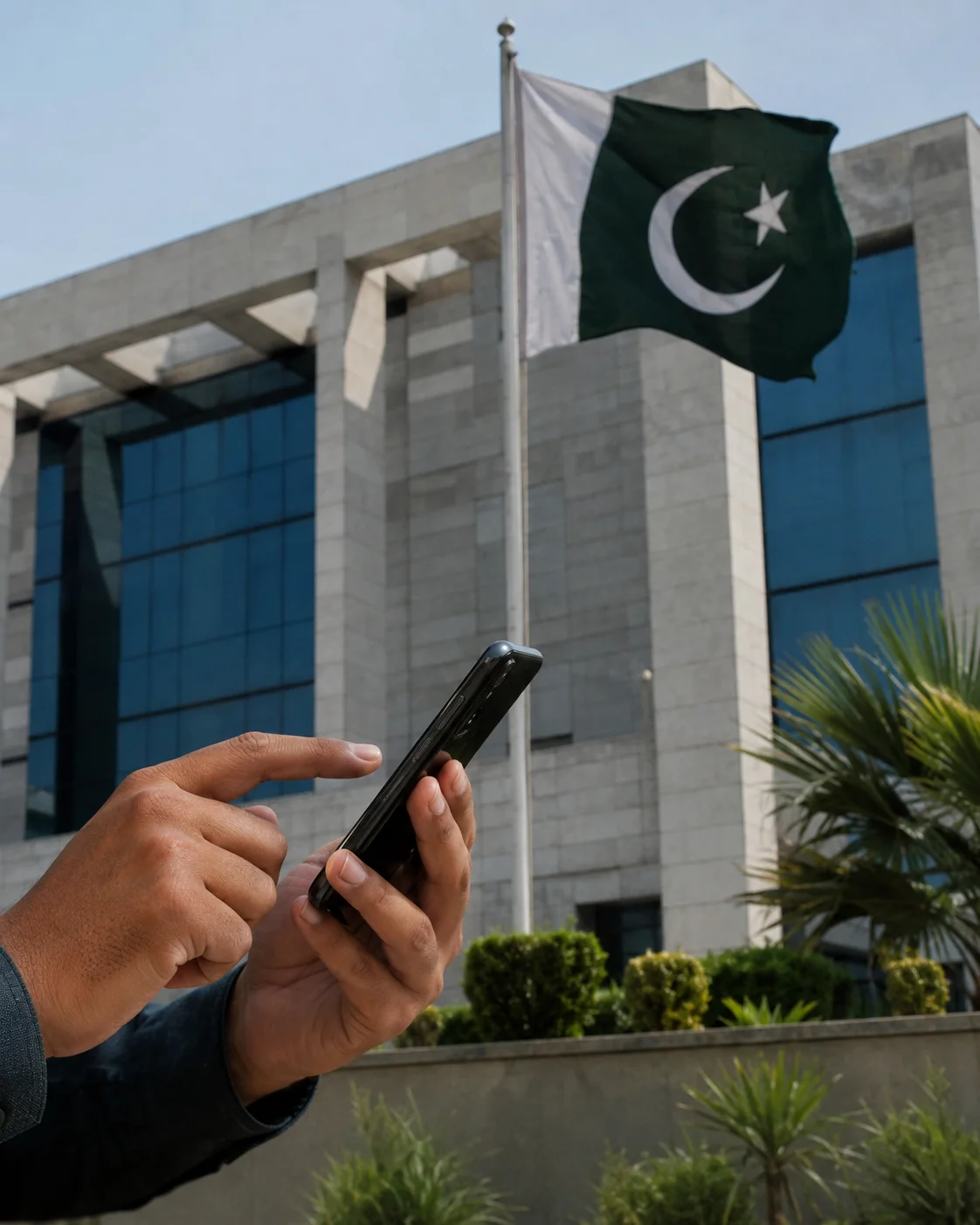
Pakistan’s telecom regulator has introduced a new PTA prepaid balance policy that will require cellular mobile operators to give prepaid customers at least 180 days to use their recharged balance. The new framework will also require expired balances to be restored automatically when a customer makes another recharge, provided the SIM remains active.
The Pakistan Telecommunication Authority (PTA) said the measures are intended to prevent consumers from permanently losing unused prepaid credit. The rules will come into force on October 1, 2026, affecting prepaid mobile subscribers across Pakistan, Azad Jammu and Kashmir, and Gilgit-Baltistan.
PTA introduces 180-day validity for prepaid balances
Under the new determination, every prepaid recharge or balance amount must carry a minimum validity period of 180 days.
This means mobile users will have substantially more time to use their prepaid credit before it expires. The measure applies to cellular mobile operators and is aimed at establishing a common minimum standard for balance validity across the sector.
The PTA’s decision comes after the regulator received complaints from consumers about unused prepaid balances being forfeited when their validity periods ended.
For many prepaid customers, particularly those who use mobile services selectively or recharge with small amounts, losing unused credit can represent a direct financial loss.
The regulator noted that approximately 97 percent of cellular mobile subscribers in Pakistan, AJK and Gilgit-Baltistan use prepaid services. As a result, the issue has implications for a very large section of the country’s mobile-user base.
Expired balance to return after the next recharge
One of the most significant parts of the new policy concerns balances that have already expired.
Under the PTA framework, if a prepaid balance expires while the SIM remains active, the amount will not be permanently lost. Instead, it must be restored and made available to the subscriber when they subsequently recharge their account.
The rule effectively creates a reinstatement mechanism for unused credit.
For example, if a customer has remaining prepaid balance that reaches its validity limit but continues using the same active SIM, that balance should become available again after the customer makes a new recharge.
The policy therefore addresses both the length of the initial validity period and the treatment of balances that have already expired.
Operators cannot use unfair practices
The PTA has also directed cellular mobile operators not to introduce unfair commercial practices while implementing the new requirements.
The regulator’s position is that consumers should receive the protection provided by the framework without operators adopting measures that could undermine its purpose.
The determination follows a wider review of prepaid balance policies and consumer complaints across Pakistan’s telecom sector.
Why the PTA changed the prepaid balance policy
The regulator’s intervention followed concerns over the permanent forfeiture of unused prepaid credit.
The PTA said the problem can have a particularly significant impact on low-income consumers, who may recharge their phones in small amounts and depend heavily on prepaid services.
Rather than allowing unused money to disappear solely because a validity period has ended, the regulator concluded that consumers should receive a minimum period of protection and a mechanism for recovering expired credit.
The decision followed a consultation process in which the PTA sought feedback from mobile operators, subscribers and members of the general public.
Two major proposals were considered.
The first involved allowing prepaid balances to remain valid for as long as the subscriber’s SIM remained active.
The second proposed linking unused balances to a subscriber’s CNIC, potentially allowing the credit to be restored if the user obtained a replacement SIM or received a refund.
Public backed stronger consumer protection
The consultation showed considerable public support for longer or permanent prepaid balance validity.
Many respondents supported the idea that prepaid credit should remain available throughout the active life of a SIM. Respondents viewed the money stored in prepaid accounts as funds that had already been paid by consumers and therefore should not simply be forfeited.
A substantial number of respondents also supported a CNIC-based system that could preserve a user’s balance beyond a particular SIM and potentially allow restoration or reimbursement.
However, the mobile operators generally raised objections to the CNIC-based proposal.
Mobile operators raised technical and financial concerns
Operators cited several potential difficulties associated with permanently linking balances to customers’ CNIC records.
Among the concerns raised were technical changes to existing systems, fraud risks, disputes over SIM ownership and the additional operational and compliance costs involved.
Operators also argued that indefinite balance validity could create continuing financial obligations and potentially encourage customers to keep SIMs inactive for longer periods.
PTML and CMPak were among the operators that opposed indefinite validity, citing concerns related to financial liabilities, dormant SIMs, financial reporting and numbering-resource management.
The PTA nevertheless noted that operators recognised the importance of preventing consumers from permanently losing prepaid balances.
Jazz and Telenor offered different approaches
The consultation also highlighted differences among individual operators.
Jazz supported the proposal for stronger balance protection and told the regulator that it had already introduced a system under which prepaid credit remains valid throughout the active life of a SIM.
Telenor did not support indefinite validity but said it had a mechanism through which expired balances could be restored following a subsequent recharge.
These differing approaches helped inform the PTA’s eventual decision to establish a minimum regulatory requirement rather than immediately impose permanent validity for the lifetime of every SIM.
PTA looked at international practices
The regulator also considered international examples when developing the framework.
The determination referred to Vodafone’s prepaid arrangements in the United Kingdom, where prepaid balances can remain valid while a SIM remains active. The PTA also noted provisions under which customers may request refunds for unused balances or bundles within 60 days after disconnection.
The international comparison supported the regulator’s view that consumer protection and the commercial interests of telecom operators do not necessarily have to conflict.
Instead, the PTA concluded that a defined minimum validity period, combined with reinstatement of expired credit following a recharge, could provide greater protection without creating an unsustainable burden for operators.
What the new rule means for mobile users
The new framework could change how millions of Pakistani prepaid customers manage their mobile credit.
From October 1, 2026, users should receive at least 180 days of validity on prepaid balances. If an amount expires while the SIM remains active, the balance should also be reinstated when the customer makes a subsequent recharge.
The policy does not, however, establish unrestricted lifetime validity for every prepaid balance. Instead, the PTA has chosen a minimum validity period together with a mechanism for recovering expired credit.
This distinction is important because permanent validity was one of the options considered during the consultation, but the final regulatory approach focused on minimum protection and balance reinstatement.
For consumers, the changes could reduce the risk of losing money simply because a recharge was not used within an operator’s shorter validity period.
A major consumer-protection change for prepaid users
With prepaid services accounting for the overwhelming majority of mobile subscriptions in Pakistan, the PTA’s decision has broad consumer implications.
The regulator’s determination represents an effort to establish consistent rules across cellular mobile operators while addressing complaints about the loss of unused prepaid credit.
The new 180-day minimum and automatic reinstatement mechanism are expected to give users more flexibility in managing their mobile balances.
The policy also reflects the PTA’s broader attempt to balance consumer interests with the technical, financial and operational concerns raised by telecom companies.
As the October 1 implementation date approaches, cellular mobile operators will need to align their systems and practices with the new requirements.
For prepaid subscribers, the key change is straightforward: unused balance will receive a minimum 180-day validity, and an expired balance on an active SIM will be restored after the next recharge.
Sources:
- Pakistan Telecommunication Authority (PTA) determination on prepaid balance validity and reinstatement
- PTA consultation on prepaid balance validity
- Public and cellular mobile operator submissions cited in the PTA determination
- International benchmarking referenced by the PTA, including Vodafone UK
Our audience means everything to us.
Have feedback or suggestions to make us better? We’re always listening—feel free to get in touch with us at editor@truthorahub.com









Leave a Comment