

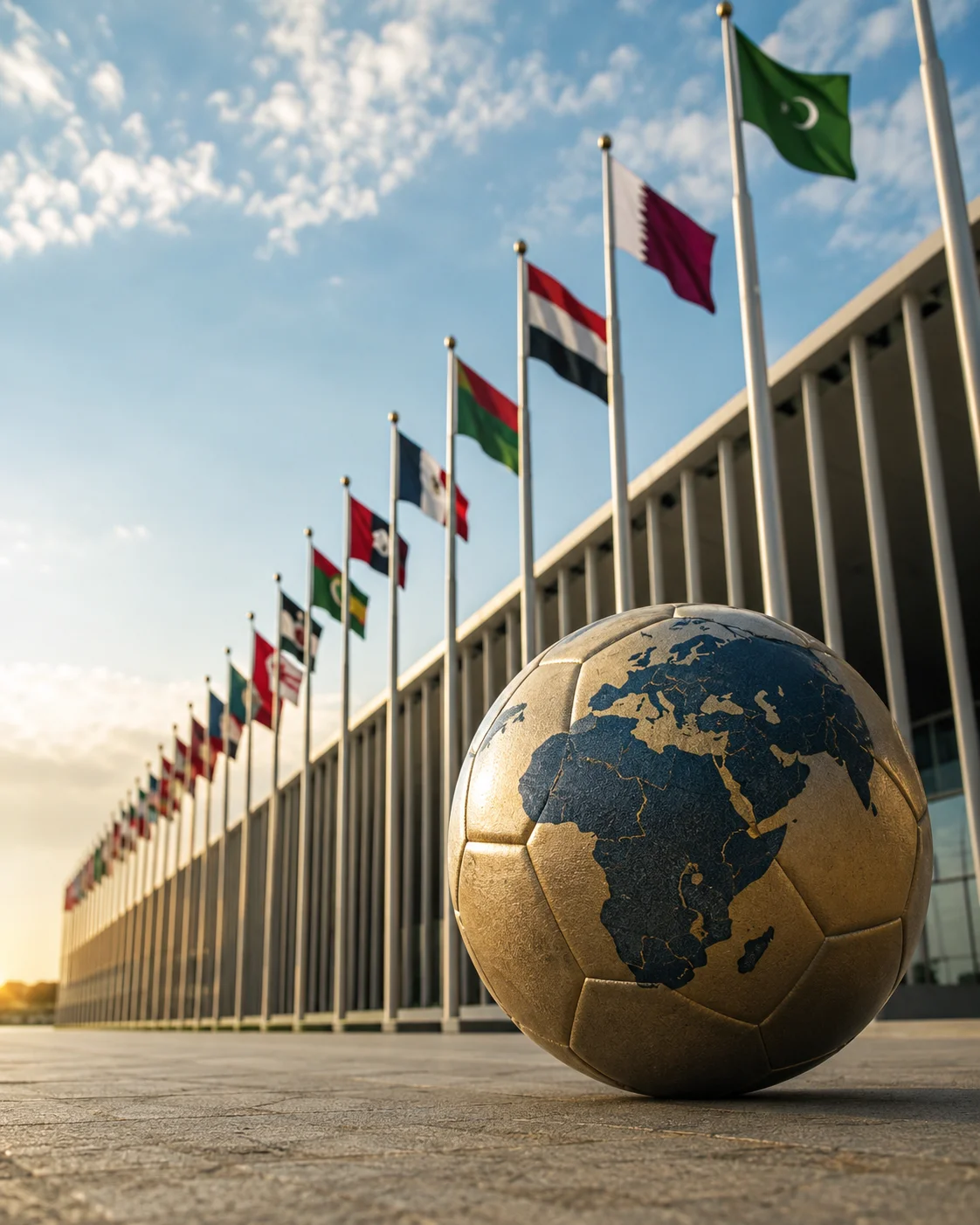
FIFA Infantino has secured public backing from six Arab national football associations as the FIFA president faces growing opposition over a controversial private investment proposal and questions about governance ahead of next year’s presidential election.
The joint support, announced on Thursday, August 13, highlights the divisions emerging within world football. While several major confederations have criticised Infantino’s handling of the proposed investment deal, a number of national associations continue to support his leadership.
The six federations backing Infantino include Qatar, Morocco, Egypt, Lebanon, Sudan and Mauritania. Four of the officials who signed the statement are also members of the FIFA Council, giving the endorsement additional significance ahead of the 2027 election.
At the same time, Ireland withdrew its previous support for Infantino, citing concerns about governance, transparency and consultation.
FIFA Infantino Receives Backing From Six Arab Federations
The football associations of Qatar and Morocco, among four other Arab countries, issued a joint statement expressing confidence in Infantino and his leadership of global football.
The statement was signed by Sheikh Hamad bin Khalifa Al Thani, head of the Qatar Football Association; Hany Abo Rida of Egypt; Morocco’s Fouzi Lekjaa; and the football chiefs of Lebanon, Sudan and Mauritania.
The federations said Arab football had an important role in strengthening cooperation and bringing communities together. They also praised Infantino’s efforts to expand opportunities for football across different regions.
The support is particularly notable because some of the signatories belong to the Asian Football Confederation, or AFC, which has previously expressed disappointment over Infantino’s investment proposal.
Four of the six signatories — Al Thani, Abo Rida, Lekjaa and Mauritania’s Ahmed Yahya — are members of the FIFA Council.
Their decision to publicly support Infantino indicates that opposition from confederation leadership may not necessarily translate into unified voting by national associations.
Infantino Faces Opposition Over Investment Proposal
The latest political tensions inside FIFA follow Infantino’s attempt to attract private investment into the organisation’s commercial rights.
Under the proposal, FIFA would have separated the commercial rights associated with major competitions, including the World Cup, and offered a 20% stake to private investors. The plan was reportedly intended to generate around $4.2 billion.
The proposal triggered strong opposition within football’s governing structure and was subsequently abandoned.
UEFA, the AFC and CONCACAF have all criticised Infantino’s conduct in connection with the plan and called for him to step down. Together, those three confederations represent 136 of FIFA’s 211 member associations.
The dispute has therefore developed into a broader debate over FIFA’s decision-making process, consultation with national associations and the organisation’s governance.
FIFA later apologised to its 211 member associations over mistakes in the handling of the proposal following a crisis meeting in Morocco.
The organisation also said that Infantino continued to have the full support of its leadership.
Ireland Withdraws Support for FIFA President
While the Arab federations were reaffirming their backing, Ireland announced that it had withdrawn its previous support for Infantino.
The Football Association of Ireland said its board had decided to rescind a letter of support issued earlier in the year. The association said it had informed FIFA of the decision and explained its reasons.
According to the statement reported by Reuters, the FAI continued to appreciate FIFA’s assistance to Irish football but said recent developments had created concerns about governance, transparency and the lack of meaningful consultation.
Ireland’s decision adds to the political pressure facing Infantino as he prepares to seek another term.
The contrasting positions of Ireland and the six Arab federations demonstrate the difficulty of predicting how FIFA’s national associations will ultimately vote.
Why National Associations Matter in FIFA Election
The FIFA presidential election is scheduled for March next year, and each national football association has one vote.
That voting structure means that positions taken by individual countries can be more important than the stance of a continental confederation when the final ballot takes place.
The Confederation of African Football, or CAF, has already backed Infantino, providing him with significant support in a region containing a large number of FIFA member associations.
The latest endorsement from Qatar, Morocco, Egypt, Lebanon, Sudan and Mauritania further demonstrates that the opposition expressed by UEFA, AFC and CONCACAF has not created a unified anti-Infantino voting bloc.
This could become increasingly important as the election approaches and national associations weigh their individual interests and relationships with FIFA.
What Infantino Needs to Win Re-election
The election rules mean Infantino’s required majority could depend on the number of candidates standing against him.
If Infantino is the only candidate facing one rival, he would need 106 votes to secure a simple majority of FIFA’s 211 members.
However, if three or more candidates contest the election, the first round requires a two-thirds majority. That would mean 141 votes.
The difference makes the number of candidates and the distribution of support especially important.
For Infantino, maintaining support among national associations will therefore be a central part of his campaign, particularly as opposition from some of the game’s most influential confederations continues.
A Divided Football Governance Landscape
The dispute has exposed divisions between FIFA’s central leadership, continental confederations and individual national associations.
The failed investment plan is at the centre of the current controversy, but the disagreement has also raised wider questions about how major decisions are made within global football.
Supporters of Infantino continue to point to his efforts to expand football’s reach and create opportunities across different regions. His critics, meanwhile, have raised concerns over the process used to develop and promote the private investment proposal.
The competing positions are likely to remain a major issue in the run-up to the FIFA presidential election.
For now, Infantino retains substantial support, particularly across Africa and parts of the Arab football community. But Ireland’s withdrawal and the opposition from UEFA, AFC and CONCACAF show that his path to re-election is not without political challenges.
With the election still months away, national associations are expected to play a decisive role in determining whether Infantino can secure the majority required to remain FIFA president.
Source:
- Reuters — August 13, 2026
Our audience means everything to us.
Have feedback or suggestions to make us better? We’re always listening—feel free to get in touch with us at editor@truthorahub.com







Leave a Comment